
This HOKA Speedgoat 7 review is based on 150+ trail miles, not a parking-lot try-on. I ran it on packed dirt, sandy singletrack, wet roots, loose gravel, pine needles, short road connectors, and downhill sections where a trail shoe either holds your foot or starts writing excuses.
My short verdict: the Speedgoat 7 is the most balanced modern Speedgoat I have tested. It brings back more long-run comfort than the Speedgoat 6, keeps the dependable Vibram Megagrip bite, and adds a firmer, more protective upper that makes sense on mixed terrain. It is not the fastest trail shoe. It is not the best deep-mud shoe. It is the shoe I would hand to a runner who wants one durable trail trainer for long days, technical confidence, and enough cushion to keep the feet from getting beat up.
The important tradeoff is fit. The Speedgoat 7 feels secure, but the standard width is not generous. If your foot is wide or high-volume, do not treat the wide option as optional. Get the fit wrong and the protective upper can feel restrictive. Get the fit right and the shoe feels like a steady trail partner instead of a max-cushion boat.
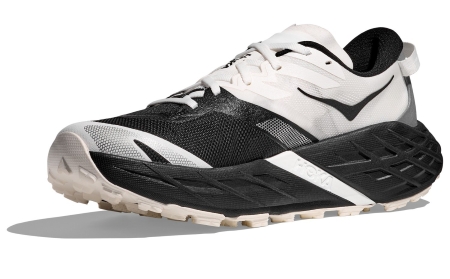
HOKA Speedgoat 7 Review: Quick Verdict
| Category | Ken’s Take |
|---|---|
| Best for | Long trail runs, mixed terrain, rocky paths, wet roots, hiking-run hybrids |
| Ride | Protective, moderately lively, more cushioned than Speedgoat 6 |
| Grip | Excellent on wet rock, roots, dry dirt, gravel, and moderate mud |
| Fit | Secure but snug in standard width |
| Weak spot | Deep mud, wide feet in standard width, runners wanting a nimble race shoe |
| Score | 9.2/10 |
If you are coming from road shoes, start with my road-to-trail transition guide before judging any trail shoe. Trail shoes feel different because they have to control your foot on uneven surfaces, not just cushion a straight-line landing. The Speedgoat 7 leans into that job.
Bottom line: The Speedgoat 7 is a top-tier all-around trail shoe for runners who want protection, grip, and long-run comfort in one package. I would not buy it for road speedwork or deep winter mud, but I would trust it for most real trail days in the U.S.
Key Facts for Fast Decision-Making
The HOKA Speedgoat 7 is best understood as a cushioned, protective, all-terrain trail trainer. It is not a plated trail racer, not a waterproof hiker, and not a soft road shoe with rubber glued underneath. Its job is to make long, rough, mixed trail runs feel calmer underfoot.
| Question | Answer |
|---|---|
| Is it good for technical trails? | Yes, especially mixed roots, gravel, rocks, and uneven dirt |
| Is it good for deep mud? | Only fair; use a mud-specific shoe for repeated deep mud |
| Is it good for road-to-trail? | Good when road sections are short, not ideal for mostly pavement |
| Is it good for wide feet? | Only if you choose wide or have enough forefoot room |
| Is it good for ultras? | Yes, if the fit works and your race is not deep-mud specific |
| Is it beginner-friendly? | Yes for protection and confidence, but it feels like a real trail shoe |
| Does it replace the Speedgoat 6? | For most long-run runners, yes; for firm-ground-feel fans, maybe not |
This is the kind of shoe I would rather slightly over-shoe than under-shoe for unfamiliar trail. On easy crushed gravel, it can feel like more protection than you need. On a rough descent after an hour of climbing, that same protection suddenly feels smart. The Speedgoat 7 is built for the second moment.
For searchers comparing HOKA trail shoes, here is the clean version: choose the Speedgoat 7 for trail protection and grip, the Challenger-style lane for road-to-trail convenience, the Clifton or Bondi for road comfort, and the Mach for road speed. Trying to make one shoe cover every surface usually creates compromises you feel by mile 8.
How I Tested the HOKA Speedgoat 7
I tested the Speedgoat 7 like a trail workhorse, not like a fashion sneaker with lugs. My testing block covered 150+ miles across 7 weeks. The routes included Atlantic County sand, Pine Barrens dirt, rooty sections, gravel service roads, damp wooden bridges, short paved connectors, and enough downhill turning to expose heel slip fast.
| Test Parameter | Details |
|---|---|
| Mileage | 150+ trail and mixed-surface miles |
| Runner profile | 182 lbs, neutral-to-mild overpronation late in long runs, US men’s 10 |
| Surfaces | Packed dirt, sand, wet roots, gravel, pine needles, road connectors |
| Run types | Easy trail runs, long runs, hiking-run days, hill repeats, wet-weather runs |
| Comparison shoes | Speedgoat 6, Mafate-style trail shoes, road trainers, beginner trail shoes |
| What I tracked | Grip, downhill hold, upper pressure, foot fatigue, mud shedding, outsole wear |
I paid special attention to three things: whether the new foam stayed stable on uneven landings, whether the upper fixed the insecure feeling some runners had in the Speedgoat 6, and whether the outsole could handle wet roots without turning every corner into a negotiation. For trail basics around footing, effort, and terrain reading, my trail running for beginners guide covers the foundation.
HOKA Speedgoat 7 Specs and Technology
The Speedgoat 7 keeps the identity of the line: high protection, 5mm drop, aggressive lugs, and a rockered trail geometry. The big update is the move to a supercritical EVA midsole, which gives the shoe a little more life without making it unstable. Tom’s Guide measured a men’s U.S. 9.5 at 10.1 oz and described the heel stack as just under 40mm. GQ listed a 9.7 oz men’s sample, 5mm drop, and 37mm stack. Weight and stack vary by sample and measurement method, so I would treat the exact number as less important than the category: this is a cushioned trail shoe that still runs lighter than it looks.
| Spec | Speedgoat 7 | What It Means on Trail |
|---|---|---|
| Drop | 5mm | Natural trail stance without feeling zero-drop |
| Midsole | Supercritical EVA | More energetic than older compression-molded EVA |
| Outsole | Vibram Megagrip rubber | Reliable grip on wet and dry mixed terrain |
| Lugs | 5mm multidirectional pattern | Bite for dirt, rock, roots, and moderate mud |
| Upper | Protective woven or engineered mesh-style construction | Better foot hold and trail debris protection |
| Widths | Standard and wide availability in key versions | Wide matters because standard fit is snug |
Do not read “supercritical EVA” and expect a plated road-shoe bounce. This is still a trail shoe. The foam has to be stable on side slopes and rocky landings, so the energy return is controlled. That is a good thing. A trail shoe that feels amazing on flat pavement can become a liability when the ground is angled and loose.
Biomechanics: Stack, 5mm Drop, Rocker, and Trail Stability
The Speedgoat 7 works because HOKA does not chase softness without structure. On trail, cushion is only useful if your foot still knows where it is. Too much soft foam can feel wonderful on a sidewalk and sloppy on an off-camber descent. The Speedgoat 7 gives you a cushioned landing, but the outsole width, rocker, and upper tension keep the shoe from feeling like it is folding under you.
The 5mm drop feels natural on rolling trail because it does not force a steep heel-to-toe ramp. That helps when climbs and descents keep changing ankle angle. If you are coming from a high-drop road shoe, though, your calves may notice the difference during the first few runs. I felt it more after hillier sessions than during flat dirt miles. That is not a flaw. It is a reminder to rotate shoes and let the lower legs adapt.
| Biomechanical Detail | What I Felt on Trail |
|---|---|
| 5mm drop | Natural stance on climbs and descents, slightly more calf load than high-drop road shoes |
| Rocker geometry | Helpful rolling effect on hardpack and long gradual climbs |
| High cushion | Less foot fatigue on rocky gravel and long downhills |
| Structured upper | Better foot control when braking or turning |
| Wide outsole contact | More confidence on uneven landings |
The rocker is not aggressive like a road super trainer. It is more practical than flashy. On hardpack, it helps the shoe roll through toe-off without forcing you forward. On technical trail, it smooths transitions but still lets you choose your line. I prefer that tuning because trail running rewards timing and balance more than mechanical propulsion. If your cadence collapses late in runs, even a good rocker cannot save the day. That is where form work matters more than foam.
Ken’s mechanics note: The Speedgoat 7 protects tired feet, but it does not replace trail skill. Shorter steps, quicker eyes, and better downhill braking still matter more than stack height.
Ride Feel: Cushioned, Stable, and Less Harsh Than Speedgoat 6
The Speedgoat 7 feels protective first, lively second. It has more give underfoot than the Speedgoat 6, especially on longer runs where foot fatigue starts building. It is not mushy. It is not a trampoline. The midsole gives you enough rebound to keep moving, but the platform still feels planted when the trail gets uneven.
The best part of the ride is how little drama it creates. On rocky gravel, the foam and outsole mute the sharpness without making the shoe feel disconnected. On sandy hardpack, the rocker helps you keep rolling instead of digging in. On road connectors, it is acceptable, but I would not pretend it feels like the HOKA Mach 7 or another true road trainer. The lugs are there for a reason.
| Pace or Run Type | How It Felt | Ken’s Verdict |
|---|---|---|
| Easy trail run | Smooth, protective, confidence-building | Excellent |
| Long trail run | Low foot fatigue, stable late | Excellent |
| Hill repeats | Secure climbing, controlled descending | Very good |
| Fast flat dirt | Comfortable but not snappy | Good |
| Road connector | Fine for short sections | Acceptable |
| Deep mud | Enough bite to survive, not a mud specialist | Fair |
If your main goal is running faster on roads, choose a road shoe. If your goal is to stay comfortable while the ground keeps changing, the Speedgoat 7 earns its place. For runners building long-run durability, my guide on how to run longer without getting tired pairs well with this shoe because the Speedgoat rewards steady pacing more than reckless surging.
On-Trail Performance: Where the Speedgoat 7 Works Best
The Speedgoat 7 is at its best on mixed trails where the surface changes every few minutes. That is the real use case. A shoe can be good on smooth dirt and still be useless on wet roots. A shoe can bite in mud and feel awful on hardpack. The Speedgoat 7 is not perfect at any one extreme, but it is unusually dependable across the middle.
| Terrain | Performance |
|---|---|
| Packed dirt | Smooth and efficient |
| Wet roots | Very secure if foot placement is sensible |
| Rocky gravel | Protective and stable |
| Loose sand | Better than road shoes, but not magic |
| Moderate mud | Good bite, decent shedding |
| Deep mud | Use a more specialized lug pattern |
| Steep downhill | Secure upper and heel help control braking |
| Road-to-trail routes | Fine when pavement sections are short |
The shoe gave me the most confidence on wet, awkward terrain. Vibram Megagrip is still the outsole compound I trust most when I cannot predict the next step. The 5mm lugs have enough edge to bite without making the shoe feel awkward on hard surfaces. If you run in rain often, read my running in the rain guide too, because grip is only one part of staying upright.
Downhill is where the upper matters. The Speedgoat 7 holds the midfoot better than a soft road shoe and better than several comfort-first trail shoes I have tested. That helps reduce the toe-jam feeling on descents. It does not fix poor downhill technique, though. If your quads and knees always complain after descending, use my downhill knee-pain and descent-load guide for the condition-specific decision instead of treating a shoe as the fix.
Wet Trails, Mud, Snow, and Heat Notes
The Speedgoat 7 is excellent in wet mixed terrain, good in moderate mud, and only average in deep mud. That distinction matters. Wet roots and wet rock need rubber compound and surface contact. Deep mud needs tall, spaced, aggressive lugs that can dig and clear quickly. The Speedgoat 7 has enough lug for normal trail slop, but it is not built like a fell-running mud shoe.
| Condition | Speedgoat 7 Performance | My Setup |
|---|---|---|
| Wet roots | Very good grip when steps are controlled | Shorter stride, eyes two steps ahead |
| Wet rock | Confident for a cushioned shoe | Avoid hard braking on angled slabs |
| Moderate mud | Good bite and acceptable shedding | Tighten midfoot slightly |
| Deep mud | Not specialized enough | Choose deeper lugs |
| Packed snow | Surprisingly stable if snow is not icy | Use caution, consider traction aids |
| Hot summer trail | Upper protects well but is not airy like a road mesh | Thin socks, hydrate early |
In heat, the protective upper is a tradeoff. I would rather have that protection on rough trail than a super airy upper that lets grit in and folds on descents. But on humid summer runs, the Speedgoat 7 will not breathe like a light road trainer. Thin socks helped. So did loosening the forefoot slightly after the first few miles. Trail shoes live in compromise; the right question is whether the compromise matches your terrain.
In snow, I only trust this shoe when the snow is shallow or packed. The outsole can bite, but ice changes the rules. No foam, rocker, or lug pattern replaces traction devices on glare ice. I would rather be boring and upright than brave for six steps and limping home. The Speedgoat 7 is dependable, but it is not winter hardware.
Fit, Upper, and Lockdown
The Speedgoat 7 upper is protective and secure, but standard width runs performance-snug. I wore my normal US men’s 10. Length was right. Heel hold was strong. Midfoot security was one of the best parts of the shoe. The forefoot is where runners need to be honest with themselves. If you already need room in the toe box, start with wide.
Tom’s Guide noted that the standard fit can feel narrow because the protective upper is stiff. That matches my experience. The upper is not plush like a road cruiser, but it protects well when you clip roots or brush through rougher trail edges. For wide feet, my best running shoes for wide feet guide is worth checking before you force the standard width.
| Fit Area | Ken’s Notes |
|---|---|
| Length | True to size for me |
| Toe box | Medium to snug in standard width |
| Midfoot | Secure and trail-ready |
| Heel | Strong hold on descents |
| Tongue | More practical than older problem tongues |
| Sock pairing | Thin trail sock for standard width, medium sock for wide |
| Gaiter use | Works well for sandy or debris-heavy routes |
The lacing sweet spot is firm but not crushed. I got the best downhill hold by locking the heel, then leaving the forefoot slightly less tight than I would in a road tempo shoe. That tiny adjustment matters on long trail days because feet swell more when climbs, descents, heat, and uneven landings keep stressing the forefoot. If you run sandy trails, pair the shoe with a gaiter. I keep a guide to trail running gaiters for exactly that reason.
Blister and Hot-Spot Notes
I did not get heel blisters in the Speedgoat 7, but I did feel forefoot pressure when I over-tightened the shoe. That is the upper telling you what it is built for. It wants control. If you crank the laces like a road race shoe, the overlays can press into the front of the foot during long descents. If you leave the shoe too loose, your toes pay for it on downhill braking. The answer is not one extreme. It is balanced tension.
For longer trail runs, I would choose a technical sock with a smooth toe seam and enough structure to stop bunching. I would also trim toenails before long descents, which sounds basic until the trail reminds you otherwise. If blisters are already a recurring problem, read my blister prevention guide before blaming the shoe. The Speedgoat 7 has a secure fit, but foot prep still matters.
Sizing Decision: Standard, Wide, or Half Size Up?
My sizing recommendation is simple: go true to size if you have a narrow-to-average foot, choose wide if your forefoot usually wants room, and only consider a half size up if length is the problem. Do not size up just to fix width unless you are comfortable with extra length on descents. Extra length can become toe-jam space when the trail points downhill.
| Your Foot or Use Case | Best Speedgoat 7 Choice |
|---|---|
| Narrow foot | True to size, standard width |
| Average foot | True to size, standard width unless you like thick socks |
| Wide forefoot | True to size in wide first |
| High-volume foot | Try wide; standard upper can feel restrictive |
| Between sizes | Choose based on downhill toe clearance, not standing comfort only |
| Ultrarun or all-day hiking use | Leave more swelling room than you would for a short run |
| Thick winter socks | Wide may work better than half-size-up |
The test I use is a downhill lunge, not a living-room walk. Lace the shoe the way you would for trail, stand on a decline if possible, and check whether your toes slide forward. If the heel lifts, the shoe is too loose or too long. If the forefoot burns immediately, the upper is too tight. If the shoe feels secure but your toes can relax, you are in the correct zone.
This matters more in the Speedgoat 7 than in many road shoes because the upper is part of the stability system. A sloppy fit makes the shoe feel taller and less precise. A cramped fit turns a protective upper into a pressure point. The best version of the Speedgoat 7 appears when the midfoot is locked and the forefoot still has space to swell.
Outsole, Grip, and Durability After 150+ Miles
The outsole is the reason I trust the Speedgoat 7 beyond groomed paths. The Vibram Megagrip rubber and 5mm lugs give the shoe its real authority. The midsole makes it comfortable. The outsole makes it useful. After 150+ miles, my pair shows normal edge rounding on high-contact lugs, but no early tearing or scary smoothing.
| Mileage Point | What I Noticed |
|---|---|
| 0-25 miles | Upper felt protective, outsole bite was immediate |
| 25-75 miles | Foam settled, transitions felt smoother |
| 75-125 miles | Best balance of comfort and precision |
| 125-150+ miles | Lugs rounding slightly, grip still strong |
My retirement signal would be grip confidence, not appearance alone. Trail outsoles often look rough before they are actually done. I would replace the Speedgoat 7 when the forefoot lugs stop biting on loose climbs or the heel lugs stop controlling steep descents. For a broader replacement framework, use my when to replace running shoes guide.
Hydration also changes how a trail shoe feels late. A shoe that feels stable at mile 4 can feel clumsy at mile 14 if you are under-fueled, under-hydrated, and dragging your feet. For longer runs, my trail hydration guide is more useful than any outsole claim. Gear works better when the runner is still sharp.
HOKA Speedgoat 6 vs Speedgoat 7
The Speedgoat 7 is more comfortable and more forgiving than the Speedgoat 6, while still keeping enough structure for technical terrain. Runners who loved the firmer, more connected feel of the 6 may think the 7 feels a little more cushioned and less precise. Runners who felt beat up in the 6 will probably prefer the 7.
| Feature | Speedgoat 6 | Speedgoat 7 | Winner |
|---|---|---|---|
| Ride | Firmer, more direct | Softer and more responsive | Speedgoat 7 for long runs |
| Ground feel | More connected | More protected | Speedgoat 6 |
| Upper | Less secure for some runners | More protective and structured | Speedgoat 7 |
| Grip | Excellent | Excellent with refined lug feel | Tie |
| Long-run comfort | Good but firmer | Better foot fatigue protection | Speedgoat 7 |
| Technical precision | Slightly sharper | Still stable but cushier | Preference |
My buying advice is simple: choose the Speedgoat 7 if you want comfort, grip, and long-run protection. Choose the Speedgoat 6 only if you already know you prefer a firmer trail shoe and can still find a pair that fits well. If you are new to trails, the 7 is the easier recommendation.
HOKA Speedgoat 7 vs Competitors
The Speedgoat 7 sits in the cushioned all-terrain trail trainer category. It is more protective than a light beginner trail shoe, less race-focused than plated trail racers, and more trail-specific than door-to-trail road hybrids.
| Shoe or Category | Choose It If |
|---|---|
| HOKA Speedgoat 7 | You want one durable trail shoe for mixed terrain and long days |
| Beginner trail shoes | You run mostly smooth dirt and want easier flexibility |
| HOKA Challenger-style road-to-trail shoes | You split time between pavement and mild dirt |
| Mud-specific trail shoes | You run deep mud, wet grass, or sloppy winter trails |
| Plated trail racers | You race fast on runnable courses and accept less everyday comfort |
| Max-cushion road shoes | You mostly run pavement and only touch gravel paths |
For newer trail runners deciding whether the Speedgoat is too much shoe, my best trail running shoes for beginners guide gives softer entry points. For long-distance runners deciding between trail and road cushioning, see my long-distance running shoe picks.
Compared with a road comfort shoe like the HOKA Clifton or HOKA Bondi, the Speedgoat feels less smooth on pavement but far more secure on dirt. Compared with the HOKA Arahi, it is not a stability shoe. It is stable for a trail shoe because the platform and upper work well, but it does not provide road-shoe pronation guidance.
Best HOKA Speedgoat 7 Alternatives by Runner Type
The Speedgoat 7 is my top pick for all-around trail protection, but it is not the right answer for every runner. The best alternative depends on what you are trying to escape: weight, narrow fit, mud limits, road clunkiness, or too much cushion.
| If You Want… | Consider… | Why |
|---|---|---|
| More road comfort | A road trainer like Clifton or Bondi | Smoother pavement feel and less lug interference |
| More road-to-trail versatility | A lighter hybrid trail shoe | Better for routes with long pavement sections |
| More deep-mud traction | A mud-specific trail shoe | Taller, more open lugs clear slop better |
| More ground feel | A lower-stack trail shoe | Sharper trail feedback and faster foot placement |
| More race speed | A lighter trail racer | Less protection, quicker turnover |
| More width | Speedgoat 7 wide or another wide trail model | Fit matters more than brand loyalty |
| More support for overpronation | A stability road shoe for road days | Trail stability is not the same as posting or guidance |
I would not overthink alternatives if the Speedgoat 7 fits your foot and your trails are mixed. That is exactly the problem it solves. I would start looking elsewhere only if your runs are mostly pavement, mostly deep mud, mostly short and fast, or if the standard shape presses your forefoot. Those are real reasons to choose another shoe, not nitpicks. For a roomier, long-haul alternative, compare my Saucony Xodus Ultra fit and ride review; it solves a different problem rather than simply being “better.”
A useful way to shop: choose by terrain first, fit second, and brand third. Trail shoes are tools. The Speedgoat 7 is a very good tool, but only when the terrain asks for it. If the trail is tame, you can go lighter. If the trail is sloppy, go more aggressive. If the trail is long and unpredictable, the Speedgoat 7 is exactly where I start.
Who Should Buy the HOKA Speedgoat 7?
Buy the Speedgoat 7 if you want one trail shoe that can handle most U.S. trail conditions without making your feet feel punished. It is built for runners who value protection and grip more than pure speed.
- Trail runners who want one shoe for long runs, daily trail miles, and mixed terrain.
- Road runners moving into trail running who want protection without a huge learning curve.
- Ultrarunners and long-run hikers who want cushioning under tired feet.
- Runners who deal with wet roots, gravel, pine needles, packed dirt, and moderate mud.
- Anyone who disliked the harsher feel of the Speedgoat 6 and wanted more comfort.
- Runners who use short road connectors but spend most of the run off pavement.
- Trail runners working on climbs and descents. Pair it with my hill running tips if descents are your weak spot.
The shoe also makes sense for runners who train by effort rather than pace. Trail pace lies to you. Sand, roots, grade, weather, and footing can turn an easy effort into a grind. The Speedgoat 7 helps because it reduces the amount of mental energy you spend worrying about every landing. That is not glamorous, but it is valuable when the run gets long.
Who Should Skip the HOKA Speedgoat 7?
Skip the Speedgoat 7 if you need a roomy standard-width fit, a mud specialist, or a fast road-to-trail shoe for mostly pavement. It is versatile, but it is not universal. For wet roots and loose ground, compare my shoes with reliable trail grip.
- Wide-footed runners who cannot get the wide version should avoid forcing the standard width.
- Deep-mud runners should use a more aggressive mud-specific outsole.
- Runners who want maximum ground feel may find the cushioning too protective.
- Road runners who only touch crushed gravel should choose a road or hybrid shoe.
- Runners who need formal stability support should use a stability model instead.
- Race-day speed hunters on smooth trails may want a lighter, faster trail shoe.
If you are injury-prone, do not expect any shoe to solve weak hips, poor downhill control, or rapid mileage jumps. The Speedgoat protects the foot, but training still drives most outcomes. I keep a practical guide on running injury prevention and a separate cross-training for runners guide because trail durability is built off the trail too.
How I Use the Speedgoat 7 in a Running Rotation
The Speedgoat 7 is my long-trail and ugly-weather shoe. I do not use it for road tempo work. I do not use it for treadmill miles. I use it when the route has enough dirt, roots, gravel, or wet surface to justify a real trail outsole.
| Training Day | Shoe Choice |
|---|---|
| Easy road run | Road daily trainer |
| Road tempo or fartlek | Mach 7 or faster road shoe |
| Smooth dirt recovery run | Light trail shoe or road-to-trail shoe |
| Mixed trail long run | HOKA Speedgoat 7 |
| Wet trail run | HOKA Speedgoat 7 |
| Deep mud day | Mud-specific trail shoe |
| Downhill technical session | Speedgoat 7 if fit is dialed |
For workouts, the Speedgoat can handle trail fartlek, hill surges, and controlled climbs, but it is not the shoe I would pick for flat speed. If you are structuring workouts, my guides to fartlek training, interval training, and running cadence give better rules than trying to force road splits onto rough trail.
For runners who own only one trail shoe, the Speedgoat 7 is a smart single-shoe answer. For runners with a larger rotation, I would pair it with a lighter trail shoe for short smooth runs and keep the Speedgoat for long, wet, rocky, or uncertain days. That is where it earns its space.
Final Verdict
The HOKA Speedgoat 7 is one of the best trail running shoes of 2026 for runners who want grip, protection, and long-run comfort without giving up stability. It fixes the biggest complaint many runners had with the Speedgoat 6 by adding a more forgiving ride, while keeping the outsole confidence that made the line famous.
My score is 9.2/10. I would score it higher if the standard width were more accommodating and if the shoe shed deep mud like a true mud specialist. But for the terrain most runners actually see – dirt, roots, gravel, rocky sections, damp turns, rolling climbs, and tired descents – the Speedgoat 7 is easy to trust.
The phrase I kept writing in my notes was “less thinking, more running.” That is what a good trail shoe should do. It should not make every step feel dramatic. It should protect you, hold you, grip the ground, and let you stay present on the trail. The Speedgoat 7 does that better than most.
| Score Category | Rating |
|---|---|
| Ride comfort | 9.2/10 |
| Grip | 9.5/10 |
| Fit and lockdown | 8.6/10 |
| Protection | 9.4/10 |
| Durability | 9.0/10 |
| Versatility | 9.1/10 |
| Overall | 9.2/10 |
FAQ
Is the HOKA Speedgoat 7 good for trail running?
Yes. The HOKA Speedgoat 7 is an excellent all-around trail running shoe for mixed terrain, long runs, wet roots, rocky paths, gravel, and moderate mud.
Is the HOKA Speedgoat 7 good for beginners?
Yes, if the fit works. Beginners who want protection and grip will like it, but runners on very smooth trails may prefer a lighter beginner trail shoe.
Does the HOKA Speedgoat 7 run true to size?
It ran true to size for me in length, but the standard width is snug. Wide-footed runners should strongly consider the wide version.
Is the HOKA Speedgoat 7 better than the Speedgoat 6?
For most runners, yes. The Speedgoat 7 is more forgiving, more comfortable for long runs, and has a more secure protective upper. Runners who prefer firmer ground feel may still like the Speedgoat 6.
Can you run roads in the HOKA Speedgoat 7?
Yes, for short road connectors. It is not ideal as a road running shoe because the lugs and trail build feel less smooth on pavement.
Is the HOKA Speedgoat 7 waterproof?
No. The standard Speedgoat 7 is not waterproof. It protects well from debris, but water can enter through the upper.
How long will the HOKA Speedgoat 7 last?
Based on my 150+ mile test, many runners should expect roughly 300 to 500 trail miles depending on terrain, body weight, gait, and how often the shoe is used on pavement.
Is the HOKA Speedgoat 7 good for hiking?
Yes. It works well for fast hiking and hiking-run days if you want trail grip, cushioning, and a lighter feel than a boot.
Is the HOKA Speedgoat 7 good in mud?
It is good in moderate mud, but not ideal for deep mud. For sloppy winter trails or wet grass, a mud-specific trail shoe will grip better.
Who should not buy the HOKA Speedgoat 7?
Skip it if you need a roomy standard-width toe box, run mostly pavement, want maximum ground feel, or need a deep-mud specialist.
Is the HOKA Speedgoat 7 good for ultramarathons?
Yes. The Speedgoat 7 is a strong ultramarathon shoe for mixed-terrain races where protection, grip, and late-run comfort matter more than the lightest possible weight.
Is the HOKA Speedgoat 7 a stability shoe?
No. The Speedgoat 7 is not a formal stability shoe, but it feels stable for trail running because of its secure upper, broad outsole contact, protective platform, and grippy lugs.
What is the biggest downside of the HOKA Speedgoat 7?
The biggest downside is fit. The standard width can feel snug, and runners with wide or high-volume feet should try the wide version first.
Next trail step: Continue with clean trail shoes without damaging them.

Written by Ken – 12 years of running, 12,500+ miles, 63 shoes tested, and races from 5K to 50K. I test shoes through real training blocks on roads, boardwalk, sand, roots, gravel, and trail climbs so the review reflects what happens after the first good run. More about me.