
HOKA Bondi 9 vs New Balance 1080 comes down to how you want a cushioned shoe to move. I would choose the Bondi 9 when slow running and walking call for a broad platform and an unmistakable rocker. I would start with the New Balance 1080v15 when one pair must also handle steady running and the foot prefers a less guided transition. Fit can reverse either choice.
I have spent 12 years watching runners mistake “more cushioning” for one single ride. These two shoes are a useful correction: Bondi 9 places the foot inside a broad, rockered chassis; 1080v15 uses Infinion foam in a more flexible daily-running package. I have logged 310 miles in the Bondi 9 and 309 in the 1080v15. My verdict comes from what those pairs do in my training, then from a fit test you can repeat for your own foot.
My answer in one glance
| If your week looks like… | I would try first | What could overturn it |
|---|---|---|
| Mostly easy or recovery miles, plus long periods walking | Bondi 9 | The rocker arrives too early for your stride, or its sidewalls press your foot |
| Easy running with frequent steady finishes | 1080v15 | The softer ride needs extra ankle work once you tire |
| A wider forefoot or a foot that swells late | Try both in the correct width | Neither width label guarantees room at your own pressure points |
| One shoe for a mixed running week | 1080v15 | Choose Bondi if the 1080 moves underfoot or the rocker makes easy pace easier |
| A second shoe beside a faster trainer | Bondi 9 | Choose 1080 if you still want this pair to cover moderate pace |
The first filter is the job, then fit, then the ride that costs you less attention. I would never buy the 1080 simply because it sounds more versatile if the forefoot folds, heel lifts, or ankle has to keep correcting the landing. I would not buy the Bondi simply because it feels plush while standing if its rocker makes every run feel prescribed.
The runs behind my decision
I wore both pairs in men’s US 10.5 D on my South Jersey road and boardwalk routes. The mileage totals are close—310 in Bondi 9, 309 in 1080v15—but equal mileage does not mean identical conditions or a controlled durability race. I use my own easy and longer runs to judge the ride, then keep the recommendation conditional on a runner’s fit and weekly pace.
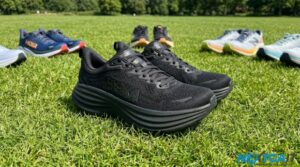
Bondi 9 made the strongest case for itself on a relaxed 12-mile outing: the broad platform let me keep an even rhythm without searching for a softer landing. Its weakness showed on a very cold 14°F boardwalk morning, when the midsole felt distinctly denser and the already substantial shoe became harder to ignore. I would not generalize that cold-weather response to a warm-weather run.
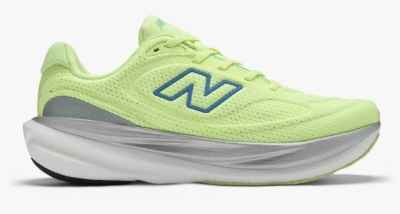
My 1080v15 highlight was a progression toward Longport: the forefoot had room as the miles accumulated, and changing pace felt easier than in the Bondi. The less flattering run was a humid 12-miler when the tongue shifted and lace pressure concentrated over my instep. That is why I check tongue position and lacing after warm-up, even in a shoe that feels comfortable when first put on.
What the specifications tell me—and what they cannot
| Detail | HOKA Bondi 9 | New Balance 1080v15 |
|---|---|---|
| Midsole | Supercritically foamed EVA | Infinion foam |
| Published heel-to-toe drop | 5 mm | 6 mm |
| Ride architecture | Broad platform, rearfoot Active Foot Frame, MetaRocker | Neutral daily trainer with a more flexible transition |
| Upper | Structured knit with molded collar | Perforated mesh |
| Outsole | Durabrasion rubber in wear zones | Rubber outsole |
| Width choice | Regular, Wide, Extra Wide in the men’s line | Multiple widths, including Wide and Extra Wide in the men’s line |
A one-millimeter difference in listed drop tells me very little about which shoe will load your calves more comfortably. The Bondi’s rocker controls the timing of the roll; the 1080 lets more of the transition come from your foot and the foam. If you are changing from a higher-drop trainer, introduce either gradually rather than treating the published number as a medical verdict.
The 1080v15 is also a genuine generation change: its midsole is Infinion. If you loved an older Fresh Foam X 1080, do not assume the v15 will feel identical. I would try the current shoe rather than purchase on the memory of the v13 or v14.
The decisive difference: guided roll or freer movement
On my Bondi 9, the broad base and raised sidewalls give me a contained feeling that makes sense at relaxed pace. The shoe encourages a smooth roll from landing through toe-off. That is valuable when I want an easy run to stay easy or expect a walking-heavy day afterward. Its trade-off is obvious as cadence rises: there is more shoe under me, and I feel the geometry rather than a quick, flexible forefoot.
In my 1080v15, Infinion cushioning and a less forceful transition let me move from easy pace toward steady running with less negotiation. The shoe gives my forefoot more say in the stride. I like that freedom, but I still check whether the landing stays centered on a cambered road and in the final tired minutes. A softer sensation is no promise that every runner will feel faster or more stable.
My tie-breaker is practical: at the pace you actually run most often, which shoe disappears from your attention? If the Bondi rocker makes you alter your landing, its comfort advantage evaporates. If the 1080 makes you steer your ankle, its extra range has little value. The midsole foam guide explains why softness, bounce, and stability should be judged separately.
Fit comes before the foam debate
I start with the same socks in both shoes and a warm foot. I check thumb-width toe clearance, then whether the widest part of the forefoot sits inside the platform without pressure from the upper or midsole wall. Adding length to solve width can move the flex point away from the toe joints. That is rarely a good compromise.
The Bondi 9 gives my foot a cradled, secure impression, but someone sensitive to sidewall contact should check both edges of the midfoot. I would lace it normally, jog a few minutes, and make two turns before deciding that the cradle is supportive rather than intrusive. The HOKA width menu is useful, yet a wider label does not remove every sidewall issue.
The 1080v15 gives my forefoot useful room, but my humid 12-miler exposed a different fit issue: the tongue moved and the laces pressed my instep. I now check heel hold, tongue position, and forefoot spread after the shoe has warmed up. A roomy first step is not enough. If tightening the midfoot creates pressure, I would change the fit or walk away rather than hope the shoe breaks in.
My running-shoe fit guide and toe-box checklist cover the checks I would use before comparing cushioning. The right width is a real fit variable in both lines; do not turn a poor fit into a break-in project.
Easy runs, long runs, walking, and pace changes
If the day is deliberately slow
I reach for a Bondi-shaped ride when the goal is low-drama time on feet. The broad base and rocker reduce the amount of forefoot bend I ask of the shoe, and the same character can work for walking. On a recovery day, I am not shopping for a lively toe-off. I am shopping for an even, unremarkable rhythm that does not invite me to push.
That does not mean Bondi 9 is a treatment for sore joints or an automatic recovery tool. Cushioning changes the sensation underfoot; it does not diagnose why a runner hurts. If an easy run remains painful or changes your gait, I would stop and address that problem before trying a second max-cushion shoe. For the training purpose itself, see my recovery-run guide.
If the run finishes steady
A one-shoe runner often lets an easy outing become a steady finish. The 1080v15 handled that change better for me. On a progression run, I could increase cadence without feeling the bulk and rocker that keep the Bondi in its slower lane. I still ask whether the 1080 stays centered when I slow again; a brief pickup in a store will not reveal the final miles of a long run.
The Bondi can run long, but I would not choose it because the training plan contains regular faster sections. The 1080 is not a race shoe either. If the week has true speed sessions, I would keep a separate workout shoe and let this comparison decide the easy-day slot.
If walking is part of the purchase
For travel or workdays with a lot of walking, Bondi 9 gets my first try. Its broad, rockered platform is more clearly built around continuous forward movement at lower speed. I would still check that the rocker does not tip me forward while standing and that the collar stays comfortable over several hours. The 1080 can walk well for the right foot, but I would buy it for running versatility first.
How I would settle a close call in three sessions
- Session 1 — fit and easy pace: wear the same socks and run a familiar flat route for roughly 30 minutes. Note heel movement, sidewall contact, toe pressure, and whether you adjust the laces more than once.
- Session 2 — your real weekly job: give each shoe the same type of easy or long run you intend it to own. Check the final fifteen minutes. Warm-foot comfort matters more than showroom plushness.
- Session 3 — a controlled change of pace: add a few relaxed pickups or a steady finish, then slow down. Compare how smoothly each shoe changes gear, not a watch pace from unmatched conditions.
If you cannot run in both before buying, keep the experiment small and use a retailer with a workable return policy. I would never treat a single dry pavement check as a verdict on wet traction. Rubber coverage, surface texture, and worn tread all matter; my outsole guide gives the practical checks. Stop a test for numbness, sharp pain, or a change in gait rather than collecting more miles to prove a point.
Durability and value without a made-up mileage winner
I would not award durability to either model from foam labels or outsole photos. Bondi 9 has Durabrasion rubber in high-wear areas; 1080v15 has a rubber outsole. The useful question is whether the foam still feels even, the upper still holds the foot, and the outsole still grips on your usual surface after repeated runs.
At 310 miles in Bondi 9 and 309 in 1080v15, I have seen ordinary outsole smoothing without an upper failure that decides the contest. I cannot turn that into a fixed lifespan or claim one will outlast the other by a set number of miles. I track changes in left-right feel, heel hold, and grip before retiring either pair. Buying the more substantial-looking construction will not repair a poor fit.
For a one-pair rotation, I choose the 1080v15 if its fit stays controlled through a mixed week. For a runner who already owns a faster shoe, Bondi 9 can create a clearer recovery and walking role. I use my shoe-rotation guide to see whether a new pair actually adds a job rather than duplicates one already covered.
Who I would put in each shoe
| Choose Bondi 9 when… | Choose 1080v15 when… |
|---|---|
| Your main miles are easy and you like an obvious rocker | You want one cushioned trainer for easy and steady running |
| Walking and long time on feet matter as much as running | You prefer more natural forefoot movement |
| A broad, cradled platform feels secure without sidewall pressure | Its soft ride remains centered after fatigue |
| You already have a separate faster training shoe | You do not want a heavily guided roll |
I would skip Bondi 9 if its rocker interrupts my natural timing or its sidewall presses the midfoot. I would skip 1080v15 if a soft, flexible landing makes me work to hold a straight line. If neither passes the fit test, I would widen the search among cushioned running shoes or, when platform control is the missing piece, stable neutral shoes. More cushioning is not the only way to get comfortable.
For a closer look at each family, I would read the Bondi review and 1080 review after deciding what role the new shoe needs to fill. Their broader histories are useful context; the v15’s Infinion construction still deserves its own fit test.
HOKA Bondi 9 vs New Balance 1080v15 ?
Which is better for everyday running, Bondi 9 or 1080v15?
I choose the 1080v15 for a single shoe covering easy runs and steady finishes, provided its fit stays controlled. Bondi 9 is my first choice for a recovery-focused role and substantial walking.
Is the New Balance 1080v15 still Fresh Foam X?
No. The 1080v15 uses Infinion foam. I would not buy it expecting the exact feel of an older Fresh Foam X 1080.
Which feels more stable?
Bondi 9 gives me the more guided, planted sensation through its broad platform and rocker. The 1080v15 lets my foot move more freely, so I check its lateral control late in a run. Neither observation is a stability-shoe prescription.
Which is better for wide feet?
Both offer width options, but their shapes differ. I would test forefoot room and midfoot pressure in the correct width; extra length is a poor substitute for width.
Can either shoe handle a long run?
Yes. I have used both for long runs. I favor Bondi 9 when the whole effort stays relaxed and 1080v15 when the route includes a steady finish, provided its tongue and laces remain comfortable.
Should I own both?
Only if they have distinct jobs: Bondi 9 for easy running and walking, 1080v15 for a broader pace range. If one pair would sit unused, buy the better-fitting shoe for your most common run.
My verdict
Bondi 9 is my comfort-first, planted option; 1080v15 is my one-shoe choice for a varied running week. I have run enough in both to know which role each serves me. I would still let your fit and two-pace test settle your purchase: the Bondi must make easy miles smoother without forcing your stride, and the 1080 must remain secure and centered as pace changes. If neither does that, keep the shoe that is already working.

Written by Ken — 12 years of running, 12,500+ miles, 63 shoes tested, 36 races from 5Ks to a 50K ultra. I run 30–40 miles a week on the Atlantic City Boardwalk and review every shoe with real training miles, not one-run demos. More about me →