
Saucony Triumph 24 vs Brooks Glycerin 23: after 205 miles in my Triumph and 211 in my Glycerin, I would buy the Saucony if I wanted a deeply soft, rolling daily shoe that still feels willing when the easy run picks up. I would buy the Brooks if I wanted a cushioned, more traditional stride with a secure, plush upper and a calm rhythm through long miles. Neither is automatically the better “premium” shoe. I choose by how the sole moves under my foot after the first hour, not by how luxurious it feels while standing still.
Both pairs are men’s US 10.5 on my 182-pound frame. I have spent 12 years running, much of it on South Jersey roads and boardwalks, and I care about the familiar work a trainer does: the easy start, the middle miles when I stop thinking about footwear, and the point where tired feet reveal fit problems. My two logs are close in mileage, which makes this comparison unusually useful for discussing wear at this stage.
My quick choice in one table
| If you want… | My first pick | What might reverse it |
|---|---|---|
| Deep softness with a rolling transition | Triumph 24 | The foam compresses too much for your stride |
| A plush upper and familiar forefoot flex | Glycerin 23 | The shoe feels too substantial on foot |
| An easy run that may become steady | Triumph 24 | You prefer a quieter, less shaped ride |
| Unhurried long mileage | Glycerin 23 | Triumph fits and centers your foot better |
| A run-walk or long walking day | Glycerin 23 | Its heel or upper does not suit walking pace |
| Fast intervals | Neither first | Choose a purpose-built workout shoe |
The biggest distinction is the path through the step. Triumph’s incrediLUX gives me more compression and a rounded roll. Glycerin’s DNA TUNED feels softer at landing than a basic daily trainer, then lets me move through a more flexible front of the shoe. When I want a little energy from an easy shoe, I reach for Triumph. When I want the shoe to stay out of the way at a steady effort, I reach for Glycerin.
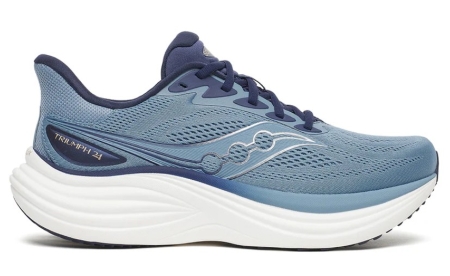
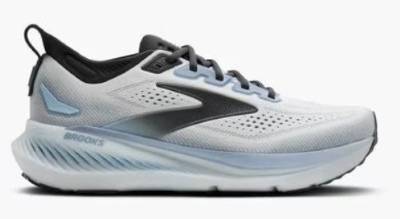
The exact versions, not the shoe families in general
| Detail | Saucony Triumph 24 | Brooks Glycerin 23 |
|---|---|---|
| My running log | 205 miles | 211 miles |
| My size | Men’s US 10.5 | Men’s US 10.5 |
| Listed drop | 10 mm | 8 mm |
| Midsole | incrediLUX | Dual-cell DNA TUNED |
| My transition cue | Deep compression and smooth rocker | Softer heel into a more flexible forefoot |
| Longest outing in my log | 15 miles | 19 miles |
| First fit check | Centered foot on soft foam | Upper volume and heel hold |
The mileage totals are separate training logs, not a controlled 416-mile experiment. I can compare the present wear of two similarly aged pairs, but I cannot promise a universal lifespan from two shoes on one runner. I also avoid treating the listed drop as a precise prediction of what every ankle or calf will feel.
What happens underfoot when the easy run gets long
Triumph 24: soft landing, then a rounded exit
incrediLUX is what makes this Triumph different from a merely plush trainer. My foot sinks into the landing more than it does in Glycerin, then the rocker helps me move through that softness. During a 90-minute outing along the Margate seawall, concrete and wooden planks felt less harsh underfoot, and I could keep the rhythm without working to lift a heavy shoe. My Saucony Triumph review has the longer single-model context.
Softness is not a free benefit. On flat road, the compression feels pleasant and I can nudge an easy run toward steady effort. On a cambered shoulder or during walking, I check whether my foot settles unevenly into the foam. The wider platform and gentle roll help me, but a runner who dislikes a deep, moving midsole may spend every mile making small corrections. I would test that before committing to long recovery runs.
Glycerin 23: a softer heel without a dominant rocker
Brooks uses different cell structures in DNA TUNED to shape the heel landing and forefoot response. I feel a comfortable entry but less of the deep collapse and return that defines Triumph. On hardpack dirt and crushed gravel through Birch Grove Park, I could settle into a patient Zone 2 rhythm with the road feel muted and the upper holding my foot well. It is the steady, quiet way the shoe behaves that earns a place in my rotation. My Brooks Glycerin review goes deeper into the family.
The forefoot lets me bend through the step more naturally than a large rocker would. That is a benefit if I like a conventional gait and also walk in my running shoes. It is a limitation if I want the shoe to push me along or feel quick under rising cadence. I can finish a steady long run in it; I would not choose it to turn the last miles into a workout.
My choice by session, including the miles around the workout
| Session | Triumph 24 in my use | Glycerin 23 in my use | My pick |
|---|---|---|---|
| Easy road run | Soft and more buoyant to me | Calm, steady, and contained | Mood and fit |
| Recovery after harder training | Protective but more motion underfoot | Lets me keep effort quiet | Glycerin |
| Long aerobic run | My log reaches 15 miles | My log reaches 19 miles | Glycerin on current evidence |
| Gentle progression | More willing to change rhythm | Possible, but not its strength | Triumph |
| Run-walk | Test deep foam compression at walking pace | More natural walking transition for me | Glycerin |
| Fast intervals | Too much cushion for my preferred turnover | Too substantial for my preferred turnover | Neither |
The 19-versus-15-mile row describes what I have actually logged; it does not prove Glycerin is inherently better past 15 miles. For a runner choosing between a cushioned daily trainer and a separate faster pair, my daily trainer versus tempo shoe guide explains where I draw that line.
Fit: the upper can outweigh the midsole verdict
My US 10.5 Triumph gives my toes horizontal room and secures the heel while leaving me flexibility to adjust midfoot tension. I still check upper volume and whether my foot remains centered as the soft foam compresses. A wide forefoot is not enough if the laces must be pulled tight to prevent sliding.
Glycerin 23 fits my 10.5 D foot naturally. Its knit and padded rearfoot feel more substantial, and I can set a secure heel hold without a hot spot on my normal long routes. Another foot may experience that padding as crowding rather than comfort. I check toe height, instep pressure, heel lift, and how much the knit changes after an hour. My warm-foot running-shoe fit checklist lays out that process.
The seven-minute test I would use in a store
- Wear the socks used on your long runs and check toe width plus space over the nails.
- Walk first; notice whether Triumph’s deep foam compresses unevenly and whether Glycerin bends comfortably.
- Jog at the actual easy effort you plan to use most.
- Try a broad turn or mild camber and watch how your foot stays centered.
- Lift cadence briefly, then come back to the original easy rhythm.
- Recheck heel hold and upper pressure once the first-step novelty fades.
The 10 mm versus 8 mm drop does not tell the whole story
Triumph 24 lists a 10 mm drop; Glycerin 23 lists 8 mm. In practice I notice the much larger difference in how their foam and front-of-shoe geometry move. Triumph’s softer heel can compress more, changing its felt slope, while Glycerin’s forefoot flex changes the timing of toe-off. I would not buy either based on those two numbers alone.
When changing from one shape to the other, I use an ordinary easy run to check calf sensation, heel placement, and whether I am unconsciously steering the shoe. I do not treat a drop figure as an injury prescription. If a new shoe repeatedly changes my gait or creates discomfort, I reassess fit and training load instead of forcing it into the rotation.
Grip, platform control, and what the two wear logs say
Both are neutral road shoes. Triumph’s broad base offsets some of its softness on my familiar pavement, while Glycerin’s secure upper and less dramatic rocker keep me centered in a different way. Neither is a formal stability model. If you specifically want Brooks guidance, my Glycerin GTS review covers that separate shoe; I would not quietly substitute GTS findings for this neutral Glycerin 23.
I have enjoyed Glycerin on firm park paths as well as roads, but neither tall cushioned shoe is my choice for loose sand or sharp lateral corrections. On damp boards, road paint, and metal covers I slow down and assess the actual surface. My outsole and traction guide explains the checks; my logs do not support a universal wet-grip winner here.
At 205 miles, my Triumph has localized rubber wear and moderate foam creasing, but its upper remains intact. At 211 miles, my Glycerin also has localized outsole wear, moderate creasing, and a sound upper. Those close mileages let me say neither pair has failed early on my foot. They do not let me declare which will last longer at 400 miles. I repeat a familiar route and watch whether the shoe still holds my foot and serves its intended pace.
Who should buy which?
- I would buy Triumph 24 for a runner who wants a deeply soft daily shoe with a smooth rocker and some willingness to lift a steady effort.
- I would buy Glycerin 23 for a runner who prefers a plush, secure upper and a more traditional, flexible forefoot for long easy mileage and mixed walking.
- I would buy neither if the foam or upper changes my stride after warm-up, or if my missing shoe is really for fast workouts.
- I would keep my present pair when it already solves easy and long-road training without a fit problem.
I would rarely buy both for a small rotation; their main jobs overlap. My shoe-rotation guide helps me decide whether another cushioned trainer adds a distinct role. If the real question is Triumph against a more built-up recovery ride, my Triumph 24 versus Nimbus 28 comparison is a closer next step.
FAQ: Triumph 24 vs Glycerin 23
Is Triumph 24 or Glycerin 23 softer?
On my foot Triumph 24 compresses more deeply and feels more buoyant. Glycerin 23 has a soft heel but a more contained, conventional transition. I would judge both while running at easy pace, not by standing in them.
Which is better for long runs?
My Glycerin 23 log reaches 19 miles and my Triumph 24 log reaches 15. I start with Glycerin for a steady long easy run and Triumph when the pace may gently build. Fit late in the run can reverse that choice.
Which is better for walking?
I would try Glycerin 23 first because its forefoot moves more naturally for me at walking speed. Triumph can work, but I would test whether its very soft foam feels steady during the longer ground contact of walking.
Is Glycerin 23 the same as Glycerin GTS 23?
No. This comparison uses the neutral Glycerin 23. GTS is a separate guidance-focused version, and I would not transfer its support behavior to the neutral shoe.
Which shoe has more room for my toes?
Both work in my US 10.5. Triumph gives me generous horizontal spread; Glycerin feels naturally accommodating with a more padded upper. I check vertical volume and heel hold after warm-up instead of judging width alone.
Which shoe will last longer?
I cannot name a winner from 205 and 211 miles. Both uppers are intact and both soles show localized wear in my logs. A replacement decision depends on how the fit and ride change in later miles.
My final verdict
I would choose Saucony Triumph 24 as a single premium cushioned trainer if I wanted more softness and a smoother, more mobile ride across easy and gently progressive runs. I would choose Brooks Glycerin 23 if I valued a secure plush upper and an unhurried long-run rhythm with less rocker influence. My 205- and 211-mile logs make the trade-off clear, but the pair that keeps your foot comfortable through the final easy miles deserves the purchase.

Written by Ken — 12 years of running, 12,500+ miles, 63 shoes tested, 36 races from 5Ks to a 50K ultra. I run 30–40 miles a week on the Atlantic City Boardwalk and review every shoe with real training miles, not one-run demos. More about me →