
A bunion-friendly running shoe is not simply the widest box on a product page. I look for space and depth over the big-toe joint, an upper that does not rub the bump, and enough heel and midfoot hold that the foot stays put when I run. These ten shoes solve different fit problems; none can cure a bunion.
I use my running fit notes and current model details to build this shortlist, and I flag meaningful version changes instead of borrowing old-mileage claims for a new shoe. If a joint is hot, increasingly painful or swollen, I would pause the shoe hunt and ask a qualified clinician to assess it.
Quick Picks: Three Bunion-Fit Starting Points
| Fit problem | My first try-on | Why I chose it |
|---|---|---|
| Best anatomical front | Topo Athletic Phantom 4 | Room at the big-toe joint without zero drop |
| Best true width | New Balance 1080v15 | 2E/4E choices when the whole forefoot is broad |
| Best smooth rocker | HOKA Bondi 9 | Cushioned roll for a runner who prefers less forefoot bend |
If the bump is your only fit issue, I begin with shape. If the entire forefoot is broad, I begin with width. If bending through the big-toe joint is the limiting sensation, I compare rocker and flexible rides on a short run.
10 Best Running Shoes for Bunions: In-Depth Reviews
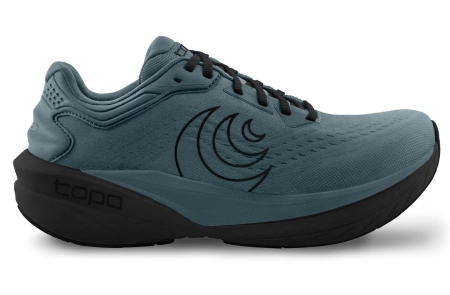
1. Topo Athletic Phantom 4 — Best overall anatomical fit
| Fit need | Drop | Toe/width approach | Ride |
|---|---|---|---|
| Toe splay without zero drop | 5 mm | Anatomical front; secure midfoot | Neutral daily trainer |
The Phantom 4 is where I start when a runner’s big-toe joint gets squeezed by conventional toe boxes but a zero-drop shoe would be a large change. Topo gives the forefoot a foot-shaped outline while keeping the heel and midfoot more contained. That combination is more useful than a shoe that is wide everywhere and lets the foot slide toward the front.
I still check the exact contact point. A roomy outline does not help if a seam or overlay lands on the bump, and its 5 mm drop may feel different from a runner’s current 10–12 mm trainer. I would run a short easy loop first, then inspect for redness after the shoe comes off. This is my broadest first try-on, not a claim that it suits every bunion shape.
What I like: Anatomical front without forcing zero drop; stable-feeling rear fit; useful as a normal daily trainer.
What I do not like: Not a true extra-wide width system; heel hold and arch shape still need an individual fit test.
My decision: Try it first when local pressure at the big-toe joint is the main complaint.
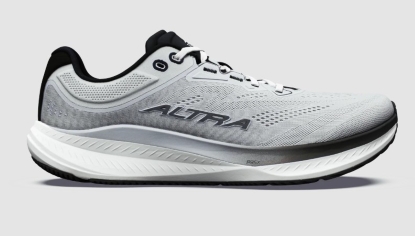
2. Altra Torin 9 — Best zero-drop toe room
| Fit need | Drop | Toe/width approach | Ride |
|---|---|---|---|
| Toe space with a flexible, level platform | 0 mm | FootShape front; check midfoot | Neutral, flexible daily running |
Torin 9 earns the toe-room slot because the FootShape front lets toes spread without asking them to line up inside a pointed silhouette. This is a new shoe, though—not my Torin 8 field notes in a fresh colorway. Altra changed the foam to P35X, updated the heel and upper, and added a Vibram XS DURA outsole. I use those facts to shortlist it, then judge the new fit on its own.
Zero drop is the decisive caveat. I will not recommend jumping from a high-drop trainer into a long Torin run simply because the forefoot feels free. I would alternate short easy outings and watch calf, Achilles and arch response. Also, toe-room language is not the same as guaranteed width; the Standard FootShape midfoot still has to fit your foot.
What I like: Generous toe shape; current outsole and foam update; a clear option for runners already happy in zero drop.
What I do not like: Zero drop needs a gradual transition for many; new-version feel and durability should not inherit Torin 8 mileage.
My decision: A strong option if toe shape is the problem and you already tolerate zero drop—or can transition patiently.
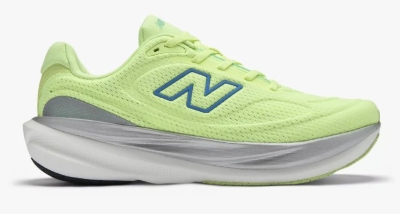
3. New Balance 1080v15 — Best true extra-wide option
| Fit need | Drop | Toe/width approach | Ride |
|---|---|---|---|
| Forefoot width beyond an anatomical outline | 6 mm | Men: D, 2E, 4E; women: B, D, 2E | Soft neutral daily running |
If a bunion is part of an overall wide forefoot, I stop telling the runner to buy a longer shoe. The 1080v15 comes in genuine width choices, including men’s 4E, and that makes it more useful than a supposedly ‘roomy’ standard-width model. I separate this version from my older 1080 experience: New Balance now uses Infinion foam, so predecessor cushioning impressions do not prove how the v15 rides.
I choose the narrowest width that leaves the big-toe joint unpressed while keeping the heel planted. A 4E that lets the foot swim can create rubbing somewhere else. Check both feet after ten minutes of jogging, then feel whether the knit stretches gently over the joint or folds into it. Width and depth matter together; a wider insole is not enough if the upper sits low over the bump.
What I like: Real 2E and 4E choices for men; accommodating soft upper; familiar daily-trainer role.
What I do not like: Soft ride will not suit every runner; maximum width can reduce lockdown if chosen indiscriminately.
My decision: My first comparison when a true width option matters more than a foot-shaped standard last.
4. HOKA Bondi 9 — Best rocker-and-cushion option

| Fit need | Drop | Toe/width approach | Ride |
|---|---|---|---|
| A smooth roll when push-off feels uncomfortable | 5 mm | Standard and Wide; verify medial seam | High-cushion rocker |
Bondi 9 makes my list for a different reason than Topo: its broad cushioned platform and rocker may make the transition through a step feel easier for a runner who dislikes bending hard over the big-toe joint. I treat that as a fit-and-ride preference to test, not a medical effect the shoe can promise. The height also makes it a less nimble choice than Phantom or Clifton.
I begin with the Wide version when the bunion is prominent, but I do not assume HOKA’s label solves the pressure point. The upper must clear the joint after the foot warms and swells; the heel must still stay secure. If the rocker feels like it tips you through push-off before you are ready, the extra foam will not compensate. I would choose it for easy and long road mileage, not intervals.
What I like: Pronounced rocker and protective underfoot feel; useful Wide option; steady easy-run platform.
What I do not like: Bulky for faster running; standard fit can still press the joint; rocker benefit varies by runner.
My decision: Try it when a smooth roll is more important than a light, flexible feel.
5. ASICS Gel-Nimbus 28 — Best soft upper and plush ride
| Fit need | Drop | Toe/width approach | Ride |
|---|---|---|---|
| Upper friction plus long-run comfort | 8 mm | Standard and selected Wide options | Plush neutral long-run shoe |
I include Nimbus 28 for the runner whose bunion reacts first to fabric and seams, not necessarily to every push-off. Its engineered knit wraps more gently than a stiff, heavily reinforced forefoot, while FF BLAST PLUS and PureGEL make it a comfortable long-run candidate. The current US men’s listing states an 8 mm drop; I do not carry over the older article’s 10 mm figure.
Soft material can still stretch tightly across a bump. I put the shoe on late in the day, jog, then look for a clear pressure outline over the first metatarsophalangeal joint. If a Wide variant removes that pressure without letting the heel move, it stays on the shortlist. If not, I move to a different last rather than assuming a plush shoe must be bunion-friendly.
What I like: Gentler-feeling knit upper; cushioned long-run ride; 8 mm geometry may feel familiar to road runners.
What I do not like: Plushness does not guarantee joint clearance; heavier and less responsive than a versatile tempo trainer.
My decision: Best considered when fabric contact is the chief irritation and the width passes a warm-foot test.
6. Brooks Glycerin GTS 23 — Best plush structured-support choice
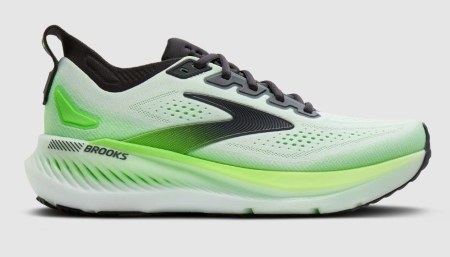
| Fit need | Drop | Toe/width approach | Ride |
|---|---|---|---|
| Bunion room plus a preferred guided ride | 8 mm | Men: medium, wide, extra-wide | Plush DNA TUNED with GuideRails |
Some runners simply feel better in a guided shoe, and a bunion does not cancel that preference. Glycerin GTS 23 pairs Brooks’ plush DNA TUNED ride with GuideRails and offers meaningful width choices. I do not rank it because support ‘corrects’ a bunion—there is no such shortcut. I rank it because it gives runners who already like structured support a way to search for enough forefoot space.
The 8 mm drop and width choices make it worth trying, although the toe-box outline is not anatomical like Topo’s. I would compare medium, 2E and 4E where available, then reject any width that leaves a hot spot at the bump or lets the heel float. If the neutral Phantom fits and feels composed, there is no reason to add support merely because a bunion is present.
What I like: Plush upper and ride; multiple widths; a supported option for runners who prefer GuideRails.
What I do not like: Heavy for faster sessions; support hardware does not itself create bunion clearance.
My decision: A fit-first stability alternative, not a treatment for the joint.
7. HOKA Arahi 9 — Best lighter guided option
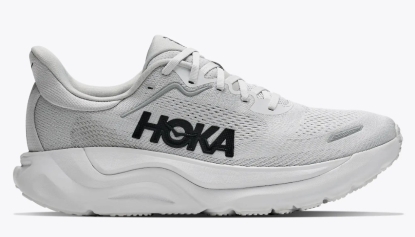
| Fit need | Drop | Toe/width approach | Ride |
|---|---|---|---|
| Moderate support without Bondi bulk | 8 mm | Standard and Wide | Enhanced H-Frame stability |
The Arahi 9 replaces Arahi 8 in this guide because HOKA has changed the platform: an enhanced H-Frame, dual-density foam and an updated upper. I like the concept for a runner who wants guidance but finds the Bondi too much shoe. This is a new-version fit recommendation, not a transfer of my Arahi 8 run notes.
The first question remains whether the bunion has its own space. The medial side has more structured mesh, so I would pay extra attention to where that material meets the joint. An 8 mm drop is also different from the lower-drop Arahi 8 story. I would test the Wide fit at easy pace, check the bump after the run, and keep this only if it feels calmer than a neutral shoe.
What I like: Lighter-feeling guided role; Wide option; current H-Frame design.
What I do not like: Medial upper may not clear every bunion; version 9 needs its own wear test and should not inherit Arahi 8 claims.
My decision: Consider it only when you prefer stability and the medial upper passes the pressure test.
8. Brooks Adrenaline GTS 25 — Best reliable daily stability
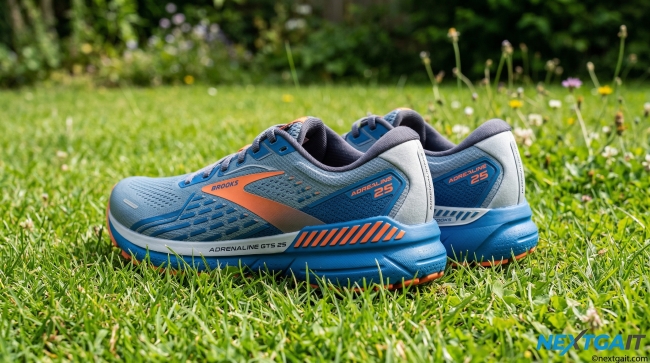
| Fit need | Drop | Toe/width approach | Ride |
|---|---|---|---|
| Support preference with adjustable widths | 10 mm | Narrow through extra-wide in US listings | Balanced cushioning with GuideRails |
Adrenaline GTS 25 stays because it is the current broadly available model while GTS 26 is still a preorder for November. Its strength is predictable daily support in several widths, not a uniquely bunion-shaped forefoot. If a runner has worn Adrenalines comfortably for years and now needs a little more medial joint space, the Wide or Extra Wide can be a sensible first try before changing the entire ride.
I will not recommend it solely because the foot rolls inward; overpronation is not the same thing as bunion pain. I check whether the upper leaves the joint free, whether the heel stays fixed in the chosen width, and whether the 10 mm drop feels familiar. If the toe-box taper still touches the bump, move on; the GuideRails cannot fix a poor forefoot fit.
What I like: Multiple widths; known daily-trainer character; structured option for runners who prefer it.
What I do not like: Conventional toe shape may fail a pronounced bunion; 10 mm geometry is not a universal answer.
My decision: A continuity pick for existing Adrenaline fans, not my first anatomical-fit recommendation.
9. HOKA Clifton 11 — Best lighter cushioned rocker

| Fit need | Drop | Toe/width approach | Ride |
|---|---|---|---|
| Smooth easy-run ride with less bulk | 8 mm | Standard, Wide and selected X-Wide | Cushioned daily rocker |
Clifton 11 updates the lighter HOKA option in this list. Compared with Bondi, it feels more like a normal daily trainer to me: enough cushioning for easy road miles without hauling a max-cushion platform through every stride. The newer upper and sockliner may improve step-in comfort, but I refuse to equate that with proven bunion clearance until the shoe passes the actual pressure-point test.
HOKA lists an 8 mm drop for the Clifton 11. If you liked Clifton 10, do not assume the 11 fits identically. I would try the Standard, Wide or X-Wide offered for your size and check whether the sidewall or upper meets the bump after ten minutes. Extra length is a poor fix if width or depth is the real issue.
What I like: Less bulky than Bondi; smooth rocker; multiple width choices in current listings.
What I do not like: Not an anatomical last; an updated upper may still press a prominent joint.
My decision: My lighter HOKA try-on for mild-to-moderate pressure, with fit decided in motion.
10. Saucony Triumph 24 — Best lively cushioned alternative
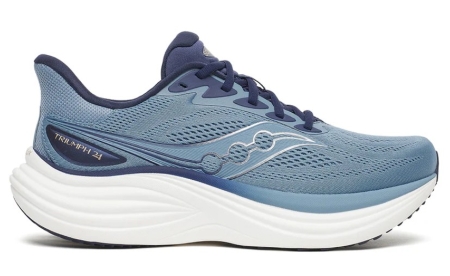
| Fit need | Drop | Toe/width approach | Ride |
|---|---|---|---|
| Comfort without a maximal rocker | 10 mm | Check current width/fit by size | Cushioned, more energetic daily feel |
Triumph 24 is tenth because it is not a bunion specialist. I keep it here for a runner with a mild bump who wants a cushioned daily shoe but finds the Bondi too bulky and the Torin too flat. Its lively platform makes long easy runs feel less subdued than some of the plushest models. That is a reason to try it, not a reason to ignore forefoot shape.
The traditional toe outline is the deciding risk. I would run a short test in the exact width and socks I plan to use, then check for rubbing at the medial joint. The 10 mm drop is simply a geometry difference—not something I can call good or bad for every bunion. If toe clearance requires sizing so long that the heel slips, I would go back to Topo or a true-wide New Balance.
What I like: Livelier cushioning than many comfort-first options; familiar daily-run use; potential for mild bunion cases.
What I do not like: Less forefoot-specific than the leaders; standard toe shape may fail a larger bunion.
My decision: An alternative only after a real fit test, not a default bunion purchase.
Ken’s Ranking Rule: Clearance First, Ride Second
I rank the shoe around the joint, not the foam. My first veto is pressure at the inside of the big-toe joint after warming up; my second is a heel or midfoot that slips because the shoe was sized too long or too wide. Only after those two checks do I compare the ride, rocker, drop, stability and price. Cushion can change how a run feels, but it cannot make a tight upper fit.
| What I check | Pass | Reject |
|---|---|---|
| Joint clearance | Room in width and depth after ten minutes of jogging | Bump touches an overlay or the upper leaves a red pressure mark |
| Foot hold | Heel and midfoot stay seated in the chosen width | Foot slides forward after sizing up or choosing excessive width |
| Ride | I can move through push-off without guarding the joint | Rocker, stiffness or flexibility makes the step more uncomfortable |
| Transition | Drop and support feel manageable beside the current shoe | Several geometry changes plus a sudden mileage increase |
I separate direct model experience from design inference. Torin 9, Arahi 9 and Clifton 11 are new versions with changed construction; I do not assign them the miles or exact fit verdicts of Torin 8, Arahi 8 or Clifton 10. The newly listed Adrenaline GTS 26 is still a preorder, so GTS 25 remains the current purchasable pick in this guide.
How I Fit a Running Shoe Around a Bunion
- Try shoes late in the day with the socks you run in; fit your larger foot.
- Remove the insole and stand on it. If the forefoot spills past the platform, try another width or shape—not simply more length.
- Lace for a secure heel, then jog for ten minutes. Feel for a seam, overlay or tight stretch directly over the joint.
- Run a short steady segment and several gentle turns. The foot should not slide forward or sideways.
- Take the shoe off and look for localized redness or rubbing. If the joint is irritated, reject the fit even if the foam felt wonderful.
I use the same width-versus-shape distinction in my wide-running-shoe guide. If discomfort sits under the ball of the foot rather than at the bunion itself, the choice may be different; see my metatarsalgia shoe guide and consider a clinical assessment when symptoms persist.
Full Comparison Table
| Shoe | Best fit reason | Drop | Main fit veto |
|---|---|---|---|
| Topo Athletic Phantom 4 | Toe splay without zero drop | 5 mm | Not a true extra-wide width system; heel hold and arch shape still need an individual fit test. |
| Altra Torin 9 | Toe space with a flexible, level platform | 0 mm | Zero drop needs a gradual transition for many; new-version feel and durability should not inherit Torin 8 mileage. |
| New Balance 1080v15 | Forefoot width beyond an anatomical outline | 6 mm | Soft ride will not suit every runner; maximum width can reduce lockdown if chosen indiscriminately. |
| HOKA Bondi 9 | A smooth roll when push-off feels uncomfortable | 5 mm | Bulky for faster running; standard fit can still press the joint; rocker benefit varies by runner. |
| ASICS Gel-Nimbus 28 | Upper friction plus long-run comfort | 8 mm | Plushness does not guarantee joint clearance; heavier and less responsive than a versatile tempo trainer. |
| Brooks Glycerin GTS 23 | Bunion room plus a preferred guided ride | 8 mm | Heavy for faster sessions; support hardware does not itself create bunion clearance. |
| HOKA Arahi 9 | Moderate support without Bondi bulk | 8 mm | Medial upper may not clear every bunion; version 9 needs its own wear test and should not inherit Arahi 8 claims. |
| Brooks Adrenaline GTS 25 | Support preference with adjustable widths | 10 mm | Conventional toe shape may fail a pronounced bunion; 10 mm geometry is not a universal answer. |
| HOKA Clifton 11 | Smooth easy-run ride with less bulk | 8 mm | Not an anatomical last; an updated upper may still press a prominent joint. |
| Saucony Triumph 24 | Comfort without a maximal rocker | 10 mm | Less forefoot-specific than the leaders; standard toe shape may fail a larger bunion. |
Frequently Asked Questions
What are the best running shoes for bunions?
I start with Topo Phantom 4 when the big-toe joint needs a foot-shaped front, New Balance 1080v15 when the whole forefoot needs a true width such as 2E or 4E, and Bondi 9 when a cushioned rocker feels better at push-off. The winning pair is the one that leaves no pressure after a warm-foot test.
Can running shoes fix a bunion?
No. A better-fitting shoe may reduce rubbing or pressure, but it does not reverse the joint deformity. Persistent pain, swelling or worsening symptoms deserve assessment by a podiatrist or other qualified clinician.
Is a wide shoe always better?
No. A shoe can be wide yet shallow over the bump, or so loose that the foot slides. I check toe-box shape and depth, upper seams, and heel hold as well as labeled width.
Should I size up for a bunion?
Not automatically. Extra length may move a seam away from the joint but can create heel slip. I compare the correct length in a wider or differently shaped last first.
Are zero-drop shoes better for bunions?
Not inherently. Altra Torin 9 can give toes more space, but zero drop changes loading for many runners. I would choose it for fit and transition gradually rather than treat drop as a bunion remedy.
Do rocker shoes help bunion pain?
Some runners prefer a rocker because the step feels smoother through push-off, but individual comfort varies and a rocker cannot overcome a tight upper. I compare it with a flexible shoe during a short run instead of assuming it will help.
Do I need stability shoes if I have a bunion?
No. I choose stability only if the runner already prefers that guided feel or a clinician recommends it for their situation. A stability label does not create extra room at the big-toe joint.
Can I keep running with a bunion?
Many people can run if footwear and symptoms allow, but I would not run through escalating joint pain, marked redness, swelling or a change in walking. A clinician can distinguish a bunion from other causes of forefoot pain.
What should I avoid in a bunion running shoe?
I reject a pointed or shallow toe box, a stiff seam directly over the joint, a heel that slips after sizing up, or numbness and redness after a brief test run.
My Final Recommendation
If I had to start with one pair for a runner whose bunion is rubbed by conventional shoes, I would try Topo Phantom 4: a foot-shaped front and a held midfoot without a zero-drop leap. If the whole forefoot needs more width, I would go straight to the 1080v15 in the correct 2E or 4E rather than buying a longer standard shoe. If the big-toe joint dislikes push-off, I would compare Bondi 9’s rocker with a more flexible shoe and keep only the one that feels better after an actual run. The best choice is the pair that clears the joint while keeping the rest of the foot secure.
I would not keep running through a persistent flare just because a new shoe feels promising. Footwear can address pressure; it is not a diagnosis or a cure. If symptoms change or do not settle, I would bring the shoes and the problem to a podiatrist. For related fit decisions, my overpronation guide explains when a guided ride may be worth trying; it is not a bunion requirement.

Written by Ken — the recreational distance runner behind NextGait. I have been running for 12 years and have raced from 5Ks to a 50K. More about me →