
The best running insoles for heavy runners are not automatically the firmest or thickest inserts. The right pair must match your arch contact and fit inside your running shoe without lifting the heel, crowding the toes, or changing a comfortable stride.
My first choice for most runners is the CURREX RUNPRO because it comes in three profiles, flexes with the shoe, and does not add heel-to-toe drop. If you want firmer support that can be renewed instead of replaced as one unit, look at the Tread Labs Pace 2. If your priority is soft cushioning in a roomy shoe and you know you prefer a high arch, the Superfeet Run Cushion High Arch is the better match.
Those are starting points, not prescriptions. Body mass can make foam compression and shoe-volume problems more noticeable, but it does not tell me your arch height, foot width, or whether an insert will feel good. Start with fit. Stop if the insert creates numbness, a new hot spot, or pain that changes how you run.
Quick picks: best running insoles for heavy runners
| Pick | Best for | Fit warning | Check price |
|---|---|---|---|
| CURREX RUNPRO | Most runners who want flexible, run-specific support | Choose Low, Medium, or High profile; trace the stock liner before trimming | See CURREX RUNPRO options |
| Tread Labs Pace 2 | Firm support, four arch heights, replaceable top cover | More arch presence; confirm both height and shoe volume | See Tread Labs Pace 2 options |
| Superfeet Run Cushion High Arch | Soft cushioning for a known high-arch preference | Max thickness needs a roomy shoe with a removable liner | See Superfeet Run Cushion options |
If you do not specifically need a heavier-runner shortlist, use my broader guide to the best insoles for running. It covers a wider range of shoe volumes and support preferences.
How I chose these insoles
This is a fit-first editorial ranking. I compared current manufacturer geometry, intended footwear, arch-profile choices, thickness, cushioning structure, sizing, and replacement design. I then checked those specifications against running-orthosis research and the practical failure modes I watch for whenever a runner changes the inside geometry of a shoe.
I did not assign made-up laboratory scores or claim controlled mileage in all ten products. A product page can verify that an insert has a medial post, replaceable cover, or high-volume shape. It cannot prove that the insert will correct your alignment, prevent an injury, or relieve your pain.
- Fit inside the shoe: heel hold, instep pressure, toe room, and whether the stock liner is removable.
- Choice within the model: multiple arch heights or thicknesses score better than a one-shape-fits-all claim.
- Structure that keeps its job clear: flexible support, firm support, or cushioning—without pretending they are interchangeable.
- Current availability: model names and intended use were checked against manufacturer pages.
- Honest boundary: marketing claims about pain, alignment, or injury were not treated as independent evidence.
Comparison: volume and feel matter more than the label
| Insole | Feel | Shoe volume | Best use | Pass if… |
|---|---|---|---|---|
| CURREX RUNPRO | Flexible | Low–medium | Daily running | The selected profile contacts your arch without poking it |
| Tread Labs Pace 2 | Firm | Medium | Long-life support system | One of four arch heights matches and heel hold remains secure |
| Superfeet Run Cushion High Arch | Soft, lightly structured | High | High-arch cushioning | Your shoe has removable liner and enough instep room |
| SOLE Performance Thick | Firm-moldable | High | Roomy shoes; shape customization | Molding does not create pressure or heel lift |
| PowerStep PULSE Maxx | Firm, posted | Medium | Runner already seeking a posted design | The 2-degree post is appropriate for your known need |
| Superfeet All-Purpose Support High Arch | Firm | High | High-arch support in roomy shoes | You want more structure than the Run Cushion model |
| Spenco Total Support Max | Rigid | Medium–high | Strong arch presence plus forefoot pad | The metatarsal contour sits in the right place |
| Sidas Run 3Feet Protect High | Structured, cushioned heel | Medium | High arches and heel cushioning | The high profile matches your foot and shoe |
| Dr. Scholl’s Heavy Duty Support | Cushioned support | Medium | Budget, walking/easy-use crossover | You accept that it is not a running-specific design |
| Cadence EX+MP | Semi-rigid, thick foam | High | Forefoot cushioning with met pad | A retailer or clinician confirms pad placement |
What changes when a runner is heavier?
The useful answer is more precise than “you need more support.” A runner with greater body mass may notice a soft sockliner compressing sooner, but compression is only one part of the system. Shoe foam, foot width, instep height, stride, surface, pace, and total weekly exposure all influence what the setup feels like. An insert cannot be selected from body weight alone.
I pay closest attention to volume retention. A thick insert raises the foot inside the same upper. That can loosen the heel while tightening the midfoot and forefoot at the same time. Heavier runners are often told to add cushioning, yet the extra material can make an otherwise good shoe worse by reducing the space the foot needs as it spreads under load.
Durability also needs a better definition. Visible flattening does not automatically mean the support geometry has failed, and an insert that still looks new may already be wrong for your shoe. Track changes you can actually observe: the heel begins slipping, the arch contact becomes localized, the top cover bunches, the insert curls, or the shoe no longer feels balanced from left to right.
Finally, separate cushioning from guidance. A soft layer can change step-in feel. A shaped shell can change pressure distribution.
Neither property proves that an insert prevents injury, and neither is universally better for a larger runner. The right target is a quiet fit: secure heel, uncompressed toes, even contact, and no reason to alter your stride.
Your shoe remains the larger decision. If its midsole feels unstable, the upper does not hold the foot, or the platform is too narrow, an insert is unlikely to rescue it. Compare shoe geometry first in the heavy-runner shoe guide, then use an insole only for a specific inside-the-shoe problem.
The 10 best running insoles for heavy runners
1. CURREX RUNPRO — best overall
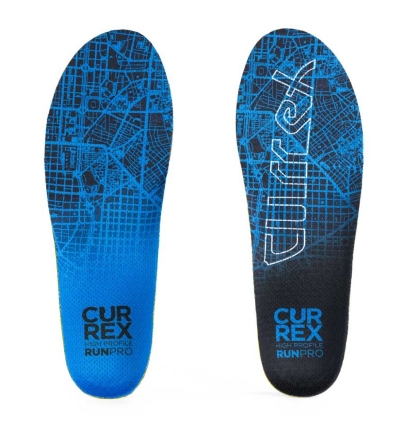
Why it leads: RUNPRO gives you Low, Medium, and High profiles instead of forcing every foot onto the same arch. Its flexible, decoupled heel and zero-drop construction make it easier to preserve the character of a running shoe than a thick rigid insert.
The practical advantage for a heavier runner is not a promise of correction. It is the ability to choose support contact without automatically choosing maximum stiffness. Match the profile, trace the original sockliner, trim conservatively, and recheck the heel counter before running.
Skip it if: you specifically want a rigid platform or your stock liner is glued in.
2. Tread Labs Pace 2 — best durable support system
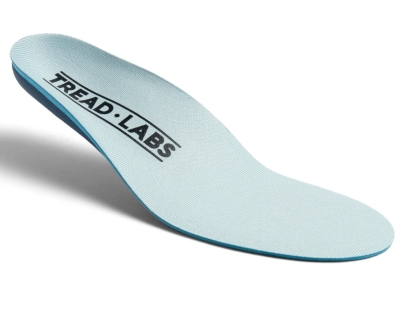
Pace 2 is the current 2026 version of Tread Labs’ firm-support platform. It comes in four arch heights—Low through Extra High—and separates the molded support from a replaceable top cover. That design is appealing when repeated foam compression is your main durability complaint.
Do not choose Extra High because it sounds more supportive. Choose the lowest profile that makes broad, comfortable contact without a concentrated arch ridge. Pace 2 is a substantial insert, so it belongs in footwear with a removable liner and enough vertical room.
Skip it if: firm arch contact bothers you or your shoe already feels snug across the instep. Check Tread Labs Pace 2 availability.
3. Superfeet Run Cushion High Arch — best soft high-arch option
This lightly structured model is softer and more adaptive than Superfeet’s classic Green. Superfeet classifies it as High Arch, Max Thickness, and Soft Cushion. That combination can work well when a runner already knows they prefer high-arch contact but does not want a hard shell dominating the ride.
Max thickness is the deal-breaker. If the insert lifts your heel toward the collar or presses the laces into the top of your foot, the shoe is too shallow for it. That is a fit failure, not a break-in challenge.
Skip it if: your arch is low or your shoe is close fitting. Check Superfeet Run Cushion High Arch availability.
4. SOLE Performance Thick — best heat-moldable choice
SOLE’s Performance footbeds use recycled cork and can be heat molded or wear molded. The line comes in Thin, Medium, and Thick; this pick is specifically the Thick version for a roomy running shoe where extra underfoot volume is welcome.
Molding can refine contact, but it does not turn an over-the-counter insert into a clinical prescription. Follow SOLE’s temperature and timing directions exactly. Before molding, confirm that the unmolded insert does not steal toe room or heel security.
Skip it if: your shoe has a shallow heel cup; use a thinner SOLE version instead. Check SOLE Performance Thick availability.
5. PowerStep PULSE Maxx — best specialized posted option
PULSE Maxx combines a firm-but-flexible polypropylene shell with a 2-degree medial post. It is designed for running footwear with a removable factory liner. The posted heel makes this the most specialized selection in the top five.
I would not use it as a default response to body weight, a flat wet footprint, or a video that appears to show pronation. Pronation is normal. Choose a posted insert because you already know that geometry is comfortable or because a qualified clinician has given you a reason to try it.
Skip it if: you are experimenting blindly with “correction.” For shoe-level choices, see the separate guide to running shoes for overpronation. Check PowerStep PULSE Maxx availability.
6. Superfeet All-Purpose Support High Arch — best firm classic
This is the current name for Superfeet Green. It is a firm, max-thickness, high-arch insert intended for roomy-to-moderate footwear with removable liners. It can be used for running, but the feel is more structured and less adaptive than the Run Cushion High Arch.
Pick it when you already like a pronounced, firm platform. Reject it if you feel a narrow ridge under the arch, if your heel rides high, or if it makes a stable shoe feel awkward.
Skip it if: you want soft cushioning or have limited shoe depth. Check Superfeet High Arch availability.
7. Spenco Total Support Max — best rigid option with forefoot contour
Total Support Max uses Spenco’s stiffer support cradle, a forefoot pad, and multi-density cushioning. Spenco lists running among its intended activities. The insert has more moving parts in the fit decision than a flat cushion: arch height, heel depth, and metatarsal-pad position all need to line up.
A misplaced met pad can feel like a lump beneath the ball of the foot. It should sit behind—not directly under—the metatarsal heads. If you cannot locate it comfortably, this is the wrong shape.
Skip it if: you dislike rigid support or do not want a metatarsal contour. Check Spenco Total Support Max availability.
8. Sidas Run 3Feet Protect High — best high-arch heel-cushion option
Sidas builds this running insert around a high-arch profile, EVA midfoot reinforcement, a gel heel pad, and an EVA-rubber forefoot structure. It is a sensible comparison for a runner who wants defined arch contact plus targeted heel cushioning.
The High label is meaningful: this is not the version to buy for a low arch because “more support” sounds safer. Sidas also sells Mid and Low profiles in related running lines. US availability can be less predictable than the first seven picks.
Skip it if: you cannot try or return the correct profile easily. Check Sidas Run 3Feet availability.
9. Dr. Scholl’s Heavy Duty Support — best budget crossover
This is the only product here explicitly marketed to men over 200 pounds, tall men, or men with wide feet. Treat that as the manufacturer’s intended segment—not as a rule that every runner above 200 pounds needs this insert.
Dr. Scholl’s lists casual shoes, sneakers, and work boots rather than running as the core use. I see it as a low-cost crossover to evaluate in walking shoes or easy-use footwear, not the strongest choice for a performance running setup. The brand instructs replacement every six months or at visible wear.
Skip it if: you want a run-specific profile or need women’s sizing; the brand’s Extra Support line is the closer counterpart. Check Dr. Scholl’s Heavy Duty availability.
10. Cadence EX+MP — best retailer-fitted forefoot option
Cadence EX+MP combines a semi-rigid shell, 7 mm of foam under the heel and forefoot, and a metatarsal pad. It is sold through stores and clinician offices rather than direct online checkout, which is why it ranks lower despite its detailed geometry.
That retail constraint can be useful: you can check whether the pad sits behind the metatarsal heads and whether the 7 mm platform leaves enough shoe volume. Do not buy a met-pad design solely because you have forefoot pain; persistent pain needs assessment.
Skip it if: you cannot try it with the exact running shoe. Check Cadence insole availability.
My four-step insole fit test
1. Establish the stock-shoe baseline
If the shoe is already comfortable, secure, and stable, an aftermarket insert is optional. Name the problem you are trying to solve: a worn sockliner, unwanted space, a preferred arch feel, or a clinician-directed change. “I am a heavy runner” is not specific enough.
2. Replace; do not stack
For a full-length insert, remove the factory sockliner unless the manufacturer explicitly says otherwise. Use it as a trimming template. Set the new insert flat against the shoe’s heel before checking length. Stacking two full-length liners commonly steals instep and toe volume.
3. Run the three-zone check
- Heel: no new lift, collar pressure, or side-to-side rocking.
- Midfoot: broad contact is acceptable; a sharp ridge or localized pressure is not.
- Forefoot: toes can spread and the ball of the foot is not pushed into the upper.
If heel lift appears, do not automatically crank the laces tighter. Use the checks in my heel-slip guide to separate lacing from a volume mismatch.
4. Progress from walk to easy run
Wear the setup indoors first so it remains returnable. Then walk, take a short easy run, and inspect your feet and the insert. A mild awareness of a different contour may settle. Numbness, burning, blistering, a new focal pain, or a gait change is a rejection signal—not something to push through for ten miles.
What the evidence can—and cannot—tell us
Running orthoses can change where pressure is distributed. A 2024 systematic review found reductions at parts of the heel and forefoot alongside increased midfoot pressure, with effects varying by orthosis design. That supports a fit-specific approach; it does not prove that a retail insert corrects a runner’s entire kinetic chain. See the systematic review of running kinetics and kinematics.
Clinical outcomes are less tidy. A 2023 randomized trial reported a significant comfort improvement, but its speed and injury differences were not statistically significant. Broader reviews have reached mixed conclusions and repeatedly note differences in populations, orthosis designs, and study quality. Read the running comfort trial and the runner-focused systematic review.
My useful takeaway is deliberately narrow: use comfort and shoe fit as early filters; use a clear failure rule; and do not buy an insert as a promised cure. If plantar heel pain, numbness, swelling, or pain farther up the leg persists, an insole roundup is the wrong endpoint. The plantar-fasciitis shoe guide explains footwear tradeoffs, but diagnosis and treatment belong with a qualified clinician.
FAQ
Do heavier runners need special insoles?
No. A heavier runner needs a special insole only when the stock liner or shoe fit creates a specific problem the insert can reasonably address. Body mass may make compression or volume tradeoffs more noticeable, but it does not determine arch height or prescribe stiffness.
Is 200 pounds the cutoff for a heavy-runner insole?
No. Two hundred pounds is a marketing threshold used for some products, including Dr. Scholl’s Heavy Duty Support. It is not a biological cutoff. Choose by the problem, the shoe’s available volume, and how the insert feels in motion.
Should I remove the original running-shoe insole?
Usually, yes. Most full-length aftermarket inserts are designed to replace a removable sockliner. Stacking them can lift the heel and crowd the forefoot. Follow the insert and shoe instructions when the original liner is glued down or non-removable.
Are firm insoles better for heavier runners?
Not automatically. Firm support can retain its shape, but it can also create concentrated arch pressure or change how a shoe feels. The better insole is the least intrusive design that solves the stated fit problem and remains comfortable while running.
How long should running insoles last?
There is no honest universal mileage number. Inspect the top cover, foam compression, cracks, curling, odor retention, and any change in fit. Follow the manufacturer’s interval when one is provided, but replace earlier if the insert is damaged or no longer sits flat.
Can running insoles cure plantar fasciitis or knee pain?
No retail insole can be promised to cure plantar fasciitis or knee pain. Orthoses may help some runners in some contexts, but symptoms have multiple possible causes. Stop an insert that worsens symptoms and seek qualified care for persistent or significant pain.
Bottom line
Start with CURREX RUNPRO if you want a flexible running-specific insert with three profile choices. Choose Tread Labs Pace 2 when firm support and a renewable top cover matter more than minimal feel. Use Superfeet Run Cushion High Arch only when you know a soft, high, max-thickness platform fits both your foot and your shoe.
If none of those descriptions names your actual problem, keep the stock liner. A comfortable shoe does not need an upgrade simply because the runner is heavier. When the whole shoe—not just the sockliner—is the issue, move to my fit-based guide to the best running shoes for heavy runners.

Written by Ken — 12 years of running, 12,500+ miles, 63 shoes tested, and 36 races from 5Ks to a 50K ultra. I run 30–40 miles a week on the Atlantic City Boardwalk and evaluate gear through the fit and training decisions it changes—not marketing promises. More about Ken.