
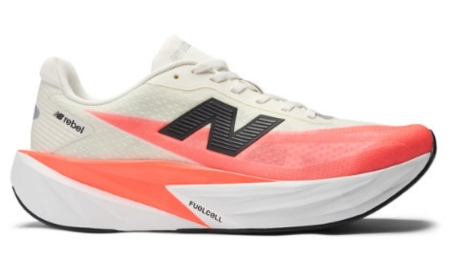
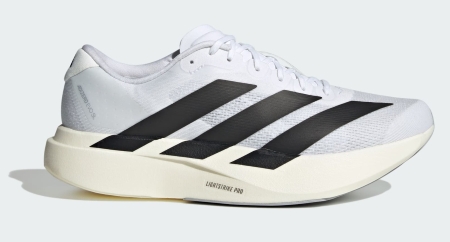
In my New Balance Rebel v5 vs adidas Adizero EVO SL comparison, I choose Rebel for short, playful pace changes and the original EVO SL for a broader week of easy running, progressions, and longer fast stretches. If I can buy only one for my current training, I take EVO SL—provided its midfoot and tongue still feel right after my foot warms. Neither shoe earns the purchase on foam feel alone.
I have 60 running miles in Rebel v5 and 359 in EVO SL, both in men’s US 10.5 D. I run about 30–40 miles a week, much of it on South Jersey asphalt and boardwalk. That is enough to describe a real preference, but the uneven mileage matters: I know far more about how my adidas pair has aged than how long my Rebel will last.
The choice in one look
| The run I need to cover | My first try | The veto |
|---|---|---|
| Fartlek with short surges and jog recoveries | Rebel v5 | Soft rearfoot or upper movement makes turns feel untidy |
| Steady run that becomes a progression | EVO SL | Midfoot or tongue fit needs repeated adjustment |
| Faster long-run segment | EVO SL | Its ride loses coherence as I tire |
| Easy mileage plus one workout in the same shoe | EVO SL | I prefer Rebel’s fit and it remains settled at slow pace |
| Very slow recovery miles | Neither first | A calmer daily trainer may suit the actual week better |
| The exact pair | New Balance FuelCell Rebel v5 | adidas Adizero EVO SL (original) |
|---|---|---|
| My logged distance | 60 miles | 359 miles |
| Heel-to-toe drop on my spec card | 6 mm | 6 mm for the original model |
| Midsole | FuelCell PEBA/EVA blend | Full-length Lightstrike Pro |
| Full-length propulsion plate | No | No |
| My first use case | Short fartlek surges | Progressions and faster long-run segments |
Both are light, energetic shoes; neither gets its character from a full-length propulsion plate. Both show a 6 mm drop on the spec cards for the versions I am comparing. The equal printed offset does not make the foam, platform or upper feel alike. The next question is which of those differences I can use every week.
Two logs, two different levels of certainty
At the Cooper River paved loop, Rebel v5 clicked for me around 7:30 per mile. The forefoot felt free and springy as I changed rhythm. I did not need to hold one precise cadence to enjoy it. Its difficult day came during an 11-mile Atlantic City run in heavy rain. By mile six, the upper was saturated; the final five miles felt heavier and noisier. That is an upper and comfort observation. It does not prove that the outsole will slip on every wet surface.
EVO SL earned its place differently. In cool mist near the Margate beach shoulder, I trusted the outsole on that damp stretch and could settle into the run rather than keep checking my footing. A separate heavy-rain outing saturated its upper too. I would not turn one confident misty run into an all-weather endorsement. I separate the surface under the sole from water retained in the upper, because both can change a wet run for different reasons.
At 359 miles, my EVO SL has visible outsole smoothing and the midsole feels softer than it did when new; the upper is still intact. Rebel has only 60 miles, with light early wear. Those observations are useful in a buying decision, but a 359-to-60 comparison is not a fair durability race.
My evidence boundary: Rebel’s current ride and fit are clear to me; its lifetime wear is still open. EVO SL has a mature mileage record on my foot. Neither log proves a guaranteed speed gain, a universal replacement distance or a medical benefit.
The difference underfoot is not the listed drop
Rebel v5 uses a FuelCell blend of PEBA and EVA. Its softer, more flexible feel lets me change pace without a strong instruction from the shoe. EVO SL uses full-length Lightstrike Pro and a more rolling geometry. I feel its energy most when I settle into a straight, repeatable rhythm. The foam names describe construction, not an outcome on the clock.
For my stride, Rebel gives a lively forefoot but asks me to keep the softer rearfoot centered on turns or tired legs. EVO SL feels more natural when a steady run gradually gets quicker; its advantage is range across the week, not a race-shoe effect from a plate. I still check whether the tall, responsive platform feels predictable when my cadence drops. A fast shoe that only feels good during the fastest 15 minutes is a poor one-shoe purchase.
I would not infer calf or knee load from a 6 mm label shared by both models. The height, flex, rocker and my own landing alter the sensation. If you want to understand why these foams and shapes can feel so different, my midsole foam guide explains the terms without turning one material into a winner.
Fit decides whether the ride is usable
In my US 10.5 D, Rebel leaves more freedom around the forefoot and feels softer around the rear. I like that when the next surge is spontaneous. But a front that feels generous at step-in can still let the foot slide forward if the midfoot is not held. I check it after warming up, not only on a store floor.
EVO SL holds my midfoot more like a performance trainer, with enough room at the toes in the socks I use. I watch the tongue position and heel hold carefully. A shoe can fit in length yet require too much lace tension to keep the foot centered; if that happens, the foam cannot rescue the purchase. I would not assume the same US size gives another runner the same result.
- Walk, then jog: I leave room ahead of the longest toe and note any pressure at the instep or little toe after the upper warms.
- Add a broad turn: Rebel should not let my heel or forefoot wander; EVO SL should not need painful lacing to stay in place.
- Finish with a short surge: I reject forward slide or a shifting tongue before deciding which ride feels faster.
If width is the sticking point, I use my running-shoe fit guide and width guide instead of buying a longer shoe to manufacture forefoot room.
Four runs that reveal the real winner
Easy miles before the workout
I can jog in either shoe, but I do not buy them principally for the slowest recovery days. Rebel feels pleasant if its soft platform stays centered when I slow down. EVO SL is useful when an easy run may grow into a steady finish; I check that it does not keep tempting me into moderate pace. If most of the week is relaxed mileage, my daily trainer picks are a more sensible starting point.
Short fartlek and frequent pace changes
This is Rebel’s strongest argument in my rotation. The Cooper River run showed how quickly I can move from cruising to a short surge without waiting for the shoe to find a rocker rhythm. I choose it when the fast segments are brief and the recoveries are real jogs. If I have to steer the rearfoot through every turn, I switch; playful does not mean sloppy. My fartlek guide gives the session context behind that choice.
Progression and continuous tempo
I choose EVO SL when the second half of a run becomes gradually quicker or when I want a smooth sustained tempo. The Lightstrike Pro ride makes that rhythm enjoyable in my stride without a full-length plate. Rebel can do tempo too, particularly when I want flexibility rather than a directed roll. I would decide by the final ten minutes: does my foot stay centered, and can I keep effort controlled without fighting the shoe? My tempo-run guide is where I set that effort before choosing a pair.
Faster long run and tired-leg finish
EVO SL gets my first try for a longer run with a planned quicker finish. Its 359-mile log gives me a mature view of its fit and changing foam feel. Rebel can cover longer miles for me, but its 60-mile record does not justify a broad durability claim. In either pair I monitor the heel, toe room and line through a turn late in the run. If the shoe needs conscious correction when my stride shortens, I use a calmer long-run option next time.
Rain, grip and what my wear actually says
The wet stories need two separate answers. In heavy rain, Rebel’s upper soaked through and became unpleasantly heavy on my 11-miler. My EVO SL upper also held water in a downpour. In lighter Margate mist, its outsole felt secure on the surface I ran. Those are different conditions. I will not call either model universally safe or unsafe on wet paint, metal or algae-covered boards because a shoe can grip one damp surface and surprise me on another.
EVO SL uses Continental rubber in its road outsole. I still check the exact patch of pavement before picking up speed. Rebel’s outsole condition at 60 miles is encouraging but too young to rank for longevity. On either pair I look for loss of traction where I actually land, upper stretch that changes lockdown, and a ride that no longer matches its job. For a practical retirement decision, see my running-shoe replacement guide.
This is also where value changes with time. My EVO SL has served many kinds of runs for 359 miles, even as the foam has softened. Rebel has earned a fun workout role but has not yet proved the same long-term range. I would pay for the shoe I will actually reach for three times a week, not the one that wins a two-minute bounce test.
Who I would buy each for—and when I would leave both
| If this is your missing job | My starting point | What could overturn it |
|---|---|---|
| A playful second shoe for short workouts | Rebel v5 | Fit moves on turns or the soft platform feels vague when tired |
| One fast daily trainer for easy-to-tempo variety | EVO SL | Tongue or midfoot fit needs constant adjustment |
| Frequent fast finishes in long runs | EVO SL | The ride loses control or the upper fit changes late |
| A genuinely quiet recovery shoe | Look beyond both | Their energy encourages more pace than the day needs |
| A dedicated plated race feel | Look beyond both | Neither supplies that specific full-length plate experience |
If I already own a quick daily trainer, Rebel makes sense only if its looser pace-change feel is a distinct weekly need. If I own a calm daily shoe and need one faster companion that still covers ordinary miles, EVO SL is the stronger first audition. I check the overlap with my rotation guide. For a nearby alternative to Rebel’s freer feel, I compare it with Mach 7 in my Mach versus Rebel article.
For a deeper account of each line, read my Rebel review and EVO SL review. This comparison answers the narrower purchase question: which exact pair fills the empty slot in my week?
My three-run test before I commit
I make the first check indoors before buying: the same socks, a short jog, a broad turn, and a few strides. My in-store shoe test is the checklist I use when a shop has room to move. I only take the shoes through the outdoor runs below if the seller’s trial or return policy allows it, or after I have decided to keep them. I never assume a worn pair can be returned.
- Run one—fit: easy pace in normal socks, then a broad turn. I note heel movement, tongue position and pressure after the foot warms.
- Run two—range: an easy start, a few relaxed strides and a controlled steady segment. I keep the lacing unchanged and ask whether both slow and quicker paces feel organized.
- Run three—the missing job: a real fartlek for Rebel or a real progression for EVO SL, ending at the planned distance. The final minutes count more than the first exciting strides.
I would keep neither if both require fit workarounds. A discount does not change where the shoe bends under my toes or whether I have to steer it late in a run.
FAQ: Rebel v5 or adidas EVO SL?
Is New Balance Rebel v5 or adidas Adizero EVO SL better overall?
For my one-shoe fast daily role, I choose EVO SL because it covers more of my easy-to-tempo week and I have a mature 359-mile log. I choose Rebel v5 when short fartlek surges and a freer forefoot are the main job. Fit can reverse either recommendation.
Which feels better for fartlek?
Rebel v5 is my first choice for short surges with real jog recoveries. Its flexible, springy feel made the Cooper River session easy to change rhythm in. EVO SL suits a longer, steadier acceleration better for me.
Which is better for long runs?
I start with EVO SL for a long run with a planned faster finish. Rebel can cover longer mileage for me, but its 60-mile log gives less wear confidence than my 359-mile EVO SL pair. Warm-foot fit remains the deciding test.
Do Rebel v5 and EVO SL both have a plate?
Neither uses a full-length propulsion plate. Rebel v5 gets its feel from a PEBA/EVA FuelCell blend and flexible geometry; EVO SL uses Lightstrike Pro and a rolling road-shoe shape. Their similar listed drop does not make them feel the same.
Which fits wider feet?
My Rebel v5 gives me more forefoot freedom, while EVO SL holds my midfoot more closely. Width depends on the whole last, not only the toe box; I would try both after the foot warms and check heel hold before changing length.
Which lasts longer?
I cannot call a lifetime winner from these unequal logs. My EVO SL has 359 miles with visible outsole smoothing and a softer ride than new; Rebel v5 has 60 miles and only early wear. I replace by functional grip, fit and ride change rather than an exact mileage promise.
The pair I would take out tomorrow
If tomorrow is a short, untidy fartlek, I lace Rebel v5. If it is a steady run with a faster finish, I lace EVO SL. With one purchase to cover my current week, the adidas pair earns the broader vote because it has handled more kinds of miles for me and I know how it wears. The Rebel earns a clear, narrower place by making changes of pace feel free and enjoyable. I begin with the run I repeat, veto a bad fit, and let the final miles settle the choice.

Written by Ken — 12 years of running, 12,500+ miles, 63 shoes tested, 36 races from 5Ks to a 50K ultra. I run 30–40 miles a week on the Atlantic City Boardwalk and review every shoe with real training miles, not one-run demos. More about me →