
The best protein powder for runners is one I will actually use after hard miles, not a tub with the loudest recovery promise. I look for a useful protein serving, a stomach-friendly formula, and a price I can live with for a full training block.
My default is Transparent Labs whey isolate. For dairy-free recovery I start with Garden of Life SPORT; for an athlete who prioritizes independent sport certification, I consider Momentous. Powder fills a food gap—it does not replace the carbohydrates and regular meals that carry my running week.
Quick Picks: My Top 3 Protein Powders for Runners
| My pick | Why it earns the spot | Best for |
|---|---|---|
| Transparent Labs Whey Isolate | 28 g per scoop; my most practical post-run default | Dairy-tolerant runners |
| Garden of Life SPORT Plant Protein | 30 g plant protein; NSF Certified for Sport | Dairy-free runners |
| Momentous Whey Isolate | 20 g; finished-batch NSF certification | Race-focused routines |
10 Best Protein Powders for Runners: In-Depth Reviews
These rankings combine my existing post-run notes with a current label and use-case review. Where I lack repeated personal use, I explain the decision I would make without inventing a taste test. Protein per serving can change by flavor, so I check the exact tub before buying.
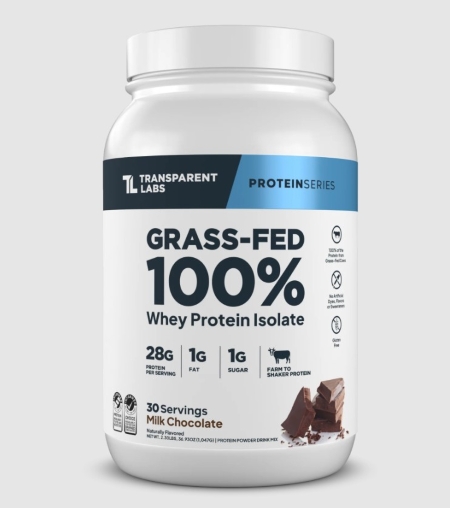
1. Transparent Labs Grass-Fed Whey Protein Isolate — Best overall
| Protein / serving | Type | My use | Main tradeoff |
|---|---|---|---|
| 28 g | Whey isolate | My default after hard miles | Higher cost than basic whey |
This is still the tub I reach for when I come home from a humid long run with no appetite for eggs. In the existing notes from my own training, it mixed thin enough in cold water to drink before I had the energy to make a full meal. That detail matters more to me than a dramatic flavor description: a recovery option only helps if I will actually use it.
The current formula lists 28 grams of protein per scoop. I like the isolate format when I tolerate dairy but want to avoid the heavier feel I sometimes get from concentrate. I add a banana, cereal, or toast alongside it after a long or demanding session; protein powder by itself does not replace the carbohydrate I spent on the run.
I would skip it if the price would stop me from buying it consistently, or if dairy is a problem even in isolate form. The texture can taste thin in plain water. That is a feature for me after intervals and a drawback for someone who wants a milkshake.
2. Garden of Life SPORT Organic Plant-Based Protein — Best plant-based
| Protein / serving | Type | My use | Main tradeoff |
|---|---|---|---|
| 30 g | Plant blend | Dairy-free recovery | Thicker texture and more ingredients |
When I need a dairy-free choice, I want a blend that can carry a recovery meal rather than a token sprinkle of pea powder. Garden of Life SPORT gives 30 grams of protein from several plant sources in the current vanilla formula, which makes the serving easy to fit into a substantial smoothie.
I treat its added ingredients as a preference question, not a bonus I can feel after one run. The practical test is whether the thick plant texture sits well after a workout. I mix it with enough liquid and fruit, then judge how my stomach feels through the next meal. A dense shake right before running is a different job and one I avoid.
The SPORT product is NSF Certified for Sport, which gives a competitive runner a clearer screening signal. I would pass if I wanted an unflavored, minimal-ingredient powder or if plant blends consistently cause bloating.
3. Momentous Whey Protein Isolate — Best for certified sport
| Protein / serving | Type | My use | Main tradeoff |
|---|---|---|---|
| 20 g | Whey isolate | Race-focused supplement routine | Premium price per serving |
Momentous stood out in my earlier post-run notes for how smoothly it mixed in a shaker, including on travel days. I care about that because race-week nutrition should be easy to repeat in a hotel room, not depend on a blender and a perfect kitchen.
The current whey isolate supplies 20 grams of protein per serving, and the finished batches carry NSF Certified for Sport. That makes it a thoughtful choice when I am advising a runner who is subject to drug testing or wants tighter product verification. The seal reduces risk; it cannot promise zero risk.
I would not pay the premium if a familiar food or cheaper powder already fills the protein gap. Nor would I assume 20 grams is the right amount for every athlete or every meal. I look at the whole day first.
4. Klean Athlete Klean Isolate — Best unflavored isolate
| Protein / serving | Type | My use | Main tradeoff |
|---|---|---|---|
| 20 g | Whey isolate | Adding protein to ordinary food | Plain taste; dairy ingredient |
Klean Isolate is the powder I consider when I do not want another sweet shake. The unflavored version can disappear into oatmeal or a smoothie more naturally than a birthday-cake flavor. The product label lists 20 grams of whey isolate protein per scoop.
I value the simple ingredient profile and NSF Certified for Sport status. For a runner eating breakfast after an early session, mixing a scoop into food can be less of a chore than drinking a second bottle. I still start with a small amount in hot oats because some powders clump when stirred straight into boiling liquid.
Skip it if you need dairy-free protein or want a rich standalone shake. Its restraint is the selling point, and also the reason it will disappoint someone shopping for dessert.
5. Optimum Nutrition Gold Standard 100% Whey — Best widely available
| Protein / serving | Type | My use | Main tradeoff |
|---|---|---|---|
| 24 g | Whey blend | Easy restocking and value | Contains whey concentrate |
If I run out of powder away from home, Optimum Nutrition is the one I can usually replace without turning shopping into a research project. Its 24-gram serving and broad retail availability make it a practical routine choice.
This is a blend with whey isolate as the first ingredient, not a pure isolate. That difference matters more than the glossy front label if a runner reacts to lactose or dislikes sweetened flavors. In my earlier notes, it worked best as an affordable, easy-to-find option for someone who already knows whey agrees with them.
I compare the exact flavor and tub size before buying. A lower sticker price can hide a worse price per serving, while a giant tub is no bargain if I dislike the taste after a week.
6. NOW Sports Pea Protein, Unflavored — Best budget plant option
| Protein / serving | Type | My use | Main tradeoff |
|---|---|---|---|
| 24 g | Pea isolate | Simple dairy-free smoothies | Earthy flavor; one protein source |
NOW Sports Pea Protein is what I suggest to a runner who wants to control the ingredients in a smoothie. The current unflavored product lists 24 grams of protein per scoop, and the powder does not force a sweet flavor into breakfast.
The tradeoff is its earthy finish. I would not judge this one mixed only with water on a hot afternoon and then conclude all plant protein is unpleasant. It makes more sense with fruit, milk alternative, or oats. I also vary the rest of the day’s protein foods rather than treating one pea product as the entire plan.
Its value is strongest when budget and ingredient simplicity matter. If I needed a ready-to-drink shake or a sport-certified product for competition, I would look elsewhere.
7. Ascent Native Fuel Whey Protein — Best for travel packs
| Protein / serving | Type | My use | Main tradeoff |
|---|---|---|---|
| 25 g | Whey blend | Portable post-workout routine | Contains whey concentrate |
Ascent enters my shortlist for runners who need a repeatable shake after work, travel, or a race weekend. Its current whey line lists 25 grams of protein per serving and Informed Sport certification on the relevant product pages. I would verify the exact flavor and package before relying on that status.
It is a whey blend rather than the isolate-only route I favor when lactose tolerance is uncertain. My decision is simple: if I already do well with whey and value portability, Ascent makes sense; if a concentrate-heavy shake has upset my stomach before, I test a small serving at home first.
I have not logged the same repeated in-run and post-run notes for Ascent as for my original picks, so I rank it on formula, use case, and labeling rather than pretending a single tasting settled it.
8. Vega Protein + Recovery — Best sport-certified vegan
| Protein / serving | Type | My use | Main tradeoff |
|---|---|---|---|
| 30 g | Plant blend | Vegan runner seeking certification | Sweet, complex formula |
Vega renamed its former Sport Premium Protein to Protein + Recovery. That matters when a runner searches the old name and sees different tubs. The current formula lists 30 grams of plant protein and NSF Certified for Sport.
I would choose it for a vegan runner who wants the certification and a full serving without stacking several scoops. I would not buy it because a long ingredient list promises extra recovery. The first job is meeting a useful protein need in a form the stomach accepts.
This is one to sample before committing to a large tub: flavor intensity, sweeteners, and thickness can make or break daily use. It also costs more than plain pea protein.
9. Dymatize ISO100 — Best low-lactose whey alternative
| Protein / serving | Type | My use | Main tradeoff |
|---|---|---|---|
| 25 g | Hydrolyzed whey isolate | Runners who dislike heavy shakes | Sweet flavors; dairy remains |
Dymatize ISO100 gives me another isolate route when a runner wants an easy-mixing powder with a clearly stated 25-gram serving. The brand filters the whey to reduce lactose, fat, and sugar, but it is still milk-derived. I would never promise that it suits every dairy-sensitive stomach.
For the runner who finishes a workout and cannot face a heavy shake, the lighter format is appealing. I would mix it with water first, then add food alongside it if the session was long enough to leave carbohydrate stores low.
I would skip it if sweet dessert flavors become tiring or if milk protein itself is the issue. A dairy-free plant option is the cleaner experiment in that case.
10. Orgain Organic Plant-Based Protein — Best everyday plant shake
| Protein / serving | Type | My use | Main tradeoff |
|---|---|---|---|
| 21 g | Plant blend | Convenient daily food gap | Fiber and sweeteners may bother some guts |
Orgain is the everyday grocery-store plant option on this list. The standard organic plant powder lists 21 grams of protein per two-scoop serving. I like its role for a runner who wants one accessible tub for breakfasts and snacks rather than a specialist race supplement.
I look closely at the exact flavor because fiber and sweeteners can vary, and that matters if the shake is close to the next run. I would put it in a normal meal window, not drink a large serving five minutes before a tempo session.
I rank it lower than Garden of Life SPORT for competitive use because the latter has a clearer sport-certification case. Orgain can still be the better purchase if taste, price, and everyday availability keep the habit consistent.
How I Rank Protein Powders for Running Recovery
I start with the role the powder has in a training week. A shake that helps me bridge the gap to lunch is valuable; an expensive tub that upsets my stomach or displaces a real meal is not. I rank these products on six practical tests:
- Useful protein per serving: enough to contribute meaningfully to the day without three oversized scoops.
- Complete nutrition context: I check whether the rest of the day supplies adequate protein and whether a long run also calls for carbohydrate.
- Digestive fit: I consider dairy, lactose, sweeteners, added fiber, and the time until my next run.
- Repeatability: a flavor and texture I can use for weeks beat a novelty I abandon after two shakes.
- Transparency: I prefer an exact serving label and verify current independent certification when it matters.
- Value: I compare cost per useful serving, not only the tub price.
I keep the larger recovery picture in my runner recovery guide and the daily food foundation in my runner nutrition guide.
How I Choose a Protein Powder for a Training Week
First, I check food before adding a scoop
If breakfast, lunch, dinner, and snacks already cover my protein needs, I do not need a shake. When a hard run leaves me without appetite or a meal is hours away, powder becomes a convenient bridge. I do not sacrifice carbohydrate to hit a protein number; my half-marathon nutrition plan shows how both fit around training.
Then I match the protein source to my stomach
Whey isolate is my starting point when I tolerate milk but want less lactose than a typical concentrate. A plant blend is my first experiment if dairy is troublesome. I test a small serving on a normal day and avoid treating the night before a race as a product trial.
I read the entire serving, not the front of the tub
I compare grams of protein, scoop size, sweeteners, fiber, allergens, and the exact certification claim. For a tested athlete I verify the product in the certifier’s database. The words “grass-fed,” “organic,” and “clean” do not tell me how the shake will sit after a run.
I pair recovery protein with the rest of the meal
After a long or demanding run I usually add carbohydrate and fluid rather than drinking protein alone. That may be a banana and toast with the shake, or simply lunch. If I am preparing for another run soon, the full recovery meal matters more than a powder brand.
My collagen rule: I keep collagen outside this top 10 because it is not my stand-alone recovery protein. I would discuss a specific connective-tissue protocol with a qualified sports clinician rather than swapping it for a complete protein shake.
Frequently Asked Questions
What is the best protein powder for runners?
Transparent Labs whey isolate is my overall pick when dairy agrees with me. Garden of Life SPORT is my plant choice, while Momentous suits runners who put sport certification first. The right pick depends on diet, tolerance, budget, and whether food already covers the day’s protein.
Do runners need protein powder?
No. I use powder as a convenient way to fill a gap after a hard run or on a rushed day. Eggs, yogurt, tofu, beans, fish, meat, and other foods can meet the same daily goal.
How much protein do runners need per day?
I begin with training load, body size, total food intake, and health context. Many exercising adults use roughly 1.4–2.0 grams per kilogram per day as a planning range, but I do not turn that into a universal prescription. A sports dietitian can individualize it.
Should I drink protein before or after running?
I usually place a shake after a hard session if a full meal is delayed. I avoid a large shake immediately before running because it feels heavy to me. Daily intake matters more than chasing a tiny timing window.
Is whey or plant protein better for runners?
Whey is compact and easy to use if dairy agrees with you. A good plant blend can also meet recovery needs. I compare the serving, amino-acid profile, tolerance, and the rest of the diet instead of assuming one source wins for everyone.
Is collagen a good recovery protein?
I do not use collagen as my main post-run protein. It does not offer the same complete essential-amino-acid profile as whey, egg, soy, or a well-designed plant blend. If I use it for a specific connective-tissue plan, it is an addition, not the replacement.
What should I mix protein powder with after a long run?
Water is convenient, but after a demanding long run I often pair the powder with carbohydrate from milk, fruit, cereal, toast, or a meal. I decide from the rest of the day’s eating and the next session.
How do I choose a powder for a sensitive stomach?
I check milk ingredients, lactose tolerance, sweeteners, fiber, serving size, and timing. I test a smaller serving on an ordinary training day and change one variable at a time. Persistent symptoms deserve advice from a clinician or dietitian.
Does third-party certification matter?
It matters most for athletes subject to drug testing and anyone who wants stronger independent product checks. I verify the exact product and current certification rather than trusting a generic brand claim. Certification reduces risk but does not remove it.
My Final Recommendation
I would buy Transparent Labs whey isolate again for the runner who tolerates dairy and wants a reliable post-run shake. Garden of Life SPORT is my pick for a dairy-free runner, and Momentous is the premium option when verified sport certification is central to the decision.
I would begin with the smallest practical package, use it after ordinary training, and check whether I still like it when the next hard block arrives. If the day’s meals already cover my protein needs, I keep the money for food.

Written by Ken – 12 years of running, 12,500+ miles, 63 shoes tested, 36 races from 5Ks to a 50K ultra. I run 30-40 miles a week on the Atlantic City Boardwalk and write from real training miles, not one-run demos. More about me ->