
When runners ask me for the best running shoes for midfoot strikers, I start with the adidas Adizero EVO SL. Across 359 logged miles, its lively center-to-toe transition has worked for my easy and faster road runs without a carbon plate directing every step. I choose Saucony Endorphin Speed 5 for workouts; for more long-run protection, I would fit-test ASICS Superblast 3.
A midfoot landing does not require zero drop. I first decide what the shoe must do—easy miles, workouts or a long run—then check whether I can land quietly over its center without fighting the upper or rocker. The morning after a new shoe tells me more than a slow-motion frame of one stride.
Quick Picks: My Three Starting Points
| Pick | Best use | Why it makes my shortlist | Check price |
|---|---|---|---|
| adidas Adizero EVO SL | One versatile road shoe | Light, plate-free; 359 logged miles | Check price → |
| Saucony Endorphin Speed 5 | Workouts and faster long runs | Smoother nylon-plate guidance; 230 miles | Check price → |
| ASICS Superblast 3 | Protected long runs | High cushion without a plate; fit-test first | Check price → |
Explore this guide
What I Actually Look for Under a Midfoot Landing
I call it a midfoot strike when initial contact is relatively flat through the middle of the foot, rather than clearly heel-first or forefoot-first. That video label is not a diagnosis or a shopping prescription. My heel-versus-midfoot-versus-forefoot guide explains why I do not force anyone to change strike solely to look better on camera.
In the shoe, I want enough platform beneath the midfoot, a secure upper that does not require painful lace tension, and a transition that matches my easy or race pace. Heel drop, rocker, foam and plate stiffness all affect that feel; none determines it alone. My rocker-geometry guide covers the roll in more detail.
The 10 Best Running Shoes for Midfoot Strikers: In-Depth Reviews
1. adidas Adizero EVO SL — Best overall
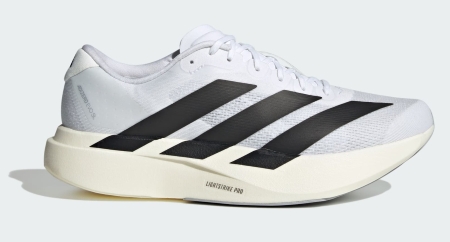
| My decision | Why it matters |
|---|---|
| Ride | Light, lively and plate-free |
| Best job | Daily runs through controlled tempo |
| Evidence | 359 logged miles in this version |
| What I do not like | Upper lockdown deserves attention |
Why I chose it: I chose it because its center contact remains useful across the widest range of my logged paces without a plate dictating the transition.
This is the first shoe I would pull from my shelf for a runner who contacts near the middle of the foot and wants one versatile road pair. Its Lightstrike Pro foam gives me a lively landing-to-toe-off sequence without a carbon plate imposing a single roll speed. That does not mean it is made for only one strike pattern; it means the center of the shoe feels useful to me at both relaxed and faster paces.
I have 359 miles logged in the EVO SL across tempo, steady and travel runs. My decision was not based on where my foot appears to touch in one slow-motion frame. I looked for a quiet landing, a secure midfoot through broad turns, and whether the ride still worked after the pace changed. On my foot, the light upper needed deliberate lacing; I would reject it if I had to over-tighten the instep to stop sliding.
I would buy it for a neutral runner who wants a fast all-rounder without the price or rigidity of a carbon racer. I would skip it if I need strong guidance when fatigued. Its logged wear is encouraging for my pair, not a guarantee of your outsole life.
The purchase test I would repeat is a relaxed first mile followed by several minutes at my normal steady pace. If the shoe feels smooth only when I speed up, it is not my best one-shoe choice. I also inspect whether the midfoot laces leave pressure after the run; a fast sensation cannot compensate for poor hold.
2. Saucony Endorphin Speed 5 — Best workout trainer
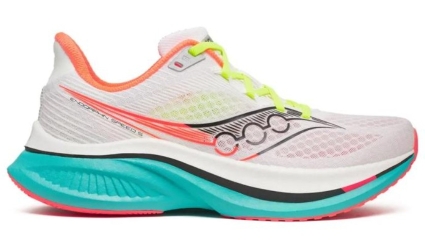
| My decision | Why it matters |
|---|---|
| Ride | Guided nylon-plate transition |
| Best job | Tempo, intervals and long workouts |
| Evidence | 230 logged miles in this version |
| What I do not like | Plate can feel too directed for easy shuffling |
Why I chose it: I chose it because the nylon plate and groove organize repeatable faster miles while remaining more forgiving than my race-day carbon shoe.
When a midfoot-contact runner asks me for a dedicated faster-day shoe, I compare the Endorphin Speed 5 with the EVO SL. Saucony’s semi-rigid nylon plate sits between PWRRUN PB layers, and the full-length groove smooths the move toward toe-off. I like that combination for repeatable threshold efforts: the shoe helps organize the transition without needing the extreme stiffness of a carbon race model.
My 230-mile log covers fartlek surges and longer workouts. I paid attention to whether the shoe stayed centered under my midfoot when I got tired, not to whether it forced a prettier landing photo. It fit true to size for my foot, with secure heel hold and usable forefoot volume. I still check pressure at the arch and midfoot in anyone else’s fitting because a plate and rocker do not rescue a poorly matched upper.
I would buy it for speed sessions and occasional racing. I would not use it as proof that midfoot strikers require a plate; the EVO SL and Mach 7 are counterexamples. If the roll feels as though it is dragging me forward at easy pace, I give the Speed 5 a narrower workout-only role.
I compare it with the Mach 7 on the same tempo route. The Speed gives me more assisted roll; the Mach allows a more direct, lighter transition. The winner is the one whose timing remains natural in the final repetition, not the one that feels snappiest on the first stride.
3. ASICS Superblast 3 — Best long-run protection
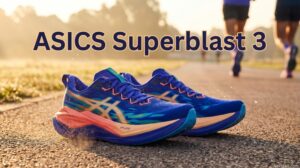
| My decision | Why it matters |
|---|---|
| Ride | High-cushion, energetic and plate-free |
| Best job | Long steady runs and high-volume weeks |
| Evidence | Fit-test candidate; no exact-version miles |
| What I do not like | Tall platform and premium price |
Why I chose it: I chose it as the protected long-run counterpoint to the lighter workout shoes, not because high stack is inherently right for a midfoot landing.
When long runs leave my forefoot feeling beaten up, I look for protection that still lets me stay centered. That is why I would try the Superblast 3: FF LEAP foam and the forefoot trampoline shape make it an energetic, plate-free alternative to a thin trainer. I would compare it with my cushioned-shoe picks, then test broad turns and late-run control. A tall stack is useful only while I feel relaxed on top of it.
I have not put an exact-version mileage block on Superblast 3. My shortlist decision comes from what its design offers, followed by a fit test I would insist on before buying: does the upper hold my midfoot without squeezing, does the platform stay calm on a cambered sidewalk, and does the transition still work at my easy pace? I would walk away if I had to brace through the ankle to steer it.
I would buy it if I want one premium, protective long-run trainer and can justify the price. I would skip it if I favor a grounded, flexible shoe or find its height distracting at slow pace.
I would be especially careful on cambered sidewalks. A large stack can protect the sole of the foot while making side-to-side control more noticeable. If I feel myself bracing through the ankle to stay centered, I would take the calmer option even if this one feels more exciting underfoot.
4. HOKA Mach 7 — Best light, controlled rocker
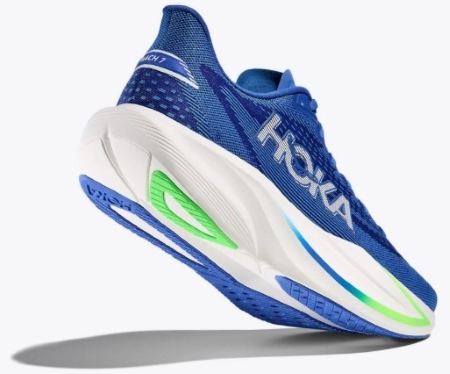
| My decision | Why it matters |
|---|---|
| Ride | Quick turnover with a steadier cradle |
| Best job | Progressions, bridges and tempo |
| Evidence | 120 logged miles in this version |
| What I do not like | Upper hot spot possible in heat |
Why I chose it: I chose it for a more held, controlled rocker when the EVO SL’s freer motion is not the feel I want.
The Mach 7 is my answer when the EVO SL feels too free-moving. In my 120-mile log, its light rocker and foot cradle supported quick turnover on bridge repetitions without feeling like a rigid race lever. For a midfoot striker, I care whether the transition begins under my own foot at the right moment; this shoe passed that check at controlled workout pace.
Its heel hold and forefoot clearance worked for me in my usual size. On a hot longer outing, however, I noted a small hot spot near my fifth metatarsal. I would not hide that behind a generic ‘true to size’ label. I would repeat the intended workout with normal socks before assigning it repeated summer long runs.
I would buy it for someone who wants a nimble, guided tempo trainer without a plate. I would skip it if maximum softness is the main goal or if that outer-forefoot contact appears during the fitting.
The strongest case is a runner who wants to feel quick but not unstable. I would run a short progression and then slow back down; a good workout trainer should not become awkward when the effort eases. That downshift is where I learn whether the rocker serves my stride or only one pace.
5. ASICS METASPEED EDGE TOKYO — Best race-day turnover
| My decision | Why it matters |
|---|---|
| Ride | Carbon race geometry for cadence-led running |
| Best job | Target-pace racing, not easy mileage |
| Evidence | 113 logged miles in this version |
| What I do not like | Expensive and demanding at casual pace |
Why I chose it: I chose it for a specific cadence-led racing job that I have tested at pace, not as an everyday midfoot prescription.
I put the EDGE TOKYO in a separate race-day lane. ASICS develops it around a cadence-oriented racing response, with FF LEAP cushioning and carbon-plate geometry. That does not mean every midfoot striker is an ‘EDGE runner.’ Landing location and cadence strategy are different variables. I choose it only when the actual target-pace comparison beats my less aggressive options.
My 113-mile log includes 10K-paced repetitions where I increased turnover rather than reaching farther ahead. The upper held my foot securely, and the transition felt timely under that effort. The log supports a fit-and-role verdict; it is not an extreme durability test or evidence that a slow jog predicts race performance.
I would buy it for a runner with a specific race and a proven fit at race pace. I would skip it as a first everyday shoe or as a shortcut to a midfoot strike. If my calf or forefoot feels overloaded after short race-pace trials, I stop trying to make the shoe work.
For race purchase, I require the exact sock and lacing setup I will use on race day. Midfoot pressure that appears after repeated fast turns is a veto. I do not extrapolate an excellent 10K repetition to marathon comfort without a longer target-pace trial.
6. ASICS Novablast 6 — Best easy-day bounce
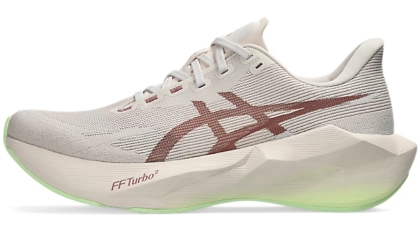
| My decision | Why it matters |
|---|---|
| Ride | Soft landing and springy forefoot |
| Best job | Easy-to-steady daily training |
| Evidence | Fit-test candidate; no exact-version miles |
| What I do not like | Bounce may feel vague on tight turns |
Why I chose it: I chose it to give the easy-day runner a bouncier, less race-oriented choice than the plated models.
I turn to Novablast 6 when I want an easy-day shoe that feels more buoyant than EVO SL. Its FF BLAST MAX midsole and trampoline-style forefoot offer the bounce, but I would choose it only if the middle of the platform settles under my foot before that lively toe-off. I compare the role with my approachable daily-trainer choices instead of mistaking an exciting step-in feel for an easy-run fit.
I have not logged miles in this exact Novablast 6 version. I would put it beside Superblast 3 on the same easy route: Novablast for a softer daily role, Superblast for more long-run protection. Broad turns and tired-leg jogging are my veto tests. If the foam feels vague laterally, I choose a calmer platform even if the straight-line bounce is fun.
I would buy it for neutral daily training if the bounce agrees with my stride. I would skip it for someone who wants a firmer, more precise central landing.
I would compare it with the Rebel v5 for a runner who describes wanting ‘bounce.’ Novablast adds more protective foam and a stronger forefoot spring; Rebel feels freer. Those are different answers to the same word, so I make the runner choose by the actual session and foot control.
7. New Balance FuelCell Rebel v5 — Best flexible quick feel
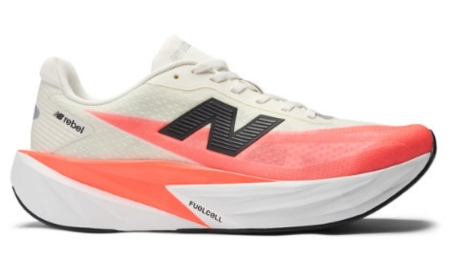
| My decision | Why it matters |
|---|---|
| Ride | Soft, flexible and less directed |
| Best job | Strides and short progressions |
| Evidence | 60 logged miles in this version |
| What I do not like | Less precise on long or wet runs |
Why I chose it: I chose it because its flexible ride lets me control my own timing in strides and short progressions.
The Rebel v5 gives me a different answer to the midfoot question: let the foot set the timing. Its flexible FuelCell ride does not impose the same roll as a plated shoe. In my 60-mile log, that made short progressions and strides feel playful. The center of the shoe was usable, but I needed to supply more of the control myself.
My regular size felt comfortable. On one wet outing the upper became saturated, and the last miles felt less pleasant; I would not call it a rain specialist. Sixty miles is early-use evidence only, so I would not promise a lifespan from it. I would also compare it with EVO SL on a longer easy run before deciding which can be my primary trainer.
I would buy it as a flexible, fast-feeling companion to a steadier daily shoe. I would skip it if I want a firmer center contact, strong guidance, or one pair to cover every long run.
I look for a clean landing-to-push-off sequence during a short progression. If I have to tense my midfoot to steer the soft platform, I reserve the Rebel for short quick days. If it stays quiet, its unforced flex is exactly what a heavily rockered shoe cannot provide.
8. Topo Athletic Cyclone 3 — Best roomy-toe speed fit
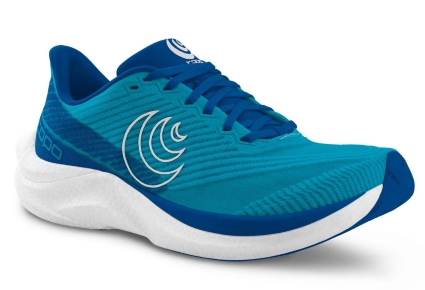
| My decision | Why it matters |
|---|---|
| Ride | Light Pebax response with a 5 mm drop |
| Best job | Tempo runs and short races |
| Evidence | Fit-test candidate; no exact-version miles |
| What I do not like | Low stack and narrow role for recovery runs |
Why I chose it: I chose it for runners whose toes need room but whose midfoot still needs a performance fit during faster running.
I would bring Cyclone 3 into the fitting room for a runner whose toes are squeezed in fast shoes. Topo pairs toe space with a held heel and midfoot, a 5 mm drop, and a 28/23 mm platform. I want the toes free without losing the center of the shoe as cadence rises. My toe-box fit guide explains why I check shape, volume and hold separately.
The important detail is that toe space and midfoot hold must work together. I would try it at easy pace first, then add a few controlled tempo minutes and a broad turn. If the shoe lets my center contact wander sideways, the roomy toe box is not enough. If the rocker begins too early for my own stride, I would compare the more flexible Rebel v5 or the more guided Speed 5.
I have not run a verified Cyclone 3 mileage block. I would buy it only after an easy jog, a few tempo minutes and a broad turn confirm that the roomy front does not let my midfoot drift. If I need a plush recovery shoe, this is the wrong job; my wide-foot shoe comparison gives me more fit options without forcing a quick-day model into a daily role.
The fit decision is unusually important here: enough room at the toe joints, but no heel lift as cadence rises. I would not size up merely to gain width if that shifts the flex point ahead of my foot. A different last is a better answer to pressure than extra empty length.
9. Nike Pegasus 42 — Best conventional-drop daily trainer
| My decision | Why it matters |
|---|---|
| Ride | ReactX with full-length curved Air Zoom |
| Best job | Dependable easy-to-steady road miles |
| Evidence | Fit-test candidate; no exact-version miles |
| What I do not like | 10 mm drop and firmer timing may not suit everyone |
Why I chose it: I chose it to show that a conventional 10 mm-drop trainer can still be a sensible match for natural midfoot contact.
I include Pegasus 42 because my midfoot contact has never required a low-drop label. Nike gives this version a 10 mm offset, ReactX foam and a curved full-length Air Zoom unit. I would test it against EVO SL over two ordinary easy runs, listening for a quiet center landing and checking heel hold. For a more traditional training feel, I also look at my long-distance shoe picks.
This is where I challenge the category label. I would put the Pegasus alongside the EVO SL for two easy runs on the same route. I would ask which one lets my foot land quietly near its natural contact point and which holds my heel and midfoot without lace bite. A 10 mm printed number cannot answer that; nor can the brand’s claim of energy return. The more pronounced toe spring may feel smooth to one runner and intrusive to another.
I have not logged a Pegasus 42 test block for this guide. Its place here is a fit-and-role option: I would buy it if I wanted a conventional daily ride and its upper held my foot without lace bite. I would leave it if the toe spring pushed my timing ahead of my natural stride. I will not let the 10 mm number decide that for me.
I would be cautious about interpreting the Air Zoom’s lively push-off as proof of a good central landing. I test easy pace, braking and mild corners before judging it. A shoe can return energy well and still feel poorly timed for my own stride.
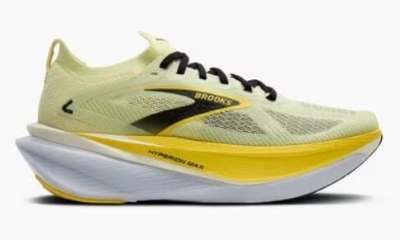
10. Brooks Hyperion Max 3 — Best plated high-stack workout option
| My decision | Why it matters |
|---|---|
| Ride | DNA GOLD and DNA FLASH v2 with nylon SpeedVault plate |
| Best job | Longer tempo sessions with more protection |
| Evidence | Fit-test candidate; no exact-version miles |
| What I do not like | Tall platform and a directed roll may feel cumbersome |
Why I chose it: I chose it for longer fast sessions where a midfoot-contact runner wants both high-stack protection and a repeatable plated roll.
I would reach for Hyperion Max 3 when a long tempo workout calls for more foam than Speed 5 gives me. Its DNA GOLD and DNA FLASH v2 cushioning, nylon SpeedVault plate and RapidRoll rocker promise a protected, repeated roll. The deciding moment is late in the session: if my center landing stays controlled, it earns the slot. I compare that job with my speedwork picks, not with a relaxed recovery shoe.
I would test this one differently from a daily trainer. I would first jog easily to rule out arch or midfoot pressure, then run a short segment at the intended workout pace. The question is whether the rocker meets my natural center contact or rushes me forward. I would also take a few gentle corners and check whether the high platform feels stable once my legs tire.
I have not logged an exact-version Hyperion Max 3 mileage block. I would try it at easy pace to rule out arch pressure, then at the intended tempo pace with gentle turns. If the tall rocker rushes me forward or feels cumbersome on the cooldown, I keep Speed 5. I would not buy the extra stack simply because it looks more protective.
The Speed 5 is my first plated workout comparison; Hyperion Max 3 earns the alternative slot only when I want more foam beneath repeated longer reps. If the tall rocker feels cumbersome once I stop pushing, I keep it out of my daily rotation.
How I Rank These Shoes
I rank by the complete shoe at its assigned pace: centered landing feel, platform control through turns, secure midfoot fit, smooth transition to toe-off, and the response after the run. I do not score a shoe higher merely because its drop is lower or its plate is stiffer. Shoes for speedwork and easy mileage can solve different problems even for the same runner.
My exact-version notes are strongest for EVO SL (359 miles), Endorphin Speed 5 (230), Mach 7 (120), METASPEED EDGE TOKYO (113) and Rebel v5 (60). For Superblast 3, Novablast 6, Cyclone 3, Pegasus 42 and Hyperion Max 3, I have explained the role and the fit test I would require before purchase. I do not treat a specification or one good run as a personal durability verdict.
How I Choose a Midfoot-Striker Running Shoe
- Pick the job first: a daily pair must feel quiet at easy pace; a workout shoe should hold and roll consistently when I accelerate; a racer must earn its place at target pace.
- Load the center of the platform: I check whether the middle of my foot feels supported during a jog and broad turn, not just when standing still.
- Secure fit without pressure: the heel and midfoot stay controlled while the toes remain free. I reject arch pressure, numbness and sliding instead of solving them by pulling harder on the laces.
- Compare rocker and flex: a smooth roll for my stride is useful; a shoe that pulls me forward before I am ready is not. A flexible option may ask more muscular control.
- Respect the response: I note calf, Achilles, arch and forefoot sensations during the session and the following morning, especially when changing drop, stack or plate stiffness.
My running-shoe fit guide walks through heel hold, forefoot space and toe clearance. If a shoe still needs painful lacing to stay put, I try another last. For a runner who wants more guidance, I compare my stability-shoe picks by how the support feels during a real run.
My Three-Run Fit-and-Load Test
Run one: 15–25 easy minutes on familiar flat ground. I note where the shoe meets my foot and whether the midfoot stays centered on gentle corners. Run two: a normal easy session only if the next morning is comfortable. I watch how control changes with fatigue. Run three: a short segment at the shoe’s intended pace—tempo for Speed 5 or Mach 7, race pace for EDGE TOKYO. I do not jump straight to intervals in a new geometry.
I stop for sharp pain, swelling, weakness, numbness or a changed stride. I keep route, distance and pace similar for the first trials so I can notice whether the new shoe changes the load on my calf, arch or forefoot. A different landing pattern is not a fitness goal. I separate what the camera shows from what I actually feel.
Full Comparison: Ride, Role and Evidence
| Shoe | Ride | Best use | Evidence / caution |
|---|---|---|---|
| adidas Adizero EVO SL | Light, lively and plate-free | Daily runs through controlled tempo | 359 logged miles in this version; Upper lockdown deserves attention |
| Saucony Endorphin Speed 5 | Guided nylon-plate transition | Tempo, intervals and long workouts | 230 logged miles in this version; Plate can feel too directed for easy shuffling |
| ASICS Superblast 3 | High-cushion, energetic and plate-free | Long steady runs and high-volume weeks | Fit-test candidate; no exact-version miles; Tall platform and premium price |
| HOKA Mach 7 | Quick turnover with a steadier cradle | Progressions, bridges and tempo | 120 logged miles in this version; Upper hot spot possible in heat |
| ASICS METASPEED EDGE TOKYO | Carbon race geometry for cadence-led running | Target-pace racing, not easy mileage | 113 logged miles in this version; Expensive and demanding at casual pace |
| ASICS Novablast 6 | Soft landing and springy forefoot | Easy-to-steady daily training | Fit-test candidate; no exact-version miles; Bounce may feel vague on tight turns |
| New Balance FuelCell Rebel v5 | Soft, flexible and less directed | Strides and short progressions | 60 logged miles in this version; Less precise on long or wet runs |
| Topo Athletic Cyclone 3 | Light Pebax response with a 5 mm drop | Tempo runs and short races | Fit-test candidate; no exact-version miles; Low stack and narrow role for recovery runs |
| Nike Pegasus 42 | ReactX with full-length curved Air Zoom | Dependable easy-to-steady road miles | Fit-test candidate; no exact-version miles; 10 mm drop and firmer timing may not suit everyone |
| Brooks Hyperion Max 3 | DNA GOLD and DNA FLASH v2 with nylon SpeedVault plate | Longer tempo sessions with more protection | Fit-test candidate; no exact-version miles; Tall platform and a directed roll may feel cumbersome |
Frequently Asked Questions
What is the best running shoe for a midfoot striker?
For my own versatile road training I choose adidas Adizero EVO SL. For dedicated workouts I choose Saucony Endorphin Speed 5; for a more protective long-run candidate I would fit-test ASICS Superblast 3. Fit and intended pace decide the final pair.
Do midfoot strikers need zero-drop shoes?
No. I have used midfoot contact in shoes with different offsets. I judge center-platform support, fit and transition rather than prescribing a heel-to-toe number from strike pattern alone.
Does a carbon plate help midfoot strikers?
It may help a runner at a specific race pace, but it is not required. I compare the METASPEED EDGE TOKYO at target pace with less rigid options and keep it only if the complete shoe works better.
Should I change my heel strike to a midfoot strike?
I would not force that change just to match a shoe or video ideal. If I am addressing an actual problem, I consider workload, overstriding, comfort and symptoms, and seek qualified help for persistent pain.
How can I tell whether a shoe supports my midfoot?
I load it in motion. My heel and midfoot stay held without squeezing, the platform feels stable beneath center contact, and the roll begins at a comfortable time at the intended pace. I check again when tired and the next morning.
Is a softer shoe always better?
No. Plush foam can feel comfortable on a straight easy run and vague in turns or fatigue. I compare softness with control, fit and the shoe’s actual job.
My Final Recommendation
I would start with the adidas Adizero EVO SL for most midfoot-contact runners who want one lively daily shoe. I would put the Saucony Endorphin Speed 5 next to it if workouts are the priority, or try the ASICS Superblast 3 when long-run protection matters more. The winner is the shoe whose center platform, fit and transition remain calm after the novelty wears off—not the shoe that claims to engineer a particular foot strike.

About Ken: I have spent 12 years running and deciding which shoes deserve a place in a real training week. Here I use my own run notes where I have them, and I give you my exact fit-and-pace test where I do not. Read more about my testing background.