
adidas EVO SL vs ASICS Novablast 5: which should you buy? I choose the Novablast 5 as a single shoe for easy runs, ordinary mileage, and long aerobic work. I choose the EVO SL when an easy-day shoe is already in my rotation and I need a lighter partner for tempo runs and progressions. I make that decision by the sessions the shoe will actually cover, then let fit and late-run control veto it.
I ran both in a men’s US 10.5 D on recurring South Jersey road routes. My log has 359 miles in the EVO SL and 95 in the Novablast 5; I weigh 182 pounds and usually run 30–40 miles a week. These are my training impressions in one size and one rotation. The unequal mileage gives me more confidence about how the adidas has aged than how the ASICS will age; it cannot establish which model lasts longer.
The short decision: one shoe or a second shoe?
| If your week needs… | My choice | Why |
|---|---|---|
| One pair for most training | ASICS Novablast 5 | A roomier, more protective ride that stays comfortable when the run remains easy or goes long. |
| A faster companion to an easy shoe | adidas Adizero EVO SL | A lighter transition that makes tempo and progression work feel more natural. |
| Maximum structure or guidance | Neither by default | I would test a stable neutral option instead of asking a lively neutral shoe to fix a control problem. |
| A calm, low-profile traditional ride | Neither is ideal | Both have more bounce and stack than this preference calls for. |
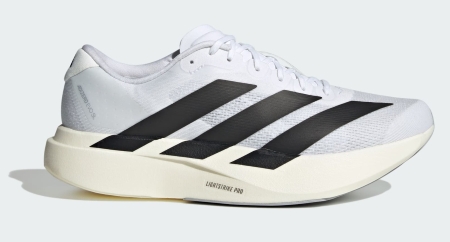
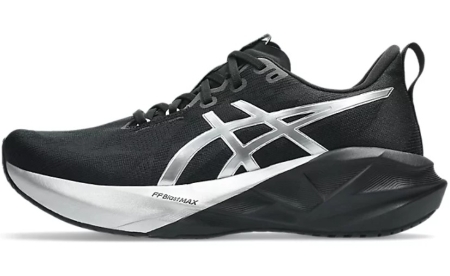
That is the distinction I use throughout this comparison. A daily trainer must make the unglamorous majority of a week easy to repeat; a tempo shoe must justify its place beside it. My running-shoe rotation guide lays out how I avoid buying two pairs for the same job.
adidas EVO SL vs ASICS Novablast 5 at a glance
| Decision point | adidas Adizero EVO SL | ASICS Novablast 5 |
|---|---|---|
| Role in my rotation | Fast, flexible, non-plated trainer | Cushioned neutral daily trainer |
| Midsole | Lightstrike Pro | FF BLAST MAX |
| Official men’s weight | About 224 g, size UK 8.5; varies by version | 255 g / 9 oz, ASICS US listing |
| Official drop | About 6 mm on the original EVO SL listing | 8 mm |
| Upper feel on my foot | Closer midfoot, light structure, adequate toe room | More accommodating front, padded and secure heel |
| Best session | Tempo, progression, faster long-run sections | Easy mileage, steady running, long aerobic runs |
| Main compromise | Needs more attention when form gets untidy | More shoe underfoot when pace gets sharp |
| Miles in my log | 359 | 95 |
The spec sheet explains the ingredients, but it does not choose the shoe for me. The published weights also use different reference sizes, so I do not treat the 31 g gap in the table as a same-size laboratory comparison. I pay more attention to what happens at easy pace, when I deliberately accelerate, and when my foot placement deteriorates near the end of a run. My midsole foam guide explains why a foam name alone cannot predict the whole ride.
Ride: which shoe makes the right pace feel natural?
Easy miles: Novablast 5 gives me more room to relax
At an easy effort, the Novablast 5 asks less of me. Its deeper cushioning filters the repetition of ordinary road miles, and I can settle into an aerobic rhythm without feeling that every step invites an acceleration. This is the shoe I reach for when the training purpose is simply to accumulate controlled time on my feet.
The EVO SL is capable of easy running, but its lighter transition makes me want to move. That can be enjoyable on a steady day; on a recovery day it can tempt me to run faster than planned. If a shoe repeatedly changes the intended effort, I give it a different job rather than pretending the pace drift is a benefit.
Tempo and progressions: EVO SL earns its place
When I lift cadence through a progression, the EVO SL feels more purposeful. Lightstrike Pro gives me a lively response without a rigid racing plate, and I can move from steady to tempo pace without feeling I need to overpower the shoe. My decision is about the whole transition, not one dramatic bounce on the first stride.
The Novablast 5 can handle moderate progressions. I notice its larger platform more when a session becomes sharp, especially compared with the EVO SL. If I regularly schedule sustained faster running, I would rather assign that work to the adidas and let the ASICS own the calmer days. The distinction between these jobs is developed in my daily trainer versus tempo shoe comparison.
Long runs: I decide by the final third
For a long aerobic run, I lean Novablast 5. Late in the run, when cadence falls and placement is less exact, I appreciate the more substantial platform and the relaxed upper. For a long run with planned faster blocks, I can make a case for EVO SL because it changes gear more readily. The right answer depends on the long run you actually do, not the distance written on the box.
Fit and lockdown after the warm-up
In the same US 10.5 D, the EVO SL holds my midfoot more closely. Its upper feels light and performance oriented, so lacing matters. If I leave the midfoot too loose, I notice the lack of extra structure when turning. The front gives my foot enough room, yet it never feels as relaxed as the Novablast.
The Novablast 5 gives me a more accommodating forefoot and a padded, secure heel. I can see why that combination makes everyday mileage easier to live with. I still check toe clearance after a warm-up and heel hold on a gentle downhill; extra upper volume is useful only when the foot remains centered. My running-shoe fit checklist explains the sequence I use before blaming a model for a sizing error.
I would not size up solely to make a narrow spot feel wider. If a heel lifts, I first confirm that length and shape are close, then try heel-lock lacing. A knot cannot turn the wrong last into the right one. When comparing adidas and ASICS labels, I use the foot-length method in my running shoe size guide rather than assuming the same printed US size means the same interior fit.
Stability, grip, and the moments that expose a mismatch
I do not judge either pair from a straight, fresh-legged mile. I include corners, road camber, a gentle downhill, and the last ten minutes of a longer run. The EVO SL feels nimble when my mechanics are organized, but its flexible platform asks more control when I get sloppy. The Novablast offers more underfoot, although its height and bounce can still feel like a lot to someone who prefers a lower, quieter shoe.
Neither is a stability shoe simply because one feels steadier to me. If a runner is repeatedly correcting ankle position or losing the landing line, I would move to my stable neutral shoe guide instead of forcing this two-shoe choice.
On wet pavement I separate outsole confidence from foam feel. I shorten the test, avoid treating painted lines or metal covers like ordinary asphalt, and watch for a repeatable loss of grip. adidas uses Continental and clear rubber in the original EVO SL outsole; ASICS uses AHAR LO on the Novablast 5. Compound, coverage, surface, and wear all matter. My outsole rubber explainer goes deeper into that decision.
What my mileage says about wear—and what it cannot say
I have 359 miles in the EVO SL and 95 in the Novablast 5. That is useful context for my ride impressions, but it is not evidence that one model lasts longer. They have not had equal exposure, and road texture, pace, weather, body mass, and rotation all affect what wears first.
I inspect the rubber at my landing and toe-off zones, check whether the upper still centers the foot, and repeat a familiar route when a midsole begins to feel different. I retire a pair when grip, hold, or ride no longer supports its job. A round mileage target is less useful than those changes; my shoe replacement guide gives the full inspection sequence.
How I would choose between them in three runs
- Fit run: Use the same socks on a familiar easy route. Check toe clearance, heel movement, pressure over the instep, and whether either shoe needs conscious steering after warm-up.
- Controlled pace run: On a separate day, add a short steady-to-tempo progression. Notice which shoe lets you increase effort smoothly and which starts to feel cumbersome or unstable.
- Job run: Test the pair you intend for long aerobic mileage late in a longer easy run; test the intended workout shoe through the faster section it would actually own. Record the final ten minutes and the next morning separately.
I keep route, socks, and fatigue as similar as practical. Before buying, I can use the short fit and movement checks from my in-store shoe test. I only take a new pair outdoors under the seller’s actual trial policy or after deciding to keep it. New numbness, sharp focal pain, or a changed gait ends the trial; I do not keep running to “break in” a fit problem.
My buying decision for different runners
- Choose Novablast 5 if you want one neutral trainer for most of the week, value forefoot room and rearfoot padding, and prioritize easy and long runs over the sharpest workouts.
- Choose EVO SL if you already have a dependable easy shoe, enjoy a lighter flexible feel, and need a distinct tool for tempo runs, progressions, or faster long-run blocks.
- Skip EVO SL if your main problem is late-run control or you need a strongly structured upper. Its enjoyable speed does not solve that need.
- Skip Novablast 5 if you dislike a tall, bouncy platform and want a direct feel for short fast work.
- Buy neither if both duplicate pairs that already serve your schedule. I would keep the current rotation until a missing job is clear.
If one model now has a clear job, my dedicated adidas EVO SL review and ASICS Novablast review add model-specific detail. I use this comparison to settle the overlap between the two, not to rank every trainer on the market.
What would change my decision?
I would switch from Novablast 5 to EVO SL as my one-pair choice if my week consistently contained more purposeful steady and tempo work than easy mileage, and the adidas still felt controlled in the final third of a long run. I would switch back if that quicker ride kept pulling recovery runs above the intended effort. Training behavior matters more to me than the label “daily trainer.”
I would also reverse a paper verdict immediately for fit: pressure that builds over the instep, toes touching on descents, or a heel that moves despite sensible lacing are reasons to reject a pair. Neither foam character nor a favorable specification compensates for that mismatch.
FAQ: adidas EVO SL vs ASICS Novablast 5
Is the adidas EVO SL or ASICS Novablast 5 better for daily training?
For one-pair daily training, I choose the Novablast 5. Its more relaxed fit and protective ride suit easy mileage and long aerobic runs. I choose EVO SL when daily training includes a meaningful share of tempo and progression work and another shoe already covers easy days.
Which feels faster, EVO SL or Novablast 5?
The EVO SL feels faster to me when I raise cadence. Its lighter, flexible transition suits tempo running. The Novablast 5 can run steadily and progress moderately, but I notice more platform when I ask for a sharper effort.
Which fits a wider forefoot better?
In my US 10.5 D, the Novablast 5 gives me more forefoot accommodation. That is a fit observation, not a guarantee for every foot. I would try both in the correct length and check the fit after a warm-up.
Can I use EVO SL for easy runs and Novablast 5 for speed?
Yes. I assign each by how it behaves for the runner. EVO SL can run easily, while Novablast 5 can handle moderate faster work. My default rotation still gives the adidas the quicker sessions and the ASICS the calmer mileage.
Which would I buy for a marathon build?
If I could buy only one training shoe for a marathon build, I would pick Novablast 5 for the volume of easy and long running. If I already had that role covered, EVO SL would be the more useful addition for tempo blocks and faster long-run segments.
My final verdict
My own choice changes with the open slot in the rotation. If I must cover four ordinary runs with one pair, I choose the Novablast 5. If I already trust an easy-day shoe and want a more engaging tool for quality work, I choose the EVO SL. I would reject either one if fit or late-run control fails, however attractive the first mile feels.

Written by Ken — I have spent 12 years running and comparing shoes on real training routes. I judge a pair by the job it serves, how it fits after warm-up, and how it behaves when a run gets harder or longer. More about me →