
HOKA Mach 7 vs New Balance Rebel v5 is a choice between control and freedom at faster training pace. I pick the Mach 7 when a tempo or progression needs a secure, repeatable platform. I reach for the FuelCell Rebel v5 when short pickups and fartlek benefit from more forefoot give. If I could keep just one for varied workouts, I would keep the Mach; for the most enjoyable pace changes, I would take the Rebel.
That decision comes from 120 logged miles in my Mach 7 and 60 in my Rebel v5, both in men’s US 10.5 D. I run roughly 30–40 miles a week, often on South Jersey roads and boardwalks. The mileage difference matters for wear confidence, but it does not make the Mach automatically better. What matters is the session each shoe improves without asking me to adjust my stride or laces.
The decision in one screen
| Your next session | My first pick | What could reverse it |
|---|---|---|
| Controlled tempo or longer progression | Mach 7 | The shaped platform presses your foot or its 5 mm geometry feels unfamiliar |
| Fartlek and short pace changes | Rebel v5 | The softer rearfoot or flexible ride loses control in turns |
| Quick daily miles with occasional faster work | Mach 7 | The Rebel fits cleaner and stays centered when you tire |
| Easy recovery run | Neither by default | Choose either only if it stays quiet and comfortable at truly easy effort |
| One lightweight workout shoe | Mach 7 | Rebel wins if its freer ride solves your specific workout need |
I use three gates before buying: the shoe must fit after the foot warms, handle the actual workout, and remain predictable when pace drops. A thrilling first stride is not enough. If the missing job is still unclear, compare the pair with your current shoe using my shoe-rotation guide before adding another similar trainer.
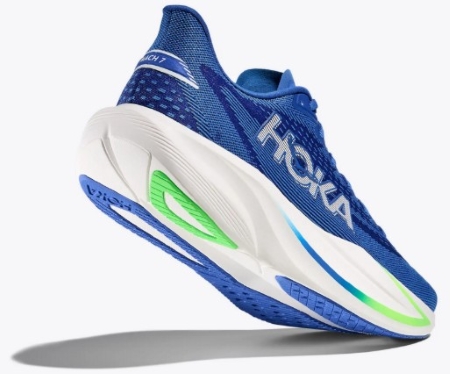
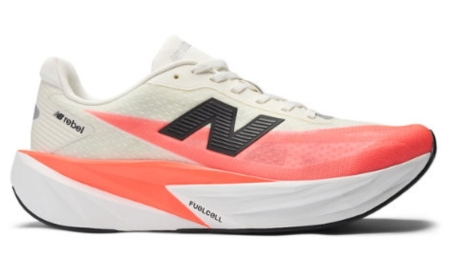
What I actually ran in each shoe
I used the same size on the same foot and returned to familiar pavement and boardwalk surfaces. I do not call two separate training blocks a perfectly controlled laboratory test; wind, fatigue, weather, and pair age vary. I can still tell which shoe makes a particular run easier to execute, and I can explain where the impression broke down.
My clearest Mach 7 session was a set of bridge repeats on the Route 52 causeway. On the incline, the shoe turned over crisply without my heel or midfoot wandering. That is the version of the Mach I want on tempo day: quick enough to engage, but organized underneath me. Its hardest outing was a hot 14-mile run along the Brigantine causeway, when sweat built up and I felt a small hot spot near my fifth metatarsal. A secure fit at the start was not a guarantee of comfort after heat and swelling.
The Rebel v5 came alive for me around the Cooper River paved loop at about 7:30 per mile. It felt light and easy to change rhythm in, with more forefoot freedom than the Mach. On an 11-mile Atlantic City run in heavy rain, the upper soaked through around mile six and felt heavy for the final miles. I separate that wet-upper problem from outsole traction: I do not claim a dry-run grip result tells you how either shoe will behave on wet paint or metal.
My evidence boundary: 120 miles gives me a more mature view of Mach 7 fit and wear. Sixty miles is enough for a useful Rebel v5 ride verdict, but not a lifetime durability ranking. I would not assign either shoe a guaranteed replacement mileage or an injury-prevention benefit.
Fit first: secure cradle or forgiving front
In my US 10.5 D, Mach 7 holds my foot in a shaped platform. The heel feels settled and the forefoot has usable room without letting the shoe twist around my foot. I like that when I am leaning into a tempo effort. A runner whose arch meets the sidewall, however, should take that contact seriously. Tightening the laces will not change the platform underneath.
The Rebel v5 gives me a roomier, more forgiving forefoot and a softer feeling at the rear. That freedom is part of its charm on a fartlek. It is also why I check for forward slide on a turn and for heel movement after the upper warms. Equal size labels did not give these shoes equal shapes on my foot; I would not assume your usual size settles the question.
- At the toe: stand and jog in the socks you will run in. Check clearance in front of the longest toe and pressure at the little toe after a few minutes.
- At the midfoot: lace to a normal tension. Reject repeated arch or instep pressure instead of clamping the upper tighter.
- At the heel: add two relaxed strides and a broad turn. If the foot slides forward or the heel rises, retest the size or last before judging the foam.
If width is the problem, adding length can move the flex point away from your toe joints. I explain the sequence in my running-shoe fit guide and width guide. My hot Mach run is a reminder to make the final decision with warm feet, not only at the start of a store try-on.
How the ride changes when I change pace
| Underfoot question | Mach 7 on my runs | Rebel v5 on my runs |
|---|---|---|
| Easy jog | Controlled, though I notice its workout character | Comfortable if I keep the softer platform centered |
| Steady to tempo | More repeatable line and secure transition | Lively, but I monitor rearfoot control as fatigue grows |
| Short pickup or fartlek | Quick and tidy | Freer forefoot and easier rhythm change |
| Late in a longer run | My first choice of the two for a structured finish | Best when I still feel centered and the upper holds |
| Broad turn or camber | The platform asks less correction from me | I pay more attention to lateral movement |
The construction helps explain the contrast. Mach 7 uses a supercritical EVA midsole and a published 5 mm drop. Rebel v5 uses a PEBA/EVA FuelCell blend with a published 6 mm drop. Neither has a plate doing the work of a racing shoe. One millimeter of listed drop does not explain the whole sensation: sidewalls, flex, rocker timing, upper hold, and my own pace all contribute. My midsole foam guide gives the vocabulary without treating a material name as a performance guarantee.
Easy pace: can I forget the shoe?
I can jog in either pair, but I would not buy either principally for recovery miles. On the slowest days, I want the shoe to disappear rather than invite an unplanned moderate effort. If the Rebel feels too mobile when my cadence drops, I use a calmer daily trainer. If the Mach’s rocker and snugness ask more attention than the easy run deserves, I save it for a session with pace.
Tempo and progression: my Mach advantage
The Route 52 bridge repeats showed why I trust the Mach for a planned workout. The platform kept my foot aligned while I climbed and changed effort. I can carry that character into a controlled progression: it does not need a dramatic bounce to be useful. If your weekly schedule includes sustained tempo work, I would try Mach 7 first and use my tempo-run guide to keep the effort honest.
Fartlek and strides: my Rebel advantage
Rebel v5 feels less prescriptive. Around Cooper River, that made quick changes in rhythm enjoyable rather than mechanical. I would use it for a session of short pickups, relaxed strides, or a fartlek where the next surge is not timed to perfection. That does not make it a race shoe or automatically the faster choice on the clock. It makes it the more natural match for the way I move through those sessions; see my fartlek guide if that is the job you need filled.
Long runs, turns, rain, and tired legs
The long-run comparison is less glamorous than the first five minutes. I ask whether the heel still sits in the same place, whether the forefoot still has room, and whether I have begun steering the shoe. Mach 7 gives me more structure for a quicker long-run finish, but the hot Brigantine outing showed how swelling and dampness can turn that close fit into a hot spot. Rebel v5 gives me room up front, yet I need its softer ride to remain centered as my legs shorten the stride.
On broad turns and road camber, I favor the Mach when I want a predictable line. Rebel rewards a runner who likes to direct the foot more freely; it asks me to pay attention if I am tired. Neither conclusion is a diagnosis of pronation or a promise against injury. I would stop a session for focal pain, numbness, or a gait change rather than force more testing miles.
Rain changes another variable. My Rebel upper became waterlogged during that Atlantic City run; that is a comfort and weight observation about the upper. It does not establish that the Rebel outsole is unsafe in all wet conditions or that Mach 7 will grip every slick surface. I slow down on wet boards, paint, leaves, and metal, and I use my outsole-rubber guide to distinguish surface grip from upper comfort.
Wear, value, and the place in a rotation
At 120 miles, my Mach 7 has enough exposure for me to judge present upper hold and ride consistency. The Rebel v5 is at 60 miles, so I can describe its current condition but not award it a lifetime mileage win. I look for functional change—loss of grip, new asymmetry underfoot, or upper stretch that changes lockdown—rather than retire a shoe because the foam has cosmetic creases.
If my closet already has a comfortable daily trainer and a race shoe, Mach 7 fills the repeatable tempo and progression slot more clearly. If I own a structured workout shoe but want something livelier for short unstructured speed, Rebel v5 adds a different sensation. Buying both only makes sense if those are truly separate weekly jobs. Otherwise, I buy the better-fitting pair and keep the rotation simple. For the category boundary, see my daily trainer versus tempo shoe guide.
For a deeper look at each line, I would read the HOKA Mach review and the New Balance Rebel review. This comparison answers the narrower question: which of these exact versions earns the workout slot in my week?
When I would pass on both
The decision is easier once I name the job neither shoe does especially well. If most of my week is easy or recovery running, I would not pay for a quick workout feel I rarely use. I would start with my daily trainer picks and judge comfort at my actual easy pace. A lighter shoe is only good value when its character matches the miles I run.
- I need a calm one-shoe setup: I would pass on both if their lively ride makes slow days feel like work. I would choose a daily trainer that stays comfortable from the first easy mile through a longer run.
- Mach presses my arch or outer forefoot: I would not buy it for its secure tempo ride and hope the pressure disappears. Rebel is worth trying for its different shape, but only if my heel stays held when I turn and tire.
- Rebel feels loose when I accelerate: I would try Mach for a more contained platform. If Mach also fails the warm-foot fit test, I would keep looking rather than force a verdict between these two.
- I want race-day propulsion: neither is my plated racing choice. I would keep the workout-shoe decision separate from the shoe I select for a goal race.
This is also my value rule: a discount does not rescue a shoe I have to negotiate with on every run. I would rather buy the pair that fits the repeated session—or neither—than buy the more exciting first impression.
My three checks before I would buy
- Warm-foot fit: same socks, same size starting point, ten minutes of walking and jogging. I reject pressure that grows, heel lift, or a flex point in the wrong place.
- Two paces: after easy running, add several relaxed strides and a controlled steady stretch. Mach should stay smooth; Rebel should change rhythm without losing its center.
- The intended session: repeat a normal tempo or fartlek, then note the final minutes and next morning. I do not add distance merely to justify the purchase.
If both pass, I choose by the workout I do most often. If neither passes, I keep looking. A shoe that makes me negotiate the fit every week is not versatile no matter how many training labels appear on its product page.
FAQ: Mach 7 or Rebel v5?
Which is better overall, HOKA Mach 7 or New Balance Rebel v5?
For my mixed workout week, I choose Mach 7 because its secure platform handles tempo and progressions more predictably. I choose Rebel v5 when fartlek and short pace changes are the main job. Fit can reverse my ranking for another foot.
Which feels faster for intervals?
Rebel v5 feels freer when I change cadence quickly; Mach 7 gives me a tidier line during sustained efforts. I would not infer a guaranteed pace advantage from that feeling. Test the interval format you actually run.
Do Mach 7 and Rebel v5 fit the same?
No. In men’s US 10.5 D, Mach 7 cradles my foot more securely, while Rebel v5 gives my forefoot more freedom and a softer rearfoot hold. Try both after your feet are warm.
Which is better for long runs?
I prefer Mach 7 for a longer run with a controlled faster finish, provided its forefoot remains comfortable. Rebel v5 can handle longer mileage for me, but I pay more attention to its soft platform as I tire.
Which lasts longer?
I cannot call a lifespan winner from my current pairs. Mach 7 has 120 logged miles and Rebel v5 has 60. I judge replacement by grip, upper hold, and ride change rather than promise an exact distance.
Can either shoe prevent injury?
No shoe can guarantee injury prevention. I choose by comfort, fit, and the intended session; focal pain, numbness, or an altered gait is a reason to stop and reassess rather than force more miles.
The pair I would take out tomorrow
For a planned tempo or progression, I lace up Mach 7. For a playful fartlek, I take Rebel v5. The Mach earns the broader workout recommendation from my current testing because its secure ride remains easier for me to repeat. The Rebel earns a clear, narrower role by making short pace changes feel natural. My 60-mile Rebel log leaves durability open; it does not erase what the shoe does well today. Start with fit, name the session, and let the last ten minutes—not the first step-in—settle the choice.

Written by Ken — 12 years of running, 12,500+ miles, 63 shoes tested, 36 races from 5Ks to a 50K ultra. I run 30–40 miles a week on the Atlantic City Boardwalk and review every shoe with real training miles, not one-run demos. More about me →