
Best running shoes for gym and running: I would start with the Topo Athletic Fli-Lyte 6 if the workout mixes basic strength circuits with short or moderate runs. Its flexible, relatively low platform and secure midfoot make the transition less awkward for me than a tall, soft daily trainer. If the treadmill is the main event, I would choose the Brooks Hyperion 3. If road miles matter more, I would choose the Saucony Kinvara 16.
I am Ken, a 182-pound runner in a men’s US 10.5 D. This ranking comes from my logged running miles and gym-to-run sessions, with each shoe judged against the same question: would I keep it on for the whole workout? A running shoe remains a compromise for lifting; heavy barbell work and aggressive lateral classes deserve footwear made for those tasks.
My 3 quick picks
| My pick | Choose it when | The useful trade-off | Shop |
|---|---|---|---|
| Topo Athletic Fli-Lyte 6 Best overall | You split time between strength circuits and short-to-moderate running. | Low, flexible feel and room for my toes; less comfort for long easy pavement miles. | Check Topo on Amazon ↗ |
| Brooks Hyperion 3 Best for treadmill-first workouts | You run intervals or tempo on the treadmill, then lift or use machines. | Fast, secure running feel; less settled under heavier loaded movements. | Check Brooks on Amazon ↗ |
| Saucony Kinvara 16 Best when running comes first | You want a light road shoe for the run and only modest gym work afterward. | Easy to turn over on a run; exposed foam and a running-first build make gym use secondary. | Check Saucony on Amazon ↗ |
📖 What’s in This Guide ▼ Click to expand
Can one pair really work for the gym and running?
Yes, for a defined workout: a treadmill run paired with machines, bodyweight training, carries, or moderate strength work. The overlap shrinks when the run gets long, the weights get heavy, or the movement turns sharply sideways. I judge the most demanding part of the session first.
A high, soft stack that feels comfortable at mile six can sway under a loaded hinge. A very flat trainer can feel planted under dumbbells yet harsh on a long run. That is why my overall pick is a middle ground rather than the softest shoe in my closet. If your weekly plan regularly combines these disciplines, my guide to balancing running and strength training covers the training side of the decision.
For maximal squats, heavy deadlifts, Olympic lifts, or court-style cutting, I change shoes. I would not claim that any of the four below is a dedicated lifting or court shoe. If most sessions are pure running, start with my broader running shoe shortlist instead.
How I tested and ranked these gym-to-run shoes
My running log is the strongest evidence for ride, fit, and wear. It includes 255 miles in Fli-Lyte 6, 304 in Hyperion 3, 359 in Kinvara 16, and 210 in Escalante Racer 2. The comparison table shows the job each of the ten can reasonably do. Running mileage alone never proves a shoe stays stable beneath a heavy lift.
For the first four, I have gym-to-run observations to draw on. The six additional models are run-first alternatives: I use their running logs and platform shape to decide when a controlled gym block is worth trying. I do not present those six as proven lifting shoes. My order gives the most weight to a planted feel and heel hold during the gym portion, then to whether I would still enjoy the planned run.
| What I check | Why it changes my ranking | My rejection signal |
|---|---|---|
| Floor contact | A controlled split squat or carry should feel planted. | The foam sways or the heel shifts under a normal training load. |
| Running transition | The shoe still needs to roll and flex at my actual pace. | A short run feels harsh or the upper rubs after the strength block. |
| Upper and traction | My foot must stay centered on the gym floor and treadmill. | Toe crowding, heel slip, or unreliable grip on the real surface. |
Best running shoes for gym and running: my detailed reviews
How I ranked the added six: My recorded running miles support their ride, fit, and wear notes. For gym suitability, I judge the platform, upper hold, and a controlled movement check; I do not treat road mileage as proof of heavy-lifting stability. Every shoe below is for a defined gym-to-run mix, and the first four remain the stronger one-pair candidates.
1. Topo Athletic Fli-Lyte 6 — best overall
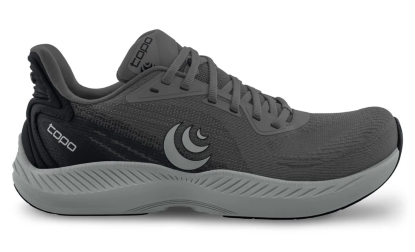
Why I chose it: The Fli-Lyte 6 gives me the clearest answer to the one-pair problem. I can move from a controlled strength circuit to a treadmill or road run without feeling that the shoe is doing an entirely different job underfoot. I logged 255 running miles in this pair; its broad forefoot and secure middle held my US 10.5 D foot without squeezing my toes during loaded steps.
Topo lists a 3 mm drop and a 23/20 mm stack. That relatively low, flexible shape is the reason I rank it first for the gym portion. In split squats, step-ups, and carries, I can sense the floor and keep my foot centered. During the run, the shoe bends and rolls easily enough that the strength-friendly feel does not become a flat, rigid slab.
On the run: I like it most for easy-to-steady shorter outings and the transition off the treadmill. It is nimble rather than plush. Across my logged use, the outsole and upper held together, although the foam softened with mileage. I would not buy it as my sole high-mileage recovery shoe on hard concrete.
Fit and limit: The anatomical toe area suits me, but a roomy front does not excuse a loose midfoot. Lace it, walk downhill, then jog before deciding. Anyone who wants a thick, protective cushion for long runs should compare a dedicated daily trainer. Heavy lifting still calls for a separate stable shoe.
My call: Buy this if your “gym and running” session is roughly a strength circuit plus a short or moderate run. It has the fewest compromises for that specific job.
2. Brooks Hyperion 3 — best for treadmill-first workouts
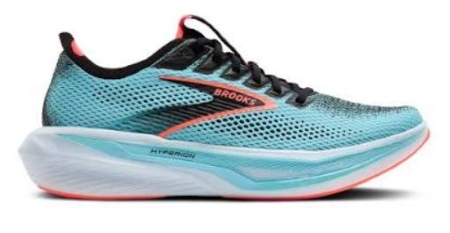
Why I chose it: On days when the run sets the pace and the gym is the follow-up, I prefer the Hyperion 3. My log has 304 running miles in it, including track, treadmill, and compact gym sessions. The secure heel and low-bulk upper keep the shoe quiet on my foot when I turn up the treadmill speed.
The Hyperion 3 feels more like a running shoe than the Topo once I start moving quickly. I can finish intervals, step into machine work, and do controlled dumbbell exercises without changing shoes. The platform is not my first choice for demanding barbell work, but the shoe is more practical for a treadmill-first visit than a tall maximal-cushion trainer.
On the run: The best reason to buy it is the smooth, quick transition from warm-up to faster work. It felt predictable rather than dramatic through my testing. The trade-off is that I would reach for a more protective trainer for my longest easy runs, especially when the route is all hard pavement. My daily trainer versus tempo shoe comparison explains why that distinction matters.
Fit and limit: My regular US 10.5 D held well at the heel. Check your own forefoot volume; a precise upper can feel less forgiving than Topo’s front shape. I would skip it if strength training dominates or if the run is mainly slow, long mileage.
My call: Choose Hyperion 3 when the treadmill workout is the reason you went to the gym and the lifting is brief and controlled.
3. Saucony Kinvara 16 — best when running comes first
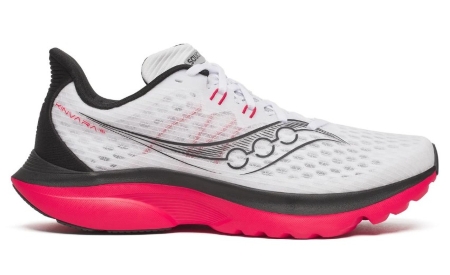
Why I chose it: The Kinvara 16 is the run-first option I would take to a gym where the strength block is modest. In my log it has 359 running miles. It fits my usual size, gives my toes enough horizontal room, and holds my heel through strides and short tempo efforts. Its 4 mm drop and light, unplated build keep the ride simple.
I notice the Kinvara most when I run out the door after training. The shoe does not feel cumbersome at quicker paces, and it gives me enough flexibility for bodyweight work and machine circuits. Compared with the Topo, I am more aware that I am wearing a road-running shoe when a set asks for planted, loaded footwork.
On the run: I enjoy it for short-to-moderate road sessions, strides, and tempo work. In an exposed, hot 14-mile run, my fifth metatarsal developed minor friction. That is one session, not a universal fit verdict, but it reminds me to separate a fun light trainer from a long-run comfort promise. Exposed outsole areas also need a look if your gym floor is abrasive.
Fit and limit: My heel stayed put, yet fit may change with sock thickness after a sweaty session. Use the checks in my running shoe fit guide and leave the toes room to spread. I would not choose Kinvara for heavy squats or a gym program built on cutting and jumping.
My call: Pick Kinvara 16 if the session is mostly a run and you want enough versatility to add light strength afterward.
4. Altra Escalante Racer 2 — best for a natural, level platform
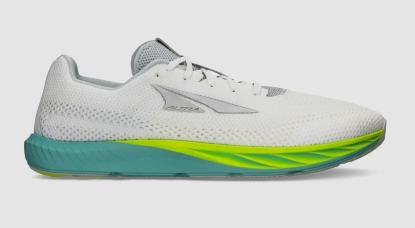
Why it made the list: The Escalante Racer 2 is my specialist choice for runners who already like zero drop. I logged 210 running miles in it. Altra lists a 22 mm stack, zero drop, and its Original FootShape front. That level, lower profile gives me clear floor feedback for controlled strength movements and enough flexibility to run afterward.
The roomy forefoot works particularly well when my toes need to spread in a split stance. The upper stays light, and the ride has a direct, ground-connected character during short treadmill runs and strides. I do not rank it in the three quick picks because zero drop changes the calf and Achilles demand; for an unadapted runner, that is a bigger decision than a convenience shoe should make.
On the run: I like the natural turnover for short, faster outings. My 210-mile log showed steady wear rather than an abrupt failure, but that mileage is not a promised lifespan for someone else. If I were planning a long, tired-leg run after weights, I would use a more forgiving shoe.
Fit and limit: A broad toe box still needs a secure heel and midfoot. If you are new to zero drop, transition gradually before making this your only gym and running pair. I also do not use it for maximal lifting simply because it is level.
My call: It is a good niche fit for an already adapted zero-drop runner doing controlled strength and shorter runs.
5. Nike Pegasus 42 — best versatile everyday alternative
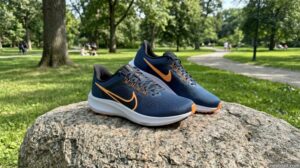
Why it made my list: The Pegasus 42 earns a place because it is a conventional, secure daily runner that I can imagine keeping on through a simple gym circuit. In 145 logged running miles, the heel stayed quiet on my US 10.5 D foot and the ride felt predictable on ordinary roads. Nike’s full-length Air Zoom design gives it a lively running side without the dramatic rocker of a race shoe.
My forefoot had less spare space than it did in the Topo, so I would not call this the roomiest pick.
In the gym: For machines, controlled step-ups, and bodyweight movements, I value the snug midfoot and the amount of outsole contacting the floor. I would still test a single-leg hinge and a loaded carry before deciding to keep it on. The air and foam beneath the foot make it a running shoe, not a firm lifting base. I would change shoes for heavy squats, deadlifts, or quick side-to-side classes.
On the run: On the run, it offers more everyday protection than the Fli-Lyte 6 while feeling less specialized than the Hyperion 3. During one hot 14-mile outing, I noted minor friction near my fifth metatarsal; I would pay attention to that fit point if my feet swell after a gym session. The current 145-mile log is enough for a ride judgment, not a lifespan promise.
My call: I would choose Pegasus 42 if running and general fitness share the week, but neither demands a specialist shoe. I would pass if I needed the broadest forefoot or a planted base for heavy strength work.
6. PUMA Velocity NITRO 5 — best grip-led daily trainer
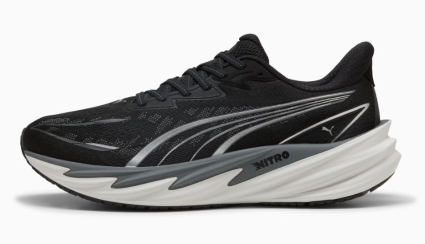
Why it made my list: I include Velocity NITRO 5 for runners who care about confident footing before and after a gym visit. Over 324 logged miles, it gave me a protected, steady road ride and a held midfoot. The shoe is more cushioned than my top gym-first choice, but its outsole coverage and fit made it a useful one-pair candidate for moderate training.
My foot did not wander inside it during normal running turns.
In the gym: A grippy outsole can help on smooth indoor flooring, but traction alone does not settle a strength exercise. I would test step-ups, carries, and controlled lunges on the actual gym surface. If the cushioning moves under my load, I would switch shoes for that block. I would not assume the same rubber behaves identically on rubber flooring, painted concrete, turf, and a treadmill belt.
On the run: Its best side is relaxed daily mileage with enough cushioning to keep a longer run pleasant. By the end of my recorded 324 miles, the high-contact outsole areas had smoothed and the foam had softened; that is a reason to recheck gym stability as the shoe ages.
On one crushed-gravel outing, stones caught in flex grooves, a reminder that this is a road-and-gym candidate rather than a rough-surface shoe.
My call: I would buy it for frequent road running plus machine or moderate strength circuits, after testing traction and sway in person. I would skip it for maximal lifting or a very low-to-the-floor feel.
7. Saucony Ride 19 — best comfort-first daily ride
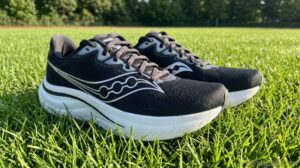
Why it made my list: The Ride 19 belongs here for the person who spends most of the session running and wants a gentle transition into basic gym work. I logged 110 running miles. In my usual US 10.5 D, the front had usable room and the heel stayed secure. Saucony’s added forefoot flex grooves make the shoe feel less rigid when I move from a walk into a run.
It is a daily trainer first, and I rank it accordingly.
In the gym: For machine work, mobility, and an easy circuit, I would check whether the foam remains centered under a split stance. Its comfort comes from more cushion than I want under a genuinely heavy barbell. I would not let the word “versatile” turn it into a training shoe for lateral drills. A short controlled step-up test tells me more than a plush first step.
On the run: I liked its unhurried rhythm along the Atlantic City Boardwalk and its ability to make an easy pace feel smooth. A fast 5K-style session showed its limit: it felt bulkier when I asked for sharp turnover. The 110-mile log also means I am not making a long-term wear claim. Compared with Kinvara 16, this is the more cushioned, less nimble run-first option.
My call: Choose Ride 19 if the run is longer or easier and the gym portion stays light. If strength takes equal billing, I would start with the Topo; if speed matters, I would start with Hyperion or Kinvara.
8. Mizuno Wave Rider 29 — best structured conventional feel
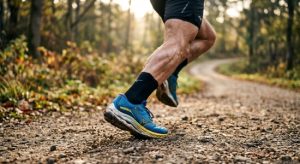
Why it made my list: The Wave Rider 29 earns a place because its conventional construction gives me a different kind of firmness than the soft, tall trainers I avoid for mixed sessions. My 90 logged miles show a secure heel, generous vertical toe room, and a steady daily ride on my 10.5 D foot. Mizuno’s Wave plate adds a structured transition underfoot.
I would not confuse that running plate with a lifting platform, but it makes the shoe worth a controlled gym try-on.
In the gym: For a circuit that includes machines, carries, and step-ups, I would focus on whether the heel stays planted and the forefoot can bend where I need it. A plate can feel stable moving forward and still be awkward during a squat or a side step.
I would test those movements in the exact gym, then change shoes if the plate or heel-to-toe shape pushes me into a position I do not want.
On the run: It ran smoothly for me on flat road work without demanding a fast pace. Early outsole wear was modest in my log, but 90 miles is too little for a durability verdict. Sharp gravel once lodged in grooves, so I would keep this choice to clean roads and indoor floors rather than use it as a trail crossover.
Compared with the Ride 19, it gives me a more structured underfoot sensation.
My call: I would shortlist Wave Rider 29 if I want a familiar daily runner with a held heel and a firmer transition for simple gym work. I would skip it if I need a highly flexible forefoot or a flat base for heavier lifts.
9. adidas Adizero SL 2 — best lighter run-first value
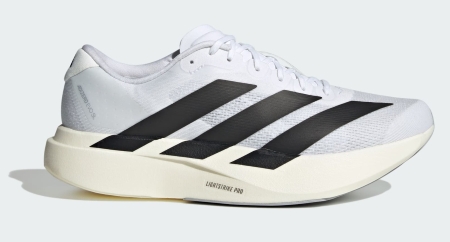
Why it made my list: The Adizero SL 2 is my leaner road-running alternative for a gym visit built around treadmill time. I logged 125 miles in it. Its snug midfoot and held heel made short faster runs feel tidy, and the lighter, less bulky upper suits a quick change from treadmill to machines.
It is a different answer from the Topo: I choose it when running pace gets the vote, not when a loaded circuit gets the vote.
In the gym: I would keep it to machines, core work, and controlled bodyweight sets. The performance fit and soft running foam do not give me a reason to trust it under a heavy hinge. I would check toe room during a lunge, because the upper that feels precise at pace can feel restrictive when my toes spread under load. It is not my pick for jumping or lateral classes.
On the run: The shoe felt lively on a longer boardwalk workout, and the heel stayed quiet as I quickened pace. In a frigid track session, the ride felt firmer and less cooperative, so temperature belongs in my decision. The 125-mile wear note looked reasonable, but I am not converting that into a universal lifespan claim. If I want a softer easy-run ride, I choose Ride 19 instead.
My call: I would use Adizero SL 2 when treadmill or road running dominates and the gym work is short and predictable. I would pass if I need a generous forefoot or the most stable platform for strength.
10. HOKA Mach 7 — best fast-running specialist
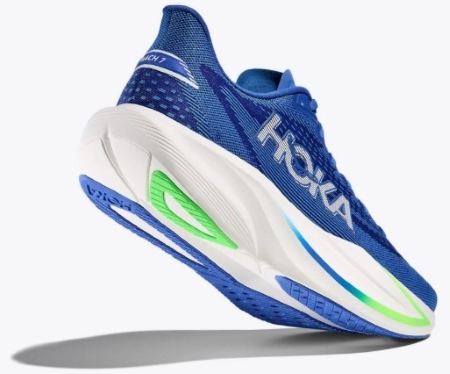
Why it made my list: Mach 7 is the fastest-feeling option in the lower half of my list, and that lower placement is intentional. I logged 120 running miles in it, including lively incline work where the shoe felt quick and smooth. My heel stayed secure and my forefoot had just enough space in the usual size.
It is useful if a gym visit means a hard treadmill workout followed by a few machines, not if the strength block is the reason for the visit.
In the gym: The rolling, cushioned shape can make a treadmill transition pleasant. It is less persuasive under a loaded squat or a balance-demanding split stance. I would check the edge of the platform during a slow step-up and stop there if I felt any side-to-side movement. A runner who wants one shoe for deadlifts and speedwork is asking for incompatible traits; I would bring two pairs.
On the run: My favorite sessions were faster climbs and short steady runs where the shoe encouraged easy turnover. On one hot 14-mile day I developed a small fifth-metatarsal hot spot, so I would not buy it without checking that area during a longer try-on. The 120-mile log supports its ride role, not a lifetime estimate. For easy recovery miles I would choose a softer dedicated daily trainer.
My call: I would choose Mach 7 only when the run is clearly first and gym work is light. It makes this top ten for that narrow use case; it does not challenge Topo Fli-Lyte 6 as the balanced choice.
Side-by-side: which compromise fits your session?
| Shoe | Best gym-to-run use | What Ken likes | Main reason to pass |
|---|---|---|---|
| Topo Fli-Lyte 6 | Balanced circuits + run | Low, flexible feel and toe room | You need deep long-run cushioning |
| Brooks Hyperion 3 | Treadmill speed + brief lifting | Secure, quick running feel | Loaded strength is the main event |
| Saucony Kinvara 16 | Road run + light gym work | Light, simple turnover | You need a planted heavy-lift base |
| Altra Escalante Racer 2 | Zero-drop runner + controlled strength | Level feel and toe space | You have not adapted to zero drop |
| Nike Pegasus 42 | Everyday run + general fitness | Secure, conventional ride | You need the broadest forefoot |
| PUMA Velocity NITRO 5 | Road miles + moderate circuits | Outsole coverage and held midfoot | You want a very low platform |
| Saucony Ride 19 | Easy run + basic gym work | Comfort and flexible transition | Strength is half the session |
| Mizuno Wave Rider 29 | Daily run + controlled circuit | Structured heel-to-toe feel | You need a flat, flexible base |
| adidas Adizero SL 2 | Treadmill pace + machines | Lean, secure upper | You need generous toe room |
| HOKA Mach 7 | Fast run + a few machines | Quick, smooth turnover | You plan loaded strength work |
How I choose by workout mix
- Half circuits, half running: I start with Fli-Lyte 6. Its balanced feel saves me a shoe change without pretending to be a lifting shoe.
- Mostly treadmill intervals: I use Hyperion 3, then keep the lifting technical demands modest.
- Mostly road miles: Kinvara 16 makes more sense if the gym work is a short accessory block.
- Already comfortable in zero drop: Escalante Racer 2 is worth trying for controlled work and shorter runs.
- Heavy lifting or sharp lateral work: I bring two pairs. None of these is the right shortcut.
A shoe that slips at the heel during a set will usually annoy me on the treadmill too. My heel-slip troubleshooting guide gives a quick lacing check. If forefoot pressure is the issue, use the toe-box fit guide before sizing up blindly.
My 20-minute gym-to-run try-on test
I test the transition, not just the jog. Running miles tell me about ride and wear; they do not prove a shoe is safe under every load. For a new hybrid pair, I repeat a short circuit at my normal training effort and pay attention to foot movement.
- Walk and jog for five minutes. I check heel security and whether my toes have room as the foot warms.
- Do unloaded hinges, step-ups, and a few controlled split squats. I watch for side-to-side foam movement or toe crowding.
- Run five to ten minutes at the pace I actually use after lifting. I notice whether the shoe feels harsh, slappy, or unstable.
- Repeat a moderate loaded movement that is already in my program. If I cannot stay planted, I change shoes for the gym block.
I do not use a personal-record attempt as a shoe test. The question is whether the shoe behaves predictably for my ordinary session. If you are unsure about changing drop, my low-drop versus high-drop explainer will help you anticipate how the run may feel.
FAQ: gym and running shoes
Can I lift weights in running shoes?
For machines, bodyweight work, and some controlled moderate lifts, I can use a stable lower-profile running shoe. For heavy or technical barbell lifts, I change into footwear suited to that lift. A soft, tall running platform makes my planted-foot position harder to judge.
What is the best running shoe for both treadmill and gym?
My overall choice is the Topo Athletic Fli-Lyte 6 for a balanced session. If treadmill speed is the priority and the gym portion is brief, I choose the Brooks Hyperion 3 instead. The movement mix decides the winner.
Are zero-drop shoes better for gym and running?
A level platform can feel more planted, but zero drop is not automatically better. The Escalante Racer 2 works for me as an adapted zero-drop option; a runner moving abruptly from a higher drop may feel more calf and Achilles load. I would transition gradually.
Can one pair handle long runs and heavy lifting?
I would carry two pairs. The cushion I want late in a long run and the firm base I want for heavy lifting pull the design in different directions. A hybrid shoe is most useful when both parts of the workout stay in the middle.
How should a gym-and-running shoe fit?
My heel should stay put during a jog and a step-up, my midfoot should not slide during a loaded turn, and my toes should have room after the run begins. I test in the socks I will actually wear and reject a shoe that needs painfully tight laces to stay secure.
Can I use these shoes for HIIT or lateral classes?
For treadmill intervals and straight-ahead circuits, I can use a running-first pick after checking traction and heel hold. For repeated side cuts, hard jumps, or court drills, I use a training shoe built for lateral movement. A secure running fit does not establish side-to-side containment.
My verdict
The Fli-Lyte 6 is my best running shoe for gym and running when the plan is controlled strength plus a short or moderate run. The Hyperion 3 wins when the treadmill gets priority; the Kinvara 16 wins when the run does. Escalante Racer 2 serves runners who already know zero drop suits them. Choose for your hardest movement, then confirm the fit in both halves of the session.

Written by Ken — 12 years of running, 12,500+ miles, 63 shoes tested, 36 races from 5Ks to a 50K ultra. I run 30–40 miles a week on the Atlantic City Boardwalk and review every shoe with real training miles, not one-run demos. More about me →