
Which durable running shoes would I buy? For ordinary road training, I start with Brooks Ghost 18. I compare it with PUMA Velocity NITRO 5 when wet-road grip and pace range matter; for varied trails, I move to Brooks Cascadia 20. Durability means the whole shoe stays useful—grip, fit, upper, and midsole—not merely that the outsole still looks thick.
After 12 years of running, I choose by the work a shoe must keep doing. A soft long-run shoe and a protected rocky-trail shoe face different failure points. Below, I tell you why each model makes my shortlist, which part I would watch as it ages, and when I would pass. I do not assign a universal mileage guarantee to any of them.
Quick Picks: My Top 3 Durable Running Shoes
| My pick | Best use | Why it makes my shortlist |
|---|---|---|
| Brooks Ghost 18 | Daily road miles | Balanced ride and substantial road-rubber coverage |
| PUMA Velocity NITRO 5 | Wet roads and varied paces | PUMAGRIP traction without a specialist-only ride |
| Brooks Cascadia 20 | Mixed trail | Vibram grip, protective upper, and adaptable trail geometry |
10 Best Durable Running Shoes: In-Depth Reviews
I rank durability by the complete shoe and its intended job. My wear notes are strongest for shoes I have run and older versions I know; this is not a controlled, equal-mileage test of all ten current models. Where a version is newer, I use its construction to decide whether it belongs on the shortlist and name the wear point I would inspect. That is a buying judgment, not a made-up long-term mileage result.
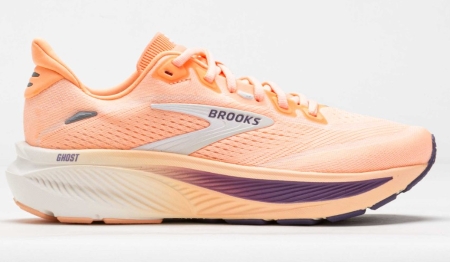
1. Brooks Ghost 18 — Best dependable road workhorse
| Best surface | Durability case | My watch point |
|---|---|---|
| Road / daily | Balanced platform and substantial road-rubber coverage | Midsole softening before the upper fails |
The Ghost 18 is where I begin if the question is “Which pair can absorb ordinary training without making every run about the shoe?” The broad, predictable ride and RoadTack rubber make more sense for this job than a fragile speed shoe. I would use it for easy miles, moderate long runs, and the weekly miles that quietly wear down a rotation.
My durability decision is not whether the mesh still looks new. I inspect the landing patch and compare both shoes for uneven rubber loss, then run a familiar loop to check whether the DNA LOFT v3 still feels even from side to side. A gradually softer midsole can narrow the shoe’s role before the upper tears or the outsole reaches foam.
I would skip the Ghost if I wanted a snappy interval shoe or a pronounced rocker. It wins here for a simple reason: fit, traction, and ride should remain usable together. A wide or narrow foot still needs the correct width; longevity does not rescue a poor fit.
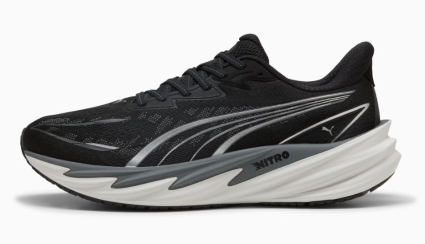
2. PUMA Velocity NITRO 5 — Best wet-road grip
| Best surface | Durability case | My watch point |
|---|---|---|
| Road / mixed pace | PUMAGRIP outsole and pace versatility | Debris in outsole channels and changing foam response |
I put the Velocity NITRO 5 near the top because a durable shoe must still grip when the pavement is wet. PUMA’s PUMAGRIP outsole is the practical attraction, while the NITROFOAM ride gives it more range than a plodding easy-day model. It is the pair I would compare with the Ghost when a runner wants one daily shoe that can also handle controlled faster work.
I look at the outsole in two places: the high-wear heel edge and the forefoot push-off zone. Rubber that remains thick but has become slick would not count as a win. I also clear sharp gravel from the grooves; a shoe that works well on asphalt can be annoying on crushed-stone paths if debris repeatedly lodges underfoot.
I would choose it for road-first training with occasional uptempo miles. If the runner is sensitive to a narrower-feeling midfoot, I would test lockdown at easy and faster pace before buying. This is a grip-and-versatility pick, not a promise that every runner will get the same mileage.
3. HOKA Clifton 11 — Best cushioned easy-mile option

| Best surface | Durability case | My watch point |
|---|---|---|
| Road / easy | Abrasion-rubber outsole and smooth rocker | Rocker feel and midsole changes over time |
The Clifton 11 is my comfort-first comparison for a runner who wants a smoother roll than the Ghost. HOKA pairs a soft daily-training platform with abrasion rubber in the outsole. The update from Clifton 10 matters: I do not transfer a wear result from an older pair to the 11 without testing the new foam, upper, and rubber placement on their own.
For durability, I would watch whether the heel stays anchored as the collar relaxes and whether the rocker still feels natural after the foam creases. A shoe can retain plenty of visible rubber yet feel vague when I turn a corner or run tired. I compare it at the same easy pace, on the same road, against a newer pair when possible.
I would use it for easy running and long, steady miles if the geometry fits. I would pass if the high platform feels unstable or the rocker gets in the way of a runner’s natural stride. Its comfortable first mile is a starting point, not a durability verdict.
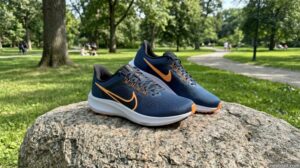
4. Nike Pegasus 42 — Best all-round road outsole
| Best surface | Durability case | My watch point |
|---|---|---|
| Road / daily | High-abrasion Waffle rubber with flexible grooves | Forefoot fit and ride change beneath the rubber |
The Pegasus 42 earns a place because Nike uses high-abrasion rubber on an updated Waffle outsole, giving me an obvious wear surface to inspect. Its ReactX and full-length Air Zoom setup is more responsive than the calm Ghost. I would try it with a runner who wants one conventional road shoe for easy running plus occasional faster finishes.
I would not call it the most durable shoe simply because the outsole looks substantial. I check the rubber under the runner’s actual landing zone, then look for uneven compression, upper stretching, and heel movement. Nike revised the toe-box shape from the previous Pegasus; I would verify toe room in this version rather than ordering by habit.
If its firmer, livelier feel suits the runner, it can be a useful everyday alternative. If the Air Zoom sensation is distracting at easy pace or the upper pinches, a thicker outsole cannot make it the right buy.
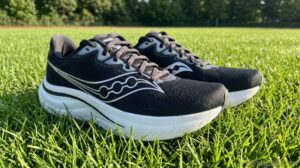
5. Saucony Ride 19 — Best straightforward daily alternative
| Best surface | Durability case | My watch point |
|---|---|---|
| Road / daily | Traditional daily-trainer role and protective rubber | Heel hold and forefoot wear pattern |
I like the Ride 19 as a second fitting-room comparison after the Ghost. The job is not glamorous: comfortable daily road miles, enough rubber where repeated contact occurs, and a ride that can stay useful as the shoe ages. Saucony sells it in regular and wide options, which matters because a durable upper is worthless if it constricts the foot.
I would inspect the forefoot flex zone and the rearfoot landing edge rather than judge the outsole as one uniform sheet. I also want the heel to stay secure after a few runs; a soft upper that becomes sloppy can end a shoe’s useful running life before the rubber is gone.
This is a practical shortlist choice, not a pair to which I assign a made-up 500-mile lifespan. I would choose between Ride and Ghost by fit and the way each handles my normal easy route. A runner wanting a fast, highly propulsive feel should look elsewhere.
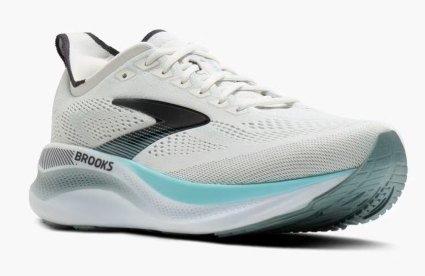
6. Brooks Adrenaline GTS 26 — Best structured-support choice
| Best surface | Durability case | My watch point |
|---|---|---|
| Road / stability | GuideRails support with daily-mile geometry | Uneven wear and whether guidance still feels natural |
I do not put the Adrenaline GTS 26 on every runner’s list. It belongs here for someone who already feels better in a structured shoe and wants that guidance to survive the ordinary wear of daily training. Brooks retains its GuideRails concept and balanced cushioning, so the question is whether the current version supports the runner without steering too aggressively.
I compare left and right shoes for a developing tilt, especially when a runner repeatedly wears one edge faster. The support mechanism does not cancel an unstable fit or a compressed midsole. I would test it against Ghost 18 on the same route and keep the Adrenaline only if the extra structure feels useful late in a run.
This version is new enough that I will not borrow durability mileage from the GTS 25 and label it a GTS 26 result. I recommend it for the role and construction, with a personal wear check still required.
7. ASICS GEL-NIMBUS 28 — Best plush long-run option
| Best surface | Durability case | My watch point |
|---|---|---|
| Road / long run | Cushioned platform and HYBRID ASICSGRIP outsole | Midsole feel before outsole appearance |
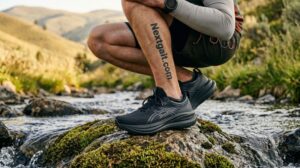
The GEL-NIMBUS 28 is for the runner who wants substantial cushioning and is prepared to judge durability by more than a rubber photograph. ASICS combines FF BLAST PLUS, PureGEL, and a HYBRID ASICSGRIP outsole. That is a plausible long-run package, but the soft ride must remain comfortable and level after repeated use.
I would give it two checkpoints: a familiar easy run and a longer outing after the initial step-in glow has faded. The knit upper must hold the midfoot without forcing a tight lace pattern; the heel must remain steady as the platform compresses. If the shoe starts feeling lopsided, fresh-looking tread would not persuade me to keep using it for long runs.
I would choose Nimbus for a comfort-first road runner, not for someone who wants a low, nimble shoe. I also avoid predicting its total lifespan from the foam name; surfaces, body load, and gait make that number personal.
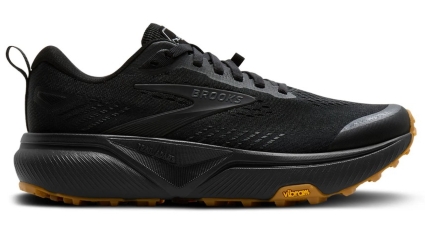
8. Brooks Cascadia 20 — Best durable mixed-trail pick
| Best surface | Durability case | My watch point |
|---|---|---|
| Trail / mixed terrain | Vibram Megagrip, 4 mm lugs, protected upper | Lug rounding and upper abrasion on local terrain |
Trail durability is a different problem from boardwalk durability. I consider Cascadia 20 when a runner needs one shoe for roots, rocks, damp patches, and smoother connectors. Brooks updated it with a Vibram Megagrip outsole, 4 mm lugs, TrailAdapt geometry, and added upper protection. Those features target grip and abuse on varied trail, not a guaranteed mileage total.
I would inspect lug edges after rocky descents and the upper at the flex point where grit rubs. My trail-grip guide helps me separate rubber compound from lug shape. I also check downhill toe room: a shoe that repeatedly jams the toes will leave the rotation no matter how long its outsole survives. Short road connectors are fine; for mostly pavement I would choose a road model.
I would buy it for a runner whose trail routes actually justify the protection. A fast runner on smooth hardpack may prefer less shoe. This recommendation is based on the current design and intended terrain, not a fabricated Cascadia 20 test log.
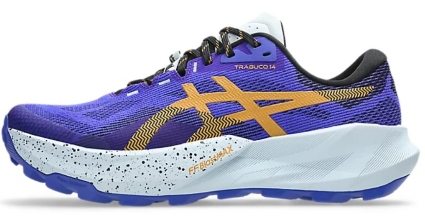
9. ASICS Trabuco 14 — Best rocky-trail protection
| Best surface | Durability case | My watch point |
|---|---|---|
| Trail / rocky | ASICSGRIP traction and a rock-protection plate | Forefoot fit and traction loss on sharp rock |
I would take Trabuco 14 onto a rocky route before a smooth park loop. ASICS gives it ASICSGRIP rubber and a protective plate, while the updated fit aims to hold the midfoot and leave more room in front. For durability, that matters because upper abrasion and toe impacts can end a trail shoe long before the foam feels tired.
I check whether the forefoot stays comfortable on descents and whether the tread is rounding in the places I actually load. A protective plate reduces what I feel underfoot, but it does not make the outsole indestructible. I would compare its grip against Cascadia 20 on the local trail rather than assume one brand’s rubber wins everywhere.
This is a specialist pick for rougher off-road mileage. I would not buy it to commute on concrete, where a road outsole and smoother transition make more sense. I do not transfer wear mileage from Gel-Trabuco 13 to this redesigned version.
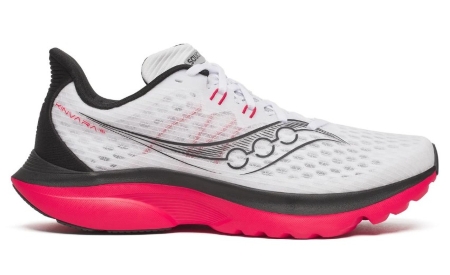
10. Saucony Kinvara 16 — Best lightweight shoe that earns its keep
| Best surface | Durability case | My watch point |
|---|---|---|
| Road / short and fast | Light, flexible ride with a clear specialist role | Sparse rubber coverage and exposed foam |
I include Kinvara 16 to make an important point: durable does not always mean the most rubber or the highest mileage. A light shoe can be a good value if it keeps doing the faster, shorter job it was bought for. The Kinvara’s flexible feel is meaningfully different from Ghost, Nimbus, or Cascadia, so I would not grade it by the same long-run standard.
Its exposed outsole areas need more frequent inspection. I would check the exact patch where my foot lands, look for asymmetry, and notice whether the shoe still feels smooth during strides. A rough-looking sole is not automatic retirement; an unstable or painful ride is a much stronger signal.
I would keep it for short daily runs, strides, and light workouts if the runner enjoys that close-to-ground feel. I would not ask it to be the one do-everything, maximum-lifespan trainer for a high-mileage runner. Its value is role durability, not outsole supremacy.
How I Rank a Running Shoe for Durability
I ask one question at every check-in: What run can I still trust this pair to do? The answer is more useful than a manufacturer lifespan estimate or a photograph of the outsole.
- Start with fit retention. A secure heel and comfortable forefoot must survive more than the try-on.
- Inspect rubber where the runner lands. I look for asymmetry, smooth patches, and exposed foam—not just the amount of rubber printed on a spec sheet.
- Compare the midsole on a familiar route. A new tilt, bottoming-out sensation, or uneven transition matters more than cosmetic creases.
- Check upper and bonding. Toe-box tearing, heel-lining damage, or separation can end a shoe before the tread disappears.
- Keep the job specific. A light workout shoe and a rocky-trail shoe should not be graded against the same surface or pace.
I use my broader best running shoes guide for the fit-and-ride baseline, then evaluate how well a pair holds that job over time. My outsole rubber guide explains why compound and coverage are only part of the durability story. I also check the sample size behind advertised weight and stack numbers; my shoe-specification guide keeps those figures in context.
How to Choose a Durable Running Shoe
Buy for your dominant surface
Road, boardwalk, and gravel wear a shoe differently. I put Ghost, Pegasus, Ride, and Velocity on a road-first shortlist; Cascadia and Trabuco belong on genuine trail. If your week mixes both, my road-versus-trail guide helps draw the line. Buying aggressive trail lugs for mostly asphalt is not a durability strategy; my trail-shoe wear checklist explains the failure points I watch off-road.
Do not trade fit for a thicker outsole
I check heel hold, midfoot pressure, and toe room in the socks I actually run in. Then I walk downhill or use a short run to see whether the foot slides forward. My running-shoe fit guide gives the full checklist. A long-lasting shoe that blisters you is poor value from day one.
Separate cosmetic aging from functional failure
Creases and dirty mesh are not enough to retire a pair. I watch for a new one-sided lean, persistent slipping, a split upper, outsole loss at the landing point, or a repeatable change in how my legs feel on the same route. My uneven-wear guide helps me tell a normal pattern from a change worth investigating.
Track the shoe, not just the purchase date
I record running miles separately from walking, note wet or abrasive routes, and compare the shoe monthly. I photograph both soles when new, then inspect the same landing patches after familiar runs; a change in grip, heel hold, or ride tells me more than the calendar. Rotating a daily trainer with a faster or trail pair makes each pair’s job clearer. I explain that setup in my shoe-rotation guide, while my replacement guide gives the full decision test. I never assume a shoe is safe simply because it has not hit an arbitrary mileage target.
My durability rule: A shoe earns another run only if its fit, grip, and ride still match the assignment I bought it for.
Frequently Asked Questions
How many miles should durable running shoes last?
I do not use one universal number. I treat mileage as a reminder to inspect the outsole, upper, fit, and midsole, then repeat a familiar run to judge whether the shoe still performs its assigned job. A new problem in any one of those areas matters more than crossing a round mileage figure.
Does a thick rubber outsole mean a shoe will last longer?
Not by itself. Rubber can outlast a midsole that has become uneven, or an upper that no longer holds the foot. I look at the whole shoe and the location of rubber under my landing pattern.
Are trail shoes more durable than road shoes?
They are built for different wear. A trail outsole and protective upper may handle rocks and debris better, but deep lugs can wear unnecessarily on pavement. I choose the shoe for the surface I run most.
When should I replace a running shoe that still looks good?
I replace it when the ride has changed in a repeatable, meaningful way: new instability, persistent heel slip, uneven compression, separation, or discomfort that disappears in another pair. A clean upper is not proof that the shoe is still good for running.
Should a heavier runner expect fewer miles?
Possibly, but body weight alone cannot predict a pair’s life. Surface, gait, rotation, foam, rubber placement, and fit all matter. I compare my own wear history rather than apply a weight-based expiration rule.
Can I rotate two shoes to make them last longer?
A rotation can spread work across different pairs and gives foam time between runs, but I would not claim it magically increases the total miles of each shoe. It helps me match a shoe to a job and notice when one pair changes.
Is an older, proven version better than a new model?
Sometimes. I prefer a known fit and wear record to an untested update when durability is the priority. I still check stock, price, and whether the new version changed the outsole, foam, or upper before deciding.
My Final Recommendation
I would start with Brooks Ghost 18 for everyday road miles, PUMA Velocity NITRO 5 if wet-road grip and pace range matter more, and Brooks Cascadia 20 for varied trail. I would choose Clifton 11 or GEL-NIMBUS 28 when cushioning is the priority, and Adrenaline GTS 26 only when structured support actually feels better on the runner’s feet.
The best value is not the model with the loudest “500-mile” promise. It is the one that fits now, matches your route, and remains stable and comfortable when you revisit the same run months later.

Written and reviewed by Ken. I have spent 12 years running and comparing shoes on road and trail. I judge them by fit, the intended route, and how the whole shoe ages. More about me.