
The best trail running shoe for a beginner depends first on terrain: Saucony Peregrine 16 is my top mixed-singletrack pick, Brooks Cascadia 19 is the safer technical default when route details are unknown, Nike ACG Pegasus Trail is best for pavement-to-dirt routes, and HOKA Challenger 8 preserves a more familiar 8mm drop on tame trails. The HOKA Speedgoat 7 is the only current-version shoe here with a Ken mileage record: 185 retrospective miles.
A beginner shoe is not the softest shoe or the model with the deepest lugs. It is the shoe whose outsole, fit, platform, protection, and geometry match the trail you will actually run. Buying for a fantasy mountain route usually leaves a new runner carrying unnecessary rubber and foam on ordinary dirt.
Updated July 17, 2026. I rechecked current US model availability and manufacturer specifications. Listed weights are men’s reference figures unless noted; size, sex-specific construction, and production variation can change them.
Safety boundary: Trail shoes can improve available traction and protect the foot from debris. They cannot prevent falls, ankle sprains, overuse injuries, or bad decisions about weather, pace, and terrain.

Trail Shoe Quick Finder
Match the shoe to your normal terrain, pavement approach, fit need, familiar heel drop, and main priority. Results appear in order as Match 1, Match 2, then Match 3.
How the finder ranks shoes
- Terrain is the largest score. A road-to-trail outsole cannot outrank a rugged outsole for repeated rock or mud.
- Fit is a hard constraint. A Wide label is not treated as 4E, and a roomy toe box is not assumed to be wide through the midfoot.
- Drop is a transition filter. It does not diagnose injury or declare one geometry universally safer.
- Evidence labels remain visible in the reviews. A specification-led pick is not presented as a current-version mileage test.
No tool can verify heel hold, toe pressure, or downhill movement on your foot. Test the final match late in the day, in trail socks, and on an incline before committing.
What is in this guideClick to expand
- Trail Shoe Quick Finder
- Quick Picks
- Evidence Status
- Best by Route and Fit
- Ken’s Ranking Rule
- Why This Ranking Differs
- Do Beginners Need Trail Shoes?
- Choose by Terrain
- Features That Matter
- Top 10 Reviews
- Comparison Table
- Fit and Descent Test
- Road-to-Trail Transition
- Waterproof or Breathable
- First Four Trail Runs
- Care and Replacement
- FAQ
- Sources and Updates
- Final Verdict
Quick Picks: Best Trail Running Shoes for Beginners
Pick by terrain and route, then verify the fit on an incline. Product names in this table are affiliate links. The links do not change the ranking, and this Quick Picks section contains no internal URLs.
| Rank | Shoe | Best for | Drop | Outsole | Main caution |
|---|---|---|---|---|---|
| 1 | Saucony Peregrine 16 | Best overall for mixed trails | 4mm | Vibram Megagrip, 4mm lugs | Choose a higher-drop crossover if 4mm is a large change or if nearly every run includes long pavement sections. |
| 2 | Nike ACG Pegasus Trail | Best road-to-trail shoe | Not published in Nike’s launch brief | Nike All Terrain Compound 2.0 | Skip it for repeated mud, scree, sharp rock, or routes where underfoot protection matters more than pavement comfort. |
| 3 | HOKA Challenger 8 | Best familiar high-drop crossover | 8mm | Multi-directional 4mm lugs | Skip it when wet rock, deep mud, or sharp technical terrain is the normal surface rather than an occasional section. |
| 4 | Brooks Cascadia 19 | Best stable technical all-rounder | 6mm | TrailTack Green, all-terrain tread | Choose Challenger or Nike for mostly smooth road-to-trail routes, or a roomier forefoot shape if Cascadia’s hold crowds the toes. |
| 5 | HOKA Speedgoat 7 | Best grip and cushion for rugged trails | 5mm | Vibram Megagrip with 5mm Traction Lugs | Skip it for mostly paved routes, runners unwilling to transition to a low drop, or feet that need more anatomical toe space. |
| 6 | Altra Experience Wild 3+ | Best roomy low-drop option | 4mm | Vibram Megagrip with Traction Lug | Skip it if 4mm is too large a drop change, if you want a light racing feel, or if you need true extra-wide midfoot volume. |
| 7 | New Balance Fresh Foam X Hierro v9 | Best wide and extra-wide trail shoe | 4mm approximate | Vibram Megagrip, 6mm lugs | Skip it if 6mm lugs make your pavement approach awkward or if a soft upper allows movement despite the correct width. |
| 8 | Brooks Caldera 8 | Best max-cushion option for long easy trails | 6mm | TrailTack Green | Skip it for narrow technical trail, runners who want ground feedback, or anyone whose ankles keep correcting on tall shoes. |
| 9 | Saucony Xodus Ultra 4 | Best protective long-distance all-rounder | 6mm | Full-coverage Vibram Megagrip | Skip it for wide feet, short road-heavy runs, or runners who want a light and highly flexible first trail shoe. |
| 10 | ASICS Trabuco 14 | Best forefoot protection for technical trail | Not exposed in the current US product copy | ASICSGRIP | Skip it when the route is mostly road or smooth dirt, or when your foot needs a verified Wide or Extra Wide platform. |
How Much Firsthand Evidence Backs Each Pick?
One shoe in this ranking has a current-version mileage record: the HOKA Speedgoat 7. Peregrine and Caldera judgments include same-line experience from older versions. The other current models are specification-led editorial picks. That distinction matters because an outsole, midsole, or last can change between versions.
| Shoe | Evidence status | Ken mileage | What supports the current verdict |
|---|---|---|---|
| Peregrine 16 | Lineage | 220 miles in Peregrine 12 | Current version ranked from official v16 construction plus line history |
| ACG Pegasus Trail | Specification-led | No current-version mileage claim | Nike 2026 launch brief |
| Challenger 8 | Specification-led | No current-version mileage claim | Current HOKA specifications and route-match analysis |
| Cascadia 19 | Specification-led | No current-version mileage claim | Current Brooks specifications plus market cross-check |
| Speedgoat 7 | Current version | 185 retrospective miles | Ken’s shoe record; no session-level activity log linked |
| Experience Wild 3+ | Specification-led | 250 miles in Altra Lone Peak 5 for transition context only | Current Wild 3+ specifications |
| Hierro v9 | Specification-led | No current-version mileage claim | Current New Balance US listings |
| Caldera 8 | Lineage | 180 miles in Caldera 6 | Current v8 construction plus line history |
| Xodus Ultra 4 | Specification-led | No current-version mileage claim | Current Saucony specifications |
| Trabuco 14 | Specification-led | No current-version mileage claim | Current ASICS product page and 2026 guide |
Best Beginner Trail Shoes by Route and Fit
| Runner or route | Start here | Why | Do not miss |
|---|---|---|---|
| Mostly pavement plus gravel | Nike ACG Pegasus Trail | Road-friendly ride and moderate outsole | Not for repeated mud or sharp rock |
| Smooth trail, familiar higher drop | HOKA Challenger 8 | 8mm transition and 4mm lugs | Technical wet grip is not its main job |
| Mixed singletrack | Saucony Peregrine 16 | Full Vibram coverage, moderate lugs, useful protection | Transition to 4mm gradually |
| Unknown or technical first trail | Brooks Cascadia 19 | Controlled 6mm platform and broad terrain range | Confirm the heel and forefoot fit |
| Wet, rocky, rugged route | HOKA Speedgoat 7 | 5mm Vibram lugs and current-version mileage context | Avoid long road approaches |
| 2E or 4E foot | New Balance Hierro v9 | D, 2E, and 4E choices with 6mm lugs | Width must still lock the heel |
| Roomy toes, not zero drop | Altra Experience Wild 3+ | Standard FootShape and 4mm offset | Toe room is not the same as 4E |
| Long easy trail or run-hike | Brooks Caldera 8 | Broad, deeply cushioned platform | Less feedback on narrow technical ground |
| Long rugged route | Saucony Xodus Ultra 4 | Full Vibram coverage and protective dual-foam chassis | Standard width and substantial weight |
| Repeated sharp forefoot strikes | ASICS Trabuco 14 | Forefoot plate and ASICSGRIP | Current US drop is not published |
How I Ranked Beginner Trail Running Shoes
I ranked terrain match first, followed by full-load fit, outsole geometry, platform stability, underfoot protection, familiar drop, width choice, road compatibility, drainage, and whether the shoe stays useful as trail skill improves. Cushion depth alone received no points.
Ken’s ranking rule: A first trail shoe should make the terrain easier to read without changing everything about the road shoe the runner already tolerates. If the grip is wrong for the surface, the foot moves inside the upper, or the drop creates an unplanned transition, the shoe moves down regardless of popularity.
| Factor | What passes | What fails |
|---|---|---|
| Terrain match | Lugs and rubber suit the normal route | A mud tread on road, or crossover tread on technical mud |
| Full-load fit | Heel and midfoot hold; toes have descent room | Heel lift, edge spill, toe impact, or arch pressure |
| Platform | Foot stays centered on off-camber ground | Delayed wobble or upper drift |
| Protection | Enough for repeated rock and roots | Unused stiffness or sharp pressure through the forefoot |
| Geometry | A manageable change from the current shoe | Drop, rocker, stack, and flexibility all change at once |
| Versatility | Works on the route before and after the trailhead | Carries specialist features that the route never uses |
How to Read the Claims
Manufacturer facts and editorial judgments are separated. Weight, drop, width, foam, and outsole come from current US product pages or launch materials. Ranking, terrain match, fit cautions, and the reason to choose or skip a model are my editorial judgments. No manufacturer specification proves an injury outcome.
For the category baseline, I cross-checked the REI trail-shoe guide, Nike’s explanation of road versus trail construction, and current manufacturer pages for every ranked shoe.
Why This Ranking Differs From Other 2026 Lists
There is no honest universal winner without terrain and fit. iRunFar names the Brooks Cascadia 19 its beginner pick, a defensible choice when nothing is known about the runner. REI separates light, rugged, and off-trail shoes by surface. RunRepeat’s lab guide advises many beginners to begin in the 6-10mm drop range. Those approaches answer slightly different questions.
This ranking puts Peregrine 16 first for a beginner who will run actual mixed singletrack and can transition to 4mm. Cascadia 19 is the safer technical default when route details are unknown. Challenger 8 moves ahead for tame trails when preserving a familiar 8mm geometry matters more than maximum grip. The Quick Finder applies those conditions instead of forcing every runner into the same number-one shoe.
For comparison, read the current iRunFar trail-shoe guide, REI terrain categories, and RunRepeat lab guide. Their rankings do not replace an incline fit test on your own feet.
Do Beginners Need Trail Running Shoes?
You do not need a trail-specific shoe for every unpaved surface. A secure road shoe can work on dry canal paths, rail trails, smooth park loops, and hard-packed dirt when traction is predictable and debris is limited.
Trail shoes become useful when the surface asks the outsole and upper to do different work: loose corners, wet roots, angled rock, steep grades, mud, sharp debris, and repeated lateral movement. The threshold is terrain, not a made-up percentage of unpaved mileage.
| Route | Road shoe can work when | Use a trail shoe when |
|---|---|---|
| Crushed gravel or rail trail | Dry, flat, compact, and familiar | Loose depth, wet turns, or poor road outsole grip |
| Buffed woodland singletrack | Dry with few roots and gentle grades | Roots, wet leaves, camber, and steeper descents appear |
| Rocky mountain trail | Rarely the best tool | Protection, lockdown, and technical traction are continuous needs |
| Mud or soft ground | Only for a short, shallow patch | Lugs need depth and spacing to clear soil |
| Road-to-trail route | Most of the run is pavement and dirt is tame | The trail segment controls the safety and grip requirement |
No injury-prevention shortcut: A trail outsole may improve grip on a matching surface, but changing shoes does not replace progressive terrain exposure, strength, route judgment, and controlled descending.
Choose the Shoe by Terrain, Not by Color or Stack
The best first question is: what is underfoot for most of the run? Surface firmness, loose material, moisture, slope, and sharpness determine the tread and protection you can use.
| Terrain | Useful construction | Best starting points |
|---|---|---|
| Road plus gravel | Broad moderate lugs, flexible forefoot, road-friendly foam | Nike ACG Pegasus Trail; HOKA Challenger 8 |
| Dry hardpack and woodland | 3-5mm all-around tread, secure upper | Peregrine 16; Challenger 8; Cascadia 19 |
| Wet rock and roots | Sticky rubber, broad contact, strong lockdown | Speedgoat 7; Peregrine 16; Xodus Ultra 4 |
| Loose or moderately muddy trail | Deeper open lugs with room to shed soil | Hierro v9; Speedgoat 7 |
| Sharp technical rock | Forefoot protection and controlled platform | Cascadia 19; Trabuco 14; Xodus Ultra 4 |
| Long easy trail and run-hike | Stable cushioning, secure upper, usable drainage | Caldera 8; Xodus Ultra 4; Experience Wild 3+ |
Terrain also changes technique. The running cadence guide explains why cadence is an outcome rather than a fixed 180-step command; on trail, stride length and rhythm should respond continuously to footing.
Seven Trail-Shoe Features That Actually Matter
Outsole, fit, and platform work as a system. A sticky compound cannot help if the foot slides inside the upper, and a protective midsole cannot rescue lugs that pack solid with mud.
- Lug depth: 3-5mm is versatile; deeper open lugs favor soft soil, while broad moderate lugs feel smoother on hard surfaces.
- Rubber compound: wet-rock grip depends on compound and contact area, not the Vibram name alone. Different Vibram formulations and tread designs behave differently.
- Lockdown: the heel and midfoot must hold against climbing lift, descending slide, and off-camber movement without painful lace pressure.
- Toe room: toes need space to spread and avoid the front on descents, but extra length that permits sliding is not protection.
- Platform stability: width, sidewalls, foam density, torsional behavior, and upper hold matter more than stack height by itself.
- Rock protection: plates, dense foam, outsole coverage, and stack can all filter sharp objects; more protection usually means less trail feel.
- Drainage: breathable mesh usually beats a membrane when water will enter over the collar or temperatures are warm.
Socks are part of fit, not an afterthought. Read whether running-specific socks are useful before testing shoes in a thick sock you will never wear on the trail.
10 Best Trail Running Shoes for Beginners: In-Depth Reviews
Each model wins a specific job. The skip note is as important as the praise because the wrong terrain, fit, or geometry can turn a highly rated trail shoe into the wrong first shoe.
1. Saucony Peregrine 16 – Best overall for mixed trails
Evidence status: Lineage evidence: 220 retrospective miles in Peregrine 12. The Peregrine 16 verdict uses current official specifications; it is not presented as a current-version wear test.
Saucony Peregrine 16 ranks 1 because it combines a protected 32/28mm platform, full-coverage wet-and-dry rubber, useful 4mm lugs, a forefoot guard, and enough flexibility to teach rather than hide the trail.
| Drop | Weight | Outsole | Widths | Best terrain |
|---|---|---|---|---|
| 4mm | 9.5 oz / 271g (men’s reference) | Vibram Megagrip, 4mm lugs | Standard and Wide | Packed dirt, rock, roots, loose climbs, moderate mud |
Peregrine 16 is the first shoe I would put under a new trail runner who expects real singletrack, not just a park path. Its lug depth is enough to bite into loose dirt without the tall, widely spaced studs of a specialist mud shoe. That makes the transition from hardpack to rock less abrupt and keeps the shoe usable on the short paved approach many US trailheads require.
The current version matters. Saucony replaced its own outsole compound with full-coverage Vibram Megagrip and softened the PWRRUN package while keeping a 4mm offset. Grip is only one part of traction, but the rubber, lug spacing, and moderate stack make this a more complete beginner tool than the older construction listed in the previous article.
The catch is the drop. Four millimeters can be a substantial change for a runner coming from a 10mm road trainer. A rock guard and more foam do not cancel that change. I would use the Peregrine in short trail doses at first and keep the familiar road shoe for road mileage while the calves and feet adapt.
Fit is performance here. The heel and midfoot need to stay fixed when the shoe is pointed downhill, while the toes need enough width to spread without sliding. Choose Wide for forefoot spill, not as a substitute for a secure midfoot.
Fit check: Secure through the heel and midfoot with a moderate forefoot; a true Wide option is available.
Skip it when: Choose a higher-drop crossover if 4mm is a large change or if nearly every run includes long pavement sections.
What I like: Current Vibram outsole; Balanced protection and trail feel; Wide option; Gaiter compatible.
What I do not like: 4mm demands a transition for some road runners; Not a deep-mud specialist; Firmer and more direct than max-cushion choices.
Read the related trail running beginner’s guide, then verify the current version on the official Saucony Peregrine 16 page.
2. Nike ACG Pegasus Trail – Best road-to-trail shoe
Evidence status: Specification-led current-model assessment. Nike’s 2026 launch brief is the source for the outsole, last, foam, drainage, and protection details.
Nike ACG Pegasus Trail ranks 2 because its ReactX ride, road manners, quick-draining mesh, wider trail last, and updated wet-grip compound solve the most common first-trail use case: mixed surfaces in one run.
| Drop | Weight | Outsole | Widths | Best terrain |
|---|---|---|---|---|
| Not published in Nike’s launch brief | Not published in Nike’s launch brief | Nike All Terrain Compound 2.0 | Standard | Pavement, gravel, rail trails, dry woodland paths |
Most beginners do not start at a mountain trailhead. They leave the house, cross pavement, run a gravel connector, and reach tame dirt. The new 2026 ACG Pegasus Trail is built for exactly that sequence. ReactX keeps the road portion from feeling wooden, while the outsole and toe wrap add more trail function than a normal Pegasus.
Nike also widened the trail-specific last and added a quick-draining engineered mesh. Those are useful changes: a trail shoe that squeezes the forefoot or holds water can become a problem long before cushioning does. The shoe should still hold the midfoot when the path tilts, so a roomy toe box is not permission for the whole foot to move.
I rank it below Peregrine because Nike’s launch page does not publish weight, drop, stack, or lug depth. That limits precise comparison, and the outsole is aimed at versatility rather than deep mud or sharp, technical rock. It is the easier first purchase for mixed running, not the stronger tool for every trail.
Use this when the trail is one part of the route. If the route becomes steeper, wetter, rockier, or more off-camber, move toward Peregrine, Cascadia, Speedgoat, or Trabuco rather than expecting a crossover outsole to do specialist work.
Fit check: The 2026 trail last is wider at the toe, but heel and midfoot lockdown still need a downhill check.
Skip it when: Skip it for repeated mud, scree, sharp rock, or routes where underfoot protection matters more than pavement comfort.
What I like: Smooth on road; Improved wet-grip rubber; Quick-draining upper; More toe room than the old trail last.
What I do not like: Key geometry not published in launch copy; Standard width only; Less specialized protection.
Read the related road-to-trail transition guide, then verify the current version on the official Nike ACG Pegasus Trail page.
3. HOKA Challenger 8 – Best familiar high-drop crossover
Evidence status: Specification-led current-model assessment. Fit, drop, outsole, and route-match judgments are editorial, not a claimed current-version mileage test.
HOKA Challenger 8 ranks 3 because its new 8mm geometry, smooth compressed-EVA ride, 4mm lugs, wide base, and road-to-trail shape feel more familiar to runners arriving from conventional daily trainers.
| Drop | Weight | Outsole | Widths | Best terrain |
|---|---|---|---|---|
| 8mm | 9.7 oz (men’s reference) | Multi-directional 4mm lugs | Regular and Wide | Gravel, buffed singletrack, dry forest roads, pavement links |
Challenger 8 is the least disruptive move for many road runners. HOKA increased the drop from the prior model to 8mm, added foam, changed the last, and reorganized the 4mm lugs. The result is a cushioned crossover that feels less foreign than a low-drop, aggressively lugged technical shoe.
The broad base is useful, but high cushion is not the same as automatic stability. Run it across a sloped surface and make sure the foot stays centered inside the upper. A platform can be wide on paper while a loose heel or high-volume upper still lets the runner drift.
I prefer Challenger for dry, predictable terrain. The lug depth can handle gravel and ordinary dirt, but the rubber and pattern do not give it the same wet-rock authority as the Vibram shoes above and below it. Beginners should not buy the softest-feeling shoe and assume the outsole has become irrelevant.
The new 8mm figure is also why old Challenger 7 reviews should not guide the transition. This version changes the lower-leg setup and fit. It may be easier for a 10mm road runner, but less familiar to someone already comfortable in 0-4mm footwear.
Fit check: Improved forefoot and instep volume, with Regular and Wide; verify the heel does not lift on climbs.
Skip it when: Skip it when wet rock, deep mud, or sharp technical terrain is the normal surface rather than an occasional section.
What I like: Road-shoe familiarity; 8mm drop; Smooth cushioning; Wide option. For how absolute sole height differs from heel-to-toe drop, read my running shoe stack-height guide.
What I do not like: Outsole is not the strongest in wet technical terrain; Tall feel reduces ground feedback; Not a mud shoe.
Read the related road running shoe guide for beginners, then verify the current version on the official HOKA Challenger 8 page.
4. Brooks Cascadia 19 – Best stable technical all-rounder
Evidence status: Specification-led current-model assessment, checked against Brooks’ US product page and the current beginner recommendation from iRunFar.
Brooks Cascadia 19 ranks 4 because its 6mm geometry, adaptable protection, controlled platform, secure upper, and wet-dry outsole make technical terrain easier to manage without the bulk of a maximal shoe.
| Drop | Weight | Outsole | Widths | Best terrain |
|---|---|---|---|---|
| 6mm | 10.7 oz / 303.3g | TrailTack Green, all-terrain tread | Standard and Wide | Rocky singletrack, roots, uneven descents, mixed mountain terrain |
Cascadia 19 is the beginner pick for a trail that stops being smooth. Brooks builds it around an adaptable platform rather than a soft slab, so the shoe can conform around rocks while resisting excessive twist. That balance matters on off-camber landings where the outsole, midsole, and upper have to work as one system.
The ride is more controlled than plush. I like that for a runner learning foot placement, because the shoe provides protection without completely muting the ground. It also makes the Cascadia a better hiking crossover than a light road-to-trail model when the route includes sharp rocks or rough descents.
At 10.7 ounces, it is not the lightest option. The payoff is structure, but a beginner should still check whether the shoe feels cumbersome when cadence drops uphill. Weight matters most when it changes movement, not because one number is universally too heavy.
The 6mm drop sits in the middle of this list. It can still be a change from a high-drop road shoe, but it is less abrupt than zero drop. Use the first runs to learn braking and placement instead of trying to match road pace downhill.
Fit check: Secure, protective fit with a Wide option; the forefoot should not slide forward during the toe-stop test.
Skip it when: Choose Challenger or Nike for mostly smooth road-to-trail routes, or a roomier forefoot shape if Cascadia’s hold crowds the toes.
What I like: Stable on uneven ground; Useful protection; Secure upper; Versatile technical outsole.
What I do not like: Heavier than crossover shoes; Ride is not especially soft; Can feel like too much shoe on tame paths.
Read the related downhill trail-running guide, then verify the current version on the official Brooks Cascadia 19 page.
5. HOKA Speedgoat 7 – Best grip and cushion for rugged trails
Evidence status: Current-version experience: 185 retrospective miles in Ken’s shoe record. No session-level activity log is linked, so the mileage is labeled rather than treated as independently verified.
HOKA Speedgoat 7 ranks 5 because its supercritical foam, secure woven upper, Vibram Megagrip, and 5mm lugs deliver the strongest combination of cushion and technical grip in this beginner shortlist.
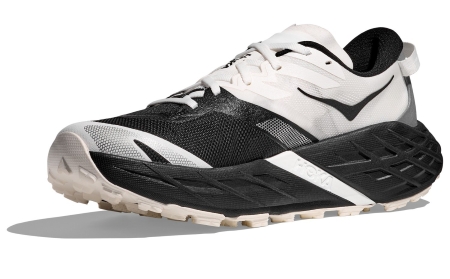
| Drop | Weight | Outsole | Widths | Best terrain |
|---|---|---|---|---|
| 5mm | 9.7 oz (men’s reference) | Vibram Megagrip with 5mm Traction Lugs | Regular and Wide | Wet rock, roots, loose climbs, long rugged trail days |
Speedgoat 7 is the shoe I would choose when a beginner’s local trail is genuinely rugged. The 2026 update moves to a livelier supercritical EVA package while retaining the full Vibram identity that makes the line useful on wet rock, roots, and loose surfaces. The outsole is a meaningful step above a crossover tread.
That capability does not make it the automatic number one. A tall, grippy shoe can encourage a new runner to enter terrain faster than their descending skill supports. The shoe improves the available traction; it does not choose the line, shorten braking distance on command, or prevent an ankle roll.
The listed 5mm geometry also deserves a transition. A road runner accustomed to 10-12mm can feel more calf and foot demand even when the midsole feels protective. Keep early Speedgoat runs short and technical enough to use the shoe, not long enough to combine unfamiliar geometry with a large mileage jump.
Fit has improved, but HOKA’s tapered forefoot still needs an honest check. The Wide version can solve edge spill, while runners needing a naturally broad toe shape may prefer Experience Wild 3+ or Hierro v9.
Fit check: Secure technical fit with Regular and Wide. HOKA suggests going up half a size, but verify that choice with the downhill toe-stop and heel-hold tests rather than applying it blindly.
Skip it when: Skip it for mostly paved routes, runners unwilling to transition to a low drop, or feet that need more anatomical toe space.
What I like: Excellent technical grip; Protective but livelier midsole; 5mm lugs; Strong long-run capability.
What I do not like: Low-drop transition; Premium price; Can be more shoe than a smooth park trail needs.
Read the related HOKA Speedgoat 7 review, then verify the current version on the official HOKA Speedgoat 7 page.
6. Altra Experience Wild 3+ – Best roomy low-drop option
Evidence status: Specification-led current-model assessment. Ken’s 250 miles in Lone Peak 5 inform only the low-drop and toe-shape transition context, not the Wild 3+ ride verdict.
Altra Experience Wild 3+ ranks 6 because it pairs Altra’s toe room with a 4mm rocker, 32/28mm stack, secure Standard FootShape midfoot, and a current Vibram outsole instead of forcing a beginner straight into zero drop.
| Drop | Weight | Outsole | Widths | Best terrain |
|---|---|---|---|---|
| 4mm | 11.4 oz / 323.2g (men’s reference) | Vibram Megagrip with Traction Lug | Standard FootShape fit | Mixed and rugged trails where toe room matters |
Experience Wild 3+ is the Altra I recommend before Lone Peak for many newcomers. It preserves the brand’s toe-friendly concept but uses 4mm of drop and a rocker, so the transition from a normal road shoe is less abrupt than moving directly to a flat, flexible platform. For how rocker location, curvature, and stiffness change transition, read my running shoe rocker-geometry guide.
The plus sign matters. Experience Wild 3+ uses Vibram Megagrip with Traction Lug and an integrated toe bumper; the non-plus Wild 3 uses MaxTrac. Those are different outsoles, and listings should not be treated as interchangeable simply because the upper name is similar.
Room at the toes does not mean the shoe is wide everywhere. Altra calls this its Standard FootShape, which is secure through the middle and roomier at the front. That can work well for a forefoot that spreads on descents, but a high-volume midfoot or true 4E foot may still fit Hierro better.
The main drawback is mass. At 11.4 ounces, it is heavier than Peregrine or Challenger. I would accept that weight for toe comfort and Vibram security, but not if the shoe feels slow to lift on steep climbs.
Fit check: Roomy at the toes with a secure Standard FootShape midfoot; it is not equivalent to a conventional 2E or 4E width.
Skip it when: Skip it if 4mm is too large a drop change, if you want a light racing feel, or if you need true extra-wide midfoot volume.
What I like: Toe-friendly shape; 4mm rather than zero drop; Vibram outsole; Secure technical update.
What I do not like: Heavy; Only one FootShape tier; Low-drop transition still required.
Read the related heel-drop guide for runners, then verify the current version on the official Altra Experience Wild 3+ page.
7. New Balance Fresh Foam X Hierro v9 – Best wide and extra-wide trail shoe
Evidence status: Specification-led current-model assessment. Weight varies across official US style listings, so the article reports the observed official range.
New Balance Fresh Foam X Hierro v9 ranks 7 because its D-to-4E fit range, dual-density Fresh Foam X, secure gusseted tongue, toe protection, and deep 6mm Vibram lugs solve real width needs without downgrading trail traction.
| Drop | Weight | Outsole | Widths | Best terrain |
|---|---|---|---|---|
| 4mm approximate | 10.3-11.1 oz / 293-314g across current US style listings | Vibram Megagrip, 6mm lugs | D, 2E, and 4E for men | Loose dirt, moderate mud, gravel, long easy trail mileage |
Hierro v9 is the width specialist that still behaves like a trail shoe. Many brands add upper volume to a wide version but leave the runner standing on the same narrow platform. New Balance offers D, 2E, and 4E, giving the fitter a better chance to keep the whole forefoot on the insole.
The v9 also moved to 6mm lugs and a dual-density Fresh Foam X arrangement. The softer layer brings comfort, while the firmer geometry underneath helps keep the shoe from becoming a loose cushion on uneven ground. A gusseted tongue and Toe Protect complete a practical, debris-resistant upper.
Deep lugs help on soft ground, but they can feel present on long pavement sections and do not automatically guarantee wet-rock grip from every angle. The shoe is also 4mm, so wide-footed runners coming from a high-drop road trainer still need to separate fit relief from geometry adaptation.
Do not buy 4E simply because it sounds comfortable. Use the narrowest width that keeps the forefoot fully supported without pressure. Excess space lets the foot accelerate inside the shoe before the upper catches it, which is exactly what a descent exposes.
Fit check: The strongest width range here; size by the larger foot and use the narrowest width that keeps the forefoot on the platform.
Skip it when: Skip it if 6mm lugs make your pavement approach awkward or if a soft upper allows movement despite the correct width.
What I like: True 2E and 4E options; 6mm Vibram lugs; Toe protection; Comfortable long-run platform.
What I do not like: Low-drop transition; Deep tread is less smooth on road; Wide sizing must still secure the heel.
Read the related wide running-shoe fit guide, then verify the current version on the official New Balance Fresh Foam X Hierro v9 page.
8. Brooks Caldera 8 – Best max-cushion option for long easy trails
Evidence status: Lineage evidence: 180 retrospective miles in Caldera 6. The Caldera 8 verdict is updated from current official construction and is not a current-version wear test.
Brooks Caldera 8 ranks 8 because its broad 6mm platform, raised sidewalls, adaptable grooves, quick-dry upper, and deep DNA LOFT v3 cushioning support long low-intensity trail time without relying on aggressive guidance.
| Drop | Weight | Outsole | Widths | Best terrain |
|---|---|---|---|---|
| 6mm | 10.6 oz / 300.5g | TrailTack Green | Standard and Wide | Long dry-to-mixed trails, rolling terrain, run-hike days |
Caldera 8 is for the beginner whose first goal is time on feet rather than speed. Brooks places a large amount of nitrogen-infused DNA LOFT v3 over a widened base, then uses raised sidewalls and outsole grooves to keep the platform adaptable. It is cushioned, but the geometry is doing as much work as the foam.
I like it for rolling, predictable trails and run-hike outings. The broad base feels settled at easy pace, and the quick-dry upper is more useful than a waterproof membrane in ordinary warm rain. The shoe can remain comfortable when a five-mile outing turns into a long day of walking and jogging.
The same volume can be clumsy on narrow, sharply cambered trail. A high platform gives more underfoot isolation and can make precise placement less obvious to a new runner. Cascadia or Peregrine is better when the lesson is footwork rather than all-day cushioning.
Caldera is also not a shortcut to ultra distance. Brooks markets it for long trail runs, but a beginner’s feet, calves, connective tissue, fueling, and descending skill still need progressive exposure. Buy the shoe for the route, not for the mileage printed in the product category.
Fit check: Broad and secure with raised sidewalls; confirm the sidewalls do not press the arch and the heel stays down uphill.
Skip it when: Skip it for narrow technical trail, runners who want ground feedback, or anyone whose ankles keep correcting on tall shoes.
What I like: Stable max-cushion geometry; Comfort over long easy outings; Quick-dry upper; Smooth 6mm transition.
What I do not like: Bulky on tight terrain; Less ground feedback; Overkill for short park paths.
Read the related trail hydration vest guide, then verify the current version on the official Brooks Caldera 8 page.
9. Saucony Xodus Ultra 4 – Best protective long-distance all-rounder
Evidence status: Specification-led current-model assessment using Saucony’s US weight, stack, offset, lug, foam, and outsole details.
Saucony Xodus Ultra 4 ranks 9 because its 36/30mm dual-foam chassis, 6mm drop, full Vibram coverage, and durable upper create a protected long-run tool without a rigid rock plate.
| Drop | Weight | Outsole | Widths | Best terrain |
|---|---|---|---|---|
| 6mm | 10.9 oz / 309g | Full-coverage Vibram Megagrip | Standard | Rock, roots, long mixed trails, hiking and running |
Xodus Ultra 4 is the shoe for a beginner who wants one protected trail model that can grow into longer outings. PWRRUN PB sits underfoot for response, while a PWRRUN frame adds durability and control. The 36/30mm geometry gives substantial protection without forcing a low 0-4mm setup.
Saucony uses full-coverage Vibram Megagrip here. That adds confidence on mixed rock and dirt, but I still judge traction by the complete tread and surface. Rubber cannot create purchase when mud is deeper than the lugs, and no outsole makes algae-covered wood predictable.
Unlike many technical shoes, Xodus Ultra 4 does not use a traditional rock plate. The foam and outsole supply the protection. Some runners will appreciate the smoother flex; others who repeatedly land on sharp rock may prefer Cascadia or Trabuco’s more explicit forefoot defense.
The upper and 10.9-ounce build feel substantial. I would not choose it for a runner whose entire trail week is a flat three-mile loop. It earns its place when protection, long-run comfort, and durability are being used rather than merely carried.
Fit check: Secure standard fit; check toe room after the foot is warm because no Wide version is listed on the main US page.
Skip it when: Skip it for wide feet, short road-heavy runs, or runners who want a light and highly flexible first trail shoe.
What I like: Protected dual-foam platform; Full Vibram coverage; 6mm drop; Useful for running and hiking.
What I do not like: Standard width only; Heavier build; No traditional rock plate.
Read the related uphill and downhill running guide, then verify the current version on the official Saucony Xodus Ultra 4 page.
10. ASICS Trabuco 14 – Best forefoot protection for technical trail
Evidence status: Specification-led current-model assessment using ASICS’ US product page and 2026 trail-shoe guide. The unpublished US drop is left unpublished here.
ASICS Trabuco 14 ranks 10 because its forefoot protection plate, ASICSGRIP outsole, secure new midfoot fit, wider forefoot, and FF BLAST MAX cushioning prioritize control over sharp, irregular ground.
| Drop | Weight | Outsole | Widths | Best terrain |
|---|---|---|---|---|
| Not exposed in the current US product copy | Approx. 9.9 oz / 281g (men’s reference) | ASICSGRIP | Standard | Rocky, rooty, unpredictable technical trail |
Trabuco 14 is the specialist at the bottom of the ranking, not a weak tenth place. It belongs here because technical protection is valuable only when the beginner’s local terrain requires it. The forefoot plate filters sharp rocks and roots, while ASICSGRIP and a secure midfoot help keep the shoe organized.
ASICS changed the fit for this version, holding the middle more securely while opening the forefoot. That is the correct relationship for descending: toes need space, but the foot should not slide forward to use it. The standard-width-only listing still limits the range of feet it can accommodate.
FF BLAST MAX adds a more energetic feel than older Trabuco versions. Protection remains the reason to buy it. On smooth hardpack, the plate and technical construction can feel unnecessary beside Challenger or Nike; on angular rock, they begin to justify themselves quickly.
ASICS publishes an approximate men’s weight of 281g in its 2026 Trabuco guide, while the current US product copy does not expose a heel-drop figure. I would rather leave that cell explicit than recycle a predecessor’s specification and pretend it belongs to this shoe.
Fit check: Secure new midfoot with more forefoot space, but the current US listing is Standard width only.
Skip it when: Skip it when the route is mostly road or smooth dirt, or when your foot needs a verified Wide or Extra Wide platform.
What I like: Forefoot protection plate; Secure technical fit; ASICSGRIP; Lighter than several protective rivals.
What I do not like: Standard width only; More technical than many beginners need; US page omits drop in visible copy.
Read the related anti-blister running sock guide, then verify the current version on the official ASICS Trabuco 14 page.
Full Comparison Table
Use the table to narrow the field, not to pick a winner without trying it. Weight references are not directly comparable across every brand size, and an unpublished specification should stay unpublished rather than be borrowed from a previous model.
| Rank | Shoe | Best use | Drop | Weight | Widths |
|---|---|---|---|---|---|
| 1 | Saucony Peregrine 16 | Best overall for mixed trails | 4mm | 9.5 oz / 271g (men’s reference) | Standard and Wide |
| 2 | Nike ACG Pegasus Trail | Best road-to-trail shoe | Not published in Nike’s launch brief | Not published in Nike’s launch brief | Standard |
| 3 | HOKA Challenger 8 | Best familiar high-drop crossover | 8mm | 9.7 oz (men’s reference) | Regular and Wide |
| 4 | Brooks Cascadia 19 | Best stable technical all-rounder | 6mm | 10.7 oz / 303.3g | Standard and Wide |
| 5 | HOKA Speedgoat 7 | Best grip and cushion for rugged trails | 5mm | 9.7 oz (men’s reference) | Regular and Wide |
| 6 | Altra Experience Wild 3+ | Best roomy low-drop option | 4mm | 11.4 oz / 323.2g (men’s reference) | Standard FootShape fit |
| 7 | New Balance Fresh Foam X Hierro v9 | Best wide and extra-wide trail shoe | 4mm approximate | 10.3-11.1 oz / 293-314g across current US style listings | D, 2E, and 4E for men |
| 8 | Brooks Caldera 8 | Best max-cushion option for long easy trails | 6mm | 10.6 oz / 300.5g | Standard and Wide |
| 9 | Saucony Xodus Ultra 4 | Best protective long-distance all-rounder | 6mm | 10.9 oz / 309g | Standard |
| 10 | ASICS Trabuco 14 | Best forefoot protection for technical trail | Not exposed in the current US product copy | Approx. 9.9 oz / 281g (men’s reference) | Standard |
Runners who prioritize a lighter feel can compare the broader lightweight running-shoe guide, but road weight alone does not account for trail rubber, toe protection, and a debris-resistant upper.
The Fit Test: Flat Ground Is Not Enough
A first trail shoe should pass a warm-foot test, a toe-stop test, a climb test, and an off-camber test. Standing on level carpet can reveal obvious pressure, but it cannot show whether the foot moves when gravity changes direction.
- Measure both feet late in the day: fit the larger foot and use the socks intended for trail running.
- Remove the insole: stand on it to identify forefoot spill and toe taper; this is a screen, not the whole fit test.
- Warm the upper: jog for at least ten minutes so foam and fabric behave more like they will outside.
- Walk a steep incline: heel lift should not require crushing the top of the foot with laces.
- Use a decline or ramp: toes should not hit the front, and the foot should not slide to consume all available space.
- Traverse a slope: the foot should stay over the platform rather than leaning into the upper wall.
- Recheck pressure: reject a sharp arch ridge, little-toe squeeze, heel edge, or numbness rather than planning to break it in.
Do not size up automatically: A half size can create descent room, but it can also create sliding. When the forefoot is too broad for the platform, change width or shoe shape before adding length.
How to Transition From Road Shoes to Trail Shoes
Change terrain, shoe geometry, and training load one variable at a time when possible. A first trail run already adds irregular footing, climbing, descending, and slower pace. A lower drop and much stiffer shoe can add two more changes.
| Current road setup | First trail-shoe strategy | Watch for |
|---|---|---|
| 8-12mm daily trainer | Start with Challenger 8 or a short trial in a 4-6mm model | Calf, Achilles, arch, and foot fatigue |
| 4-6mm road trainer | Peregrine, Cascadia, Speedgoat, or Xodus may be familiar | Tread stiffness and technical upper pressure |
| Zero-drop road shoe | A 4mm trail shoe is still a change | Different rocker, stack, and outsole flex |
| Very soft max-cushion road shoe | Choose a stable trail platform before chasing softness | Ankle correction and side-to-side drift |
| Wide road shoe | Use a verified trail width, not extra length | Forefoot spill and heel movement |
Keep early trail pace conversational and let effort rise on climbs without chasing the road watch display. Use the easy-run pace guide to anchor effort, then accept that trail pace changes with grade and footing.
If you track routes and elevation, the GPS watch guide for runners explains navigation and battery tradeoffs. Heart-rate users can compare sensor limitations in the running heart-rate monitor guide.
Waterproof or Breathable Trail Shoes?
Choose waterproof only when keeping cold, shallow water out is more valuable than ventilation and drainage. A membrane delays entry; it does not keep a shoe dry after water pours over the collar.
| Condition | Breathable mesh | Waterproof membrane |
|---|---|---|
| Warm rain | Usually better ventilation and drainage | Often warmer and slower to dry |
| Creek crossings | Water exits more quickly | Water can remain trapped after collar entry |
| Cold wet grass or shallow snow | May wet out early | Useful when water stays below the collar |
| Dry dusty trail | Cooler and lighter | Unnecessary unless cold or weather changes |
For clothing, visibility, lightning, and post-run care, use the running-in-the-rain guide. A membrane decision should follow the weather and route, not a belief that waterproof automatically means safer.
A Practical First Four Trail Runs
The first goal is to learn how the shoe and terrain interact, not to prove fitness. Keep the route familiar, daylight generous, and consequences low enough that you can notice fit and movement.
| Run | Focus | Keep constant |
|---|---|---|
| 1: Short hardpack loop | Heel hold, toe room, calf and arch response | Easy effort and familiar duration |
| 2: Add gentle climbing | Uphill heel lift and downhill toe stop | No speed targets |
| 3: Add modest technical sections | Foot placement, lateral hold, outsole confidence | Short overall exposure |
| 4: Repeat before extending | Next-day response and whether problems repeat | Same shoe, socks, and route class |
Walk technical sections before running them. Shortening the stride and keeping the feet under the body usually gives more options than braking from an overstride. Look several steps ahead, then use peripheral vision for the immediate landing zone. For a pace-specific retraining process, follow my step-by-step overstriding guide.
Route consequences determine the kit. The guides to how much water to carry, trail-running gaiters, and a trail headlamp cover three common needs without turning a short park loop into an expedition.
Training progression still controls the adaptation. Review practical running-injury prevention and recovery and rest-day decisions rather than relying on a shoe to absorb every load error.
Cleaning, Drying, and Replacing Trail Shoes
Remove mud before it hides wear, dry shoes with moving air at room temperature, and replace them by function rather than one universal mileage number. Trail surface, runner mass, gait, outsole compound, foam, storage, and route all change useful life.
- Brush off dry mud and stones before washing; do not grind grit deeper into mesh and flex grooves.
- Use cool water, mild soap, and a soft brush when needed. Avoid a hot dryer, radiator, or direct high heat.
- Remove the insole and loosen the laces so air reaches the interior. Paper can help absorb initial moisture, but replace it when saturated.
- Inspect lug edges, exposed midsole, toe-cap separation, upper tears, and whether the shoe sits level on a flat surface.
- Compare behavior with a fresh pair when grip, cushion, or stability feels different. Visual wear is only one signal.
The full process is in How to Wash Trail Running Shoes. For a functional wear audit, use the running-shoe replacement test instead of treating 300 or 500 miles as an expiration date.
Frequently Asked Questions
These short answers preserve the decisions that matter most: terrain, fit, transition, and route consequences.
What are the best trail running shoes for beginners?
Saucony Peregrine 16 is the best overall first trail shoe for mixed singletrack. Nike ACG Pegasus Trail is better for road-to-trail routes, HOKA Challenger 8 for smooth trails and familiar 8mm geometry, and Brooks Cascadia 19 for rougher technical terrain.
Can a beginner use road running shoes on trails?
Yes, on dry, smooth, nontechnical paths when the road shoe has enough traction and a secure upper. Move to a trail shoe when loose dirt, wet surfaces, rock, roots, steep grades, or debris make outsole grip, lockdown, and protection meaningful.
How should trail running shoes fit?
The heel and midfoot should stay secure while the toes have space to spread and avoid the front on descents. Fit the larger foot, wear the intended socks, and test the shoe on an incline rather than automatically sizing up half a size.
What lug depth is best for a first trail shoe?
About 3-5mm is a useful all-around range, but shape, spacing, rubber, surface area, and terrain matter as much as depth. Deeper, wider-spaced lugs favor soft ground; broader moderate lugs feel smoother on hardpack and road links.
What heel drop is best for beginner trail runners?
There is no universal best drop. Start near the geometry you already tolerate, then transition gradually if the trail shoe is meaningfully lower. A low-drop shoe can be excellent without being the best immediate change for every road runner.
Do beginners need a rock plate?
Not on every trail. A plate is useful where sharp rocks and roots repeatedly load the forefoot, but it can add stiffness and reduce ground feel on smooth dirt. Midsole depth and outsole construction can also provide protection.
Are waterproof trail running shoes better?
Usually only for cold, shallow, persistent wet conditions. A waterproof membrane slows water entry but also slows drainage and runs warmer. Breathable mesh is often better for warm rain, creek crossings, and runs where water enters over the collar.
Should trail running shoes be a half size bigger?
Not automatically. The correct size leaves descent room without allowing the foot to slide. Measure both feet late in the day, fit the larger one, and change width before adding unnecessary length when the forefoot spills over the platform.
Can trail running shoes prevent ankle sprains?
No shoe can guarantee that. A stable platform, secure upper, suitable traction, strength, foot placement, speed control, and terrain experience all affect the system. High collars and cushioning do not mechanically eliminate inversion risk.
Are trail running shoes good for hiking?
Many are, especially Cascadia 19, Speedgoat 7, Experience Wild 3+, and Xodus Ultra 4. Trail shoes are lighter and more flexible than boots, but they offer less ankle coverage and may wear faster under heavy packs or abrasive walking. For higher-mileage trail days, compare these trail shoes for long distances.
How long do trail running shoes last?
There is no reliable mileage number for every shoe and trail. Replace or demote the pair when lugs no longer bite, the platform leans or bottoms out, the upper loses hold, protection is exposed, or behavior changes versus a fresh comparison pair.
How much should a beginner spend on trail running shoes?
Do not choose by price tier alone. A previous-generation model can be good value when its fit, outsole, and geometry match the route, but verify the exact version because updates can change drop and traction. Pay for fit and terrain function before plates, fashion, or maximum stack.
Specification Sources and Update Notes
Last full specification check: July 17, 2026. Prices and inventory can change. Weight can also vary by size, sex-specific construction, color or style code, and production tolerance. When a US manufacturer page did not publish a field, this guide says so instead of filling it from a retailer.
- Saucony Peregrine 16: current outsole, foam, fit, and model details.
- Nike ACG Pegasus Trail launch brief: ReactX, All Terrain Compound 2.0, wider trail last, drainage, and protection.
- HOKA Challenger 8: current US model details.
- Brooks Cascadia 19: 6mm drop, reference weight, traction, and adaptable ride.
- HOKA Speedgoat 7 launch details: stack, reference weight, 5mm lugs, Vibram outsole, and widths.
- Altra Experience Wild 3+: 4mm drop, 32/28mm stack, weight, FootShape tier, and Vibram outsole.
- New Balance Hierro v9: width range, drop, foam, tread, and style-dependent weight.
- Brooks Caldera 8: 6mm drop, reference weight, platform, and upper.
- Saucony Xodus Ultra 4: weight, 6mm offset, stack, 4mm lugs, foam, and Vibram coverage.
- ASICS Trabuco 14 and the 2026 ASICS trail guide: fit update, foam, protection plate, outsole, and reference weight.
Final Verdict
Saucony Peregrine 16 is the best trail running shoe for most beginners because its current Vibram outsole, 4mm all-around lugs, protected platform, secure upper, and Wide option cover the broadest range of real singletrack. Transition carefully if 4mm is far below your road shoe.
Choose Nike ACG Pegasus Trail when road and gravel dominate, HOKA Challenger 8 for smooth trail and familiar 8mm geometry, Brooks Cascadia 19 for stable technical protection, or HOKA Speedgoat 7 when wet-rock grip and rugged cushioning are the main job.
The best first trail shoe is the one that disappears under a controlled stride while the tread still does its work. Match it to the route, verify it on a slope, and let trail skill grow before pace and distance.
NextGait may earn a commission from qualifying purchases. Affiliate relationships do not change the ranking, fit warnings, or reasons a popular shoe may be wrong for a route. Full disclosure.
Pingback: Best Trail Running Gaiters: 4 Models Tested and Ranked | NextGait