
Best running shoes for orthotics: I start with the Saucony Echelon 10 because its broad, straight platform gives me the most sensible place to fit a device before I judge the ride. Brooks Ghost Max 3 is my cushioned rocker alternative; Ghost 18 is my familiar daily trainer. I reviewed ten shoes below, but the winner for you is the one that holds your actual orthosis flat while keeping your heel secure and your toes clear.
I am Ken, a 182-pound runner in men’s US 10.5 D. My logged miles tell me how these shoes fit and run on my foot. They cannot prove that every custom device will fit, or that any shoe treats a condition. I use the shoe and orthosis as one system, and I would take a prescribed device and its fitting instructions to the try-on.
My 3 quick picks
| Pick | Best for | Why I would try it first | Check availability |
|---|---|---|---|
| Saucony Echelon 10 | Best overall for orthotic volume | A straight, broad platform with the most forgiving starting shape for a bulky device. | Check on Amazon ↗ |
| Brooks Ghost Max 3 | Best cushioned rocker | A broad base and rolling transition for runners who want a smoother, cushioned stride. | Check on Amazon ↗ |
| Brooks Ghost 18 | Best familiar daily ride | A conventional daily trainer when an orthosis already supplies the foot-level structure. | Check on Amazon ↗ |
📖 What’s in This Guide ▼ Click to expand
What actually makes a running shoe orthotic-friendly?
Depth after removing the stock liner matters more than a marketing label. I check four things together: does the orthosis sit flat, does the heel remain held, is there enough space above the toes and instep, and does the shoe still run naturally? A wide outsole does not tell me the internal width; a removable liner does not guarantee adequate depth.
The device itself changes the answer. A thin over-the-counter insert and a tall custom shell can occupy very different amounts of room. If you are comparing those types, my custom orthotics versus over-the-counter insoles guide helps frame the decision. I never trim or reshape a prescribed device just to save a poor shoe match; its clinician should direct modifications.
I also look for unwanted layers of control. Echelon, Beast, and Adrenaline have their own support characteristics. Whether those complement an orthosis depends on the device and the runner. If you need a simpler starting set beyond this niche list, see my broader running shoes guide.
How I tested the shoes—and what the miles do not prove
I have running miles in all ten shoes, not ten universal orthotic-fit certificates. The mileage in each review tells me about my fit, ride, and early or later wear. It does not tell me how a different person’s rigid, high-arched, or thick device will sit in the same shoe. My shortest log here is 85 miles in GEL-CUMULUS 28; I treat its durability comments accordingly.
I rank the candidates by the room and shape available after a stock liner is removed, heel containment once the device raises the foot, forefoot and instep clearance, and how naturally the shoe runs with the device in place. Manufacturer statements about removable liners are useful checks, but I will not call a shoe compatible until the reader tests the actual pair and orthosis together.
A device prescribed for a specific movement problem also changes my shortlist. I avoid assuming that more shoe support plus more orthotic support must be better. When the two seem to fight each other, I take the complete setup back to the prescriber instead of changing the device myself.
The 10 best running shoes for orthotics: my reviews
These are shoes I have run in, ranked as orthotic fitting candidates. Mileage describes shoe testing, not ten controlled tests with every possible orthosis. I would still take the exact device to the store and reject any pair that fails the fit sequence below.
1. Saucony Echelon 10 — best overall for orthotic volume

Why it made my list: I keep returning to the Echelon when the footbed needs to do the fitting work. Across 163 logged miles, the broad platform felt steady through easy road and boardwalk running. My US 10.5 D foot had useful front room, and the heel stayed contained without painfully tight laces. This is a substantial daily shoe; it does not ask me to run fast to make sense of it.
Orthotic fit check: Its broad, relatively straight shape is why it leads my orthotics shortlist. After removing the factory liner, I would check whether the device lies flat, whether the heel remains below the collar, and whether the added arch height presses into the upper. Saucony describes the Echelon 10 as a stability shoe, so I assess the combined guidance of shoe and orthosis rather than call it neutral. A wide or rigid device still needs a real try-on.
Who I would choose it for—and who should pass: I would choose it for easy and steady mileage with a thicker orthosis, provided the actual device passes the fit test. I would pass if I wanted a nimble speed shoe or if the built-in structure and my orthosis together felt intrusive. The newer Echelon 11 is a separate version; these miles belong to the 10.
2. Brooks Ghost Max 3 — best cushioned rocker
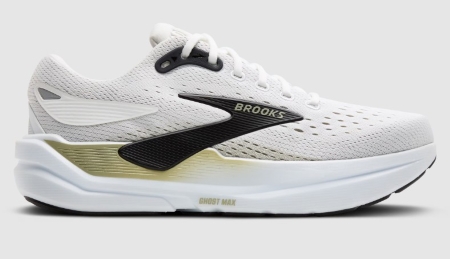
Why it made my list: My 158 miles in the Ghost Max 3 made its appeal clear: it rolls through easy miles without making me chase the pace. I used it on steady roads and walking-heavy recovery days. The padded heel held my foot securely, and the platform felt broad under my 182-pound frame. It is the opposite of a light, quick trainer, but that calm ride is useful when the device already changes how the foot meets the ground.
Orthotic fit check: The wide-looking base is only a first clue. I would remove the stock liner, place the orthosis fully back against the heel, and check that the device does not ride up the curved sidewalls or alter the rocker in a way that feels forced. The heel must remain captured once the device lifts the foot. A rigid orthosis that fights the shoe’s roll can make this otherwise smooth design the wrong match.
Who I would choose it for—and who should pass: I rank it second for a runner who prioritizes cushioning and a rocker over a traditional flexible feel. I would skip it for quick cadence changes, rough gravel, or a device that cannot sit level inside. In those cases, the Echelon or Ghost 18 is an easier starting point.
3. Brooks Ghost 18 — best familiar daily ride
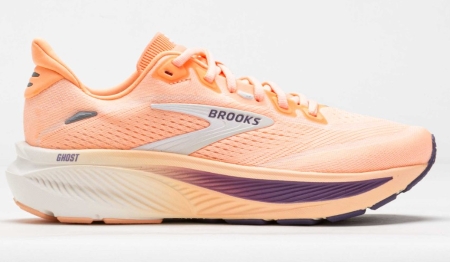
Why it made my list: The Ghost 18 is my conservative choice when I want the shoe to disappear under the run. I have 380 logged miles in it, mostly steady road and boardwalk work. The padded rearfoot, accommodating front, and predictable transition suited my regular 10.5 D. The upper remained intact through my log while the landing area gradually smoothed and the ride softened. That is the sort of ordinary wear story I can plan around.
Orthotic fit check: Its familiar shape makes it worth testing with an orthosis that does not need unusually high volume. I would pull the original sockliner, then check instep pressure, toe depth, and heel hold. A shoe can fit me in its stock configuration and become too shallow after a device goes in; I would never treat my 380 miles as proof of someone else’s orthotic clearance.
Who I would choose it for—and who should pass: I prefer Ghost 18 for daily training with a moderate-profile device and a conventional ride. It is less compelling for aggressive intervals, and a thick device may make the upper feel crowded. If the device is bulky, I would try Echelon first.
4. Brooks Beast GTS 24 — best when extra structure is prescribed
Why it made my list: The Beast GTS 24 felt like a controlled, planted platform across my 360 logged miles. I used it for easy and steady running, where its substantial heel and upper held my foot securely. The robust build survived the cycle in my log, but it is clearly more shoe than I want for quick sessions. I include it for a specific need, not because maximum support should be everyone’s default.
Orthotic fit check: Brooks confirms that its factory insole can be removed. That creates room, but the GuideRails structure remains part of the shoe. If a clinician prescribed a device for a particular movement pattern, I would ask how this extra shoe guidance fits the plan, then test the complete system while running. I would also check that a tall device does not lift my heel out of the deep-looking collar.
Who I would choose it for—and who should pass: This is the specialist option when a broad supportive shoe is genuinely desired. I would not add it automatically to a firm corrective orthosis; redundant guidance can feel restrictive. If the combination feels overbuilt, I would start with a simpler platform.
5. Brooks Glycerin 23 — best plush neutral feel
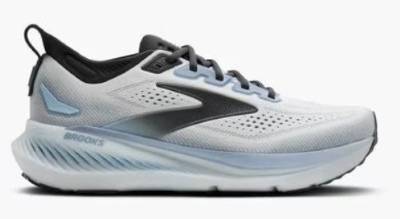
Why it made my list: I logged 211 miles in the Glycerin 23 and reached for it when easy mileage mattered more than speed. The upper felt accommodating around my foot, with a secure padded heel and a soft landing that stayed pleasant on hard surfaces. Unlike the Beast, it does not make support the main story. That lets me assess what the orthosis is doing without assuming I also need a strongly guided shoe.
Orthotic fit check: Brooks states that the Glycerin 23 insole can be removed for an orthotic. I would still judge the space left after removal, not the label. A thick device can lift the foot into the upper and change heel lockdown; a firm device can also make the plush ride feel different from my stock-insole run. I would bring both orthoses to the fitting if their thickness differs.
Who I would choose it for—and who should pass: I like it for comfort-first daily runs with a moderate device that sits flat. I would pass if the shell needs a particularly straight, roomy bed or if soft cushioning plus the device feels unstable. The Echelon is the more forgiving first try in that situation.
6. Saucony Ride 19 — best lighter everyday option
Why it made my list: My 110-mile Ride 19 log is shorter than several others here, so I make a narrower claim: it felt easy to use as a daily trainer on my regular roads. The Saucony shape gave my forefoot room and held my heel in my usual size. It made the shortlist because a runner using a low-profile insert may want a conventional, less bulky shoe rather than a high-volume specialist.
Orthotic fit check: I would remove the factory liner only if the device and its prescriber call for replacement, then check whether the orthosis sits flat under the arch and whether the front still has vertical room. The Ride’s secure heel in my stock setup does not guarantee the same hold once a device raises the foot. This is a shoe to test with the exact insert, not one to buy from a removable-liner description alone.
Who I would choose it for—and who should pass: Choose it when the orthosis is thin enough to preserve fit and you want an ordinary daily shoe. If the heel rises or the upper presses on the instep, I would move to Echelon or another higher-volume candidate rather than sizing up blindly.
7. HOKA Bondi 9 — best maximal cushion candidate

Why it made my list: The Bondi 9 was one of my easy-day comfort shoes across 310 logged miles. It gave me a cushioned, rolling rhythm on hard pavement, and the rearfoot stayed secure in my usual size. I do not mistake the tall exterior stack for generous interior volume, though. The foot sits inside shaped sidewalls, which can be a benefit for some feet and a conflict for a rigid orthosis.
Orthotic fit check: This is the pair I insist on testing with the actual device before considering its running comfort. I check whether the orthosis’s heel cup and edges settle within the footbed without rocking or pressing into the sidewalls. Then I check that the added height does not put my heel above the secure part of the collar. A lower-profile insert may cooperate better than a wide, rigid shell.
Who I would choose it for—and who should pass: I would consider Bondi 9 if comfort on easy road miles is the priority and the full system stays seated. I would skip it if the orthosis teeters, pinches at the side, or changes the rocker into an unnatural roll.
8. ASICS GEL-NIMBUS 28 — best soft long-run candidate
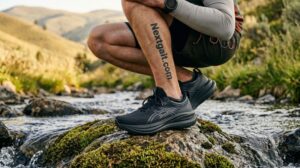
Why it made my list: I have 260 running miles in the GEL-NIMBUS 28. Its soft landing and enveloping upper make more sense to me on easy and longer outings than on speed days. The plush heel felt secure on my 10.5 D foot, and the upper accommodated ordinary swelling late in a run. Those are running impressions, not a guarantee that a tall orthosis will fit beneath the same upper.
Orthotic fit check: ASICS lists an OrthoLite sockliner, and its product information in some markets identifies the liner as replaceable. I would verify the actual pair in hand, remove the stock liner when appropriate, and then check toe and instep height. A soft upper can hide pressure at first; I would wear the complete system long enough to discover whether the device edge or arch becomes noticeable.
Who I would choose it for—and who should pass: I like it for a runner whose orthosis is comfortable in a soft, protective shoe and whose pace is mostly easy. I would move away if the device lifts the heel, the arch feels doubled, or the soft platform becomes vague underfoot.
9. Brooks Adrenaline GTS 25 — best familiar guided trainer
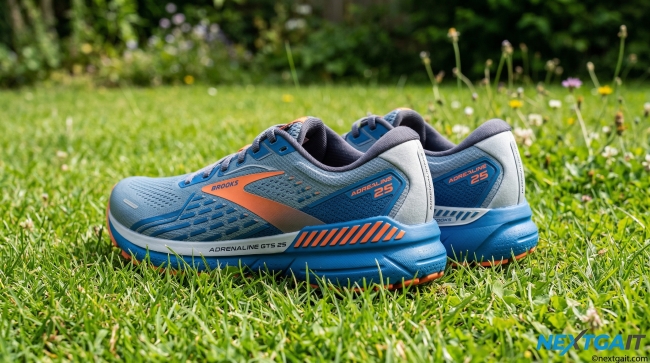
Why it made my list: Across 340 logged miles, the Adrenaline GTS 25 gave me the straightforward daily rhythm I expect from this line. The heel stayed well held, the upper was predictable on my standard-width foot, and the ride worked for steady miles. I would not put it ahead of Echelon for a bulky device, but it is a useful comparator for someone who already runs comfortably in Brooks support shoes.
Orthotic fit check: Brooks uses GuideRails in this model. That support does not automatically become better when paired with an orthosis; the two must be considered as one system. I would replace the liner, check the shell’s position relative to the shoe’s side structures, then run at my normal pace. If the combined guidance feels like it is steering the foot, I would test a simpler shoe and discuss the mismatch with the prescriber.
Who I would choose it for—and who should pass: Keep it on the shortlist when you already know guided shoes work with your device. I would pass if the orthosis alone supplies enough control or if the upper loses toe depth after insertion.
10. ASICS GEL-CUMULUS 28 — best compact cushioned option
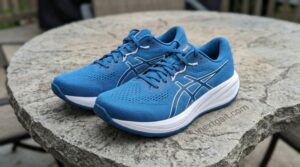
Why it made my list: My 85-mile GEL-CUMULUS 28 log is the smallest here, so this is an early-fit option rather than a long-term durability verdict. I found a smooth, lighter daily ride and a heel that stayed quiet on my ordinary runs. ASICS uses a breathable engineered mesh and a cushioned sockliner; I liked the easier turnover compared with its more plush sibling, the Nimbus.
Orthotic fit check: The key question is whether the actual orthosis preserves the Cumulus’s useful room. I would take out the stock liner, seat the device against the heel, and check the top of the toes and instep while standing and jogging. An insert that fits Nimbus may still crowd Cumulus, and a smaller outside silhouette says little about the inside shape.
Who I would choose it for—and who should pass: I would shortlist it for a lower-profile device and a runner who wants a lighter everyday feel. I would not promise long-term wear from 85 miles, and I would reject it immediately if the device lifts my heel or squeezes the forefoot.
Compare all ten at a glance
| Shoe | My role for it | Running miles in my log | Fit check that decides it |
|---|---|---|---|
| Saucony Echelon 10 | Roomy starting point | 163 | Device flat; support feels compatible |
| Brooks Ghost Max 3 | Cushioned rocker | 158 | Device does not fight rocker or sidewalls |
| Brooks Ghost 18 | Conventional daily ride | 380 | Instep and heel depth remain secure |
| Brooks Beast GTS 24 | Strong support specialist | 360 | GuideRails and device work together |
| Brooks Glycerin 23 | Plush neutral feel | 211 | Soft upper still clears the device |
| Saucony Ride 19 | Less bulky daily shoe | 110 | Lower-profile insert keeps heel locked |
| HOKA Bondi 9 | Maximal cushion | 310 | Rigid shell does not teeter on shaped bed |
| ASICS GEL-NIMBUS 28 | Soft long-run shoe | 260 | Toe and instep depth after liner removal |
| Brooks Adrenaline GTS 25 | Guided daily trainer | 340 | Combined support does not over-steer |
| ASICS GEL-CUMULUS 28 | Compact cushioned option | 85 | Device stays seated in smaller interior |
Which shoe should I try with my orthotic shape?
I use this as a try-on order, not a fit guarantee. I start with the device’s shape and volume, then let the seated orthosis and a short run decide. A wide shoe is not automatically deep enough, and a thick heel cup can change collar hold even when the forefoot has room.
| Device or fit problem | First shoes I would try | What decides the fit |
|---|---|---|
| Thick full-length shell | Echelon 10; then Ghost Max 3 | The shell lies flat and leaves the heel securely below the collar. |
| Moderate or low-profile insert | Ghost 18; Glycerin 23; Ride 19 | No new instep pressure, toe contact, or heel lift after replacing the liner. |
| High or wide heel cup | Echelon 10; Beast GTS 24 if its support suits the plan | The cup does not ride on the shoe’s sidewalls or overfill the heel. |
| Device that feels awkward in a rocker | Ghost 18; Ride 19 | The orthosis remains flat and the run does not feel forced forward. |
| Device plus prescribed shoe guidance | Beast GTS 24 or Adrenaline GTS 25 to discuss with the prescriber | The combined guidance feels natural rather than steering the foot. |
My orthotic fitting sequence before buying
I bring the actual orthoses, my normal running socks, and my old shoe. An empty shoe can look roomy and fail once a device lifts the foot. I begin with the size that normally fits my length; if the insert changes fit, I compare width and depth before automatically increasing length. My running shoe fit guide covers the baseline check.
- Seat the device: I remove the factory liner if the orthosis is meant to replace it, set the device fully back, and make sure it lies flat without a curled edge or rocking heel.
- Check standing room: I look for toe clearance above and ahead of the foot, no instep pinch, and a heel that remains below the secure part of the collar.
- Walk and jog: I turn, climb a step, and run easy for ten minutes. I listen for squeaks or sliding and notice any new arch or edge pressure.
- Repeat after warming up: I extend gradually to a normal short run only when the first test is comfortable. A device that feels fine standing can rub once the foot swells.
Heel lift after inserting the device is a fit problem, not automatically a lacing problem. My heel-slip guide can help when the shoe otherwise fits, and the toe-box guide helps distinguish width from length. Persistent pressure, numbness, skin damage, or new pain goes back to the prescriber.
If you move one orthosis between shoes, I recheck it in every pair. The fit that worked in a daily trainer may change in a racer or another brand. I use the running shoe rotation guide to choose shoe roles, then validate the device separately in each. Runners seeking more toe space may also compare my wide-foot running shoe list, while remembering that a wide upper and a wide internal platform are different things.
FAQ: running with orthotics
Should I remove the original insole before inserting an orthotic?
Usually I remove the shoe’s liner when the orthosis is designed to replace it, because stacking can raise my foot and crowd the heel and toes. I follow the device prescriber’s instructions if they specify a different setup. Then I confirm the insert sits flat and the shoe still holds my heel.
Do I need a stability shoe if I wear orthotics?
Not automatically. The orthosis may already change how my foot is supported, while a stability shoe adds its own guidance. I judge the combination in motion and ask the prescriber when the device was designed for a particular shoe type. My stability shoe comparison is a useful next step only when extra shoe support is part of that decision.
Can I size up so the orthotic fits?
Sometimes a different size or width is needed, but I do not add length as a reflex. Too much length can shift the bend point and loosen the heel. I first try removing the stock liner, then compare depth, width, and heel hold with the actual device inside.
Can I trim a custom orthotic to fit a shoe?
I would not modify a prescribed device on my own. Some devices are designed to be adjusted, but the safe cut line and fit goal depend on that device. I take the shoe and orthosis back to the clinician or orthotist if the edges or length conflict.
Which shoe should I try first for a thick orthotic?
I start with Saucony Echelon 10 because of its broad, accommodating shape, then test the device flatness, heel depth, and running comfort. If I want a smoother rockered ride, I try Ghost Max 3 next. Neither is a guaranteed fit for every thick shell.
Is a wide running shoe automatically better for orthotics?
No. Width may help a broad forefoot or device, but an orthosis also uses vertical space and can lift the heel. I check length, internal width, toe and instep depth, and heel containment separately. If the device only fits after I make the shoe too long, I try another shape.
My final verdict
For the best running shoes for orthotics, I would try the Echelon 10 first and buy it only if the complete device-shoe system passes the fit test. Ghost Max 3 is my cushioned rocker choice, while Ghost 18 is my conventional daily trainer. The other seven serve narrower preferences for softness, structure, or a smaller everyday feel. The correct orthosis fit outranks this list every time.

Written by Ken — 12 years of running, 12,500+ miles, 63 shoes tested, 36 races from 5Ks to a 50K ultra. I run 30–40 miles a week on the Atlantic City Boardwalk and review every shoe with real training miles, not one-run demos. More about me →