
Which vegan running shoes would I shortlist? For easy road miles, I start with Brooks Ghost 18; for faster sessions, Saucony Endorphin Speed 5; for light trails, ASICS Fuji Lite 6. After 12 years of running, I use two gates: a clear material claim for the exact model, then a fit and ride that work for its real job. A synthetic-looking upper alone cannot pass the first gate.
These are starting points, not interchangeable winners. Fuji Lite 6 is the light trail shoe I know best from my own running; several newer models below are fit-and-use comparisons rather than long-term wear verdicts. I keep every vegan claim tied to the current model and recheck the exact listing before purchase.
Quick Picks: My Top 3 Vegan Running Shoes
| My pick | Best use | Why I choose it |
|---|---|---|
| Brooks Ghost 18 | Everyday road miles | A balanced shoe I can recommend as a first neutral try-on |
| Saucony Endorphin Speed 5 | Faster training | A model-specific vegan claim and a versatile nylon-plated ride |
| ASICS Fuji Lite 6 | Light trail running | A detailed vegan-friendly statement plus my logged trail miles |
10 Best Vegan Running Shoes: In-Depth Reviews
I separate running experience from material verification. I have logged substantial miles in Fuji Lite 6 and the previous Gel-Trabuco 13. My Gel-Trabuco 13 miles are not a test of Trabuco 14; for the newer models, I explain the job each shoe would fill and the tradeoff I would test. A manufacturer vegan or vegan-friendly statement qualifies the shoe for this list, but it does not tell me how it will fit your foot.
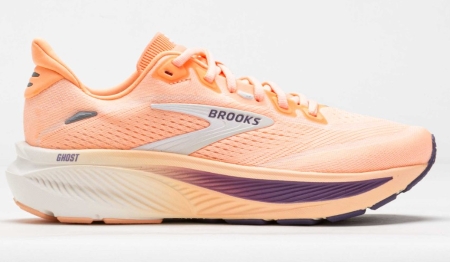
1. Brooks Ghost 18 — Best everyday road shoe
| Surface | Vegan claim | I would watch for |
|---|---|---|
| Road | Brooks brand policy: vegan except named leather/wool exceptions | Balanced rather than exciting |
If a vegan runner asks me for one dependable road shoe before we talk about plates or maximal cushioning, I start with the Ghost 18. Its assignment is easy runs, ordinary mileage, and the days when I want a shoe to disappear rather than dictate my stride. Brooks describes a soft yet dynamic DNA LOFT v3 ride, a secure heel, and a more comfortable tongue in this version; I would check that those updates work on the runner’s foot rather than assume that newer automatically means better.
I use Brooks’ current vegan policy as the material check: it covers most products, including dyes and glues, and names animal-material exceptions. Ghost 18 is not among those exceptions. I still check a special edition or retailer listing before buying; a mesh upper alone would not settle the question.
I would not buy it for a runner whose main goal is fast intervals or a very soft, high-stack feel. I would choose it when fit and routine matter most: a neutral daily shoe that can handle the bulk of road training without a specialist learning curve. I have not logged a dedicated Ghost 18 test block, so this is a fit-and-use recommendation, not a firsthand durability verdict.
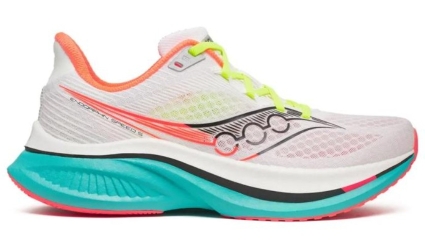
2. Saucony Endorphin Speed 5 — Best fast trainer
| Surface | Vegan claim | I would watch for |
|---|---|---|
| Road / speed | Saucony exact-model VEGAN statement | Nylon plate feel is not for everyone |
The Endorphin Speed 5 is where I go when “vegan” cannot mean giving up a fast workout shoe. Saucony identifies this exact model as made without leather or animal ingredients. Its nylon plate and PWRRUN PB foam make tempo work feel more directed than a conventional daily trainer, yet it has enough range for longer controlled efforts.
I put it on the shortlist for intervals, progression runs, and runners who want one performance shoe they can also train in. The plate changes how the forefoot bends; some runners find that rhythm helpful, while others feel pushed forward when they want to settle into an easy jog. I would test it at both planned training paces before buying for a race.
My field notes favor its secure midfoot and lively transitions, but the shoe is unnecessary for someone doing mostly relaxed miles. It also is not a substitute for checking the product page: “Endorphin” on a box does not verify every model in the line.
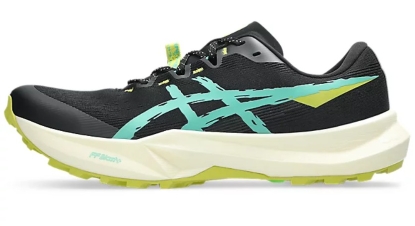
3. ASICS Fuji Lite 6 — Best light trail shoe
| Surface | Vegan claim | I would watch for |
|---|---|---|
| Trail | ASICS exact-model vegan-friendly statement including glues | Less underfoot protection than heavier trail shoes |
Fuji Lite 6 is the trail shoe in this list for runners who want quicker foot placement and less bulk. I have 287 logged miles in my pair across South Jersey hardpack, loam, and wet trail. Its fit stayed predictable for my US 10.5 D foot, and the shoe felt more willing to change direction than a protective, high-volume trail model.
ASICS describes this version as vegan-friendly and specifically includes yarns, glues, and other adhesives in its material statement. It also says the product has no independent vegan certification. I treat that as clear manufacturer disclosure, not as an outside audit.
I would use Fuji Lite for smoother or mixed trail where I value agility. On sharp, rocky descents, or for a runner who wants maximum shielding late in a long outing, I would compare it with Trabuco 14 or another more protective trail option. I do not try to make a light trail shoe serve every surface.
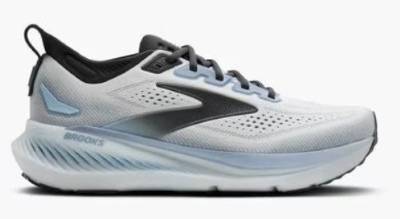
4. Brooks Glycerin 23 — Best cushioned road trainer
| Surface | Vegan claim | I would watch for |
|---|---|---|
| Road / long run | Brooks brand vegan policy; model outside exceptions | Premium price and more shoe underfoot |
Some runners want the Ghost’s straightforward job with a softer, more substantial landing. I would take them to the Glycerin 23. Brooks positions it for everyday road runs and long runs, with its tuned foam and broader platform aimed at comfort over many miles.
I check the upper and midfoot hold carefully here. Plushness can hide a fit problem in the store; the shoe still needs to keep my heel stable and leave enough room for foot expansion after an hour. I judge it on the second half of a long run, when a comfortable step-in no longer tells the whole story.
The model falls under Brooks’ stated vegan policy, subject to the same exact-product recheck as every purchase. I would pass if the runner prefers a lower, more flexible platform or wants to keep the budget closer to a standard daily trainer.
5. Brooks Adrenaline GTS 26 — Best structured support
| Surface | Vegan claim | I would watch for |
|---|---|---|
| Road / stability | Brooks brand vegan policy; model outside exceptions | Support geometry can feel intrusive to neutral runners |
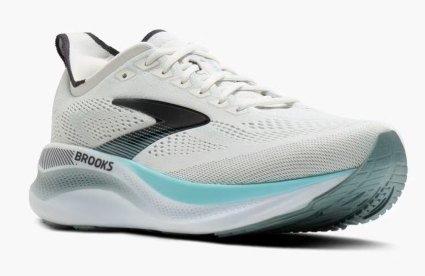
I do not prescribe stability because a runner’s arch looks low. I consider the Adrenaline GTS 26 when a runner has actually felt better in a structured shoe, particularly as form gets tired. Brooks continues to use GuideRails with balanced cushioning; that guidance is part of the ride, not a treatment for an injury.
I would compare its fit directly with the Ghost 18 at the same easy pace and on the same surface. The 26 is a new release, so I will not claim a personal long-run or durability result for it. If its guidance feels comfortable without rubbing or fighting the runner’s natural path, it has a job. If it feels controlling, I do not force it because of a gait label.
Adrenaline GTS 26 sits outside Brooks’ named animal-material exceptions in the current policy. I would still check any special edition separately. For a neutral runner happy in the Ghost, paying for structure they do not need adds no value.
6. ASICS Trabuco 14 — Best protective trail option
| Surface | Vegan claim | I would watch for |
|---|---|---|
| Trail / rough ground | ASICS exact-model vegan-friendly designation | More bulk than Fuji Lite 6 |
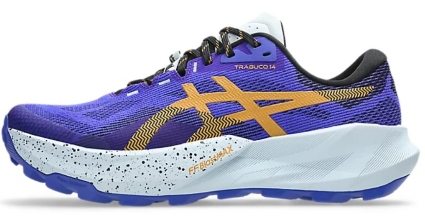
Trabuco 14 is the protective trail option I would compare with my lighter Fuji Lite 6. I logged 118 miles in the previous Gel-Trabuco 13 on rough trail and loose descents, where its protection was valuable. Those miles inform the role I want this shoe to play, but they are not a test of the 14. ASICS says the new model has more FF BLAST MAX cushioning, a more secure midfoot, and a wider forefoot; I would test whether that revised fit holds on descents.
ASICS labels this exact Trabuco 14 as a vegan-friendly design. Its published wording is shorter than the Fuji Lite 6 material statement, so a buyer who needs specific adhesive detail should confirm the exact SKU with ASICS. I will not turn a short manufacturer label into a claim of independent certification.
I would choose it for protective trail mileage, especially when rocks and debris make a light shoe feel exposed. I would skip it for mostly pavement or for the runner who likes to feel every change in the trail beneath the foot.
7. Merrell Agility Peak 6 — Best rugged trail choice
| Surface | Vegan claim | I would watch for |
|---|---|---|
| Trail / technical | Merrell current collection vegan-friendly filter | Overbuilt for smooth paths |
Agility Peak 6 makes sense when the trail is the main event: uneven ground, longer off-road outings, and the need for traction and a rock shield. Merrell’s current collection places the model under its vegan-friendly feature filter. That is a manufacturer claim, with no independent vegan trademark implied.
My decision would start at the outsole and fit. A rugged shoe is only useful if it grips the surfaces I run and holds the heel on descents without crushing the toes. I would test it on a familiar route before relying on it for an ultra or a remote trail day.
I rank it below the two ASICS options because I have more direct field history in those pairs. I would move Agility Peak higher for a runner who spends much more time on sharp terrain than on hardpack. A road-first runner should look at Ghost, Glycerin, or Morphlite instead.
8. Saucony Endorphin Azura — Best lively shoe without a plate
| Surface | Vegan claim | I would watch for |
|---|---|---|
| Road / uptempo | Saucony current vegan product filter | Energetic ride may feel unnecessary at easy pace |
Endorphin Azura gives me a useful contrast to the Speed 5. Saucony positions it as a responsive road trainer without a plate, and the model appears under the brand’s vegan filter. I would try it with a runner who wants a quick, modern feel but dislikes the more directed bend of a plated shoe.
It should earn its place on a normal training route, not just in the first lively few minutes. I would check whether the forefoot remains comfortable on easy miles and whether the upper stays secure as pace rises. A fast feel that only works at one speed is a narrower shoe than the name suggests.
I do not have the repeated personal mileage in Azura that I have in Fuji Lite or Gel-Trabuco, so this is an evidence-qualified shortlist choice. The exact color and listing still need a current material check before purchase.
9. Brooks Cascadia 20 — Best versatile trail workhorse
| Surface | Vegan claim | I would watch for |
|---|---|---|
| Trail / mixed terrain | Brooks brand vegan policy; model outside exceptions | Less agile than a light trail shoe |
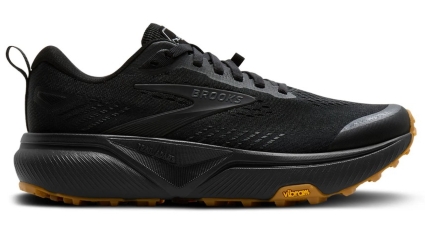
Cascadia 20 is the trail workhorse I would compare with Trabuco 14 when a runner wants one pair for varied routes. Brooks has changed this version substantially: Vibram Megagrip, a 4 mm lug pattern, TrailAdapt geometry, and more DNA FLASH v2 cushioning. On paper that makes it a stronger wet-and-dry all-rounder than the previous Cascadia, but I would still judge the grip on the runner’s local surfaces.
I want the Cascadia to prove itself on dry trail, loose corners, wet sections, and any road connection. I have not logged a dedicated Cascadia 20 test block, so I do not assign it invented mileage or a personal durability score. If half the run is pavement, a protective trail outsole may feel unnecessary.
Cascadia 20 sits outside Brooks’ current animal-material exceptions. I would choose it for adaptable trail range, then recheck the exact listing; I would pass if the runner needs a fast, minimal-feeling shoe.
10. Merrell Morphlite — Best road-to-trail value
| Surface | Vegan claim | I would watch for |
|---|---|---|
| Road to light trail | Merrell Morphlite appears in vegan-friendly filter | Not built for technical trail grip |
Morphlite is for the runner whose “trail” begins with a few miles of sidewalk and finishes on a smooth park path. Merrell describes it as a road-to-trail shoe and includes it in its vegan-friendly collection filter. The appeal is a simple, lower-cost bridge between surfaces.
I would keep its assignment narrow. I want to know that it runs comfortably on asphalt and has enough traction for dry dirt or light gravel. I would not ask its relatively mild outsole to handle steep, wet rock or deep mud; Agility Peak, Cascadia, or Trabuco are better comparisons there.
This is a practical tenth pick, not a hidden performance winner. If the fit works and the route is genuinely mixed but gentle, it can save the runner from buying two specialized pairs. If the terrain gets serious, that saving disappears.
How I Rank Vegan Running Shoes
The material check is an entry requirement. Once a shoe clears it, I rank the running experience the same way I judge any other pair. My order changes for a runner who needs stability, a different width, or a very different surface.
- Verify the exact model: I look for current manufacturer language that covers the shoe being sold, and I note whether it includes adhesives and dyes.
- Fit comes next: I want a secure heel, a calm midfoot, and enough room for toes to spread after the foot warms up.
- Match the primary surface: I do not trade trail grip for road smoothness without a reason.
- Test the full pace range: an easy-mile shoe and a workout shoe should feel right at the speeds they will actually see.
- Account for tradeoffs: cushioning, guidance, plate stiffness, grip, and weight each help some runners and frustrate others.
- Recheck value and availability: a discontinued color or hard-to-find size can change the practical recommendation.
I use my broader best running shoes guide for the overall fit and ride framework. The vegan requirement then narrows the shortlist.
How I Verify a Vegan Shoe Claim
I read “vegan,” “vegan-friendly,” and “made without animal ingredients” as manufacturer claims with different levels of detail. Brooks currently says most products exclude animal materials, including dyes and glues, and lists exceptions. Saucony identifies Speed 5 and Azura as vegan. ASICS gives detailed yarn-and-adhesive language for Fuji Lite 6 and labels Trabuco 14 vegan-friendly. Merrell uses a vegan-friendly designation without implying independent certification. I check the exact product before buying, especially when a variant or region differs.
I check the exact version, color, and SKU before checkout. A change in model year or a special leather edition can change the answer. I also keep two questions separate: whether the materials meet my requirement, and whether the shoe actually runs well. A vegan designation does not promise durability, traction, or lower environmental impact.
Ken’s buying check: If a listing uses only “synthetic upper,” I do not infer that its glue, dyes, linings, or reinforcement materials are animal-free. I ask the brand for the exact product claim.
How to Choose the Right Vegan Running Shoe
Start with the route, not the label
For mostly pavement, I try Ghost 18 or Glycerin 23 first. For controlled speed I compare Speed 5 with plate-free Azura. For dirt and rocks I move to Fuji Lite, Trabuco, Cascadia, or Agility Peak. My road-versus-trail guide helps decide where the surface line belongs.
Make the fit test specific
I use the socks I plan to run in, lace the shoe for a secure heel, then check that the toes can spread without sliding forward. My running-shoe fit guide and toe-box guide give the checks; my in-store shoe test shows how I compare the finalists before committing to longer mileage.
Choose support by response
I compare a neutral option with Adrenaline GTS 26 only if the runner has a reason to test structured guidance. I listen to what happens at easy pace and late in a longer run; I do not buy a stability shoe because an online quiz assigns a foot type. My modern stability shoe guide explains the support features I actually evaluate.
Test the shoe on the terrain that matters
For trail choices, I check uphill toe room, downhill heel hold, debris entry, and grip on the local surfaces I actually face. I use my trail lug-depth guide and grip-compound guide when the ground gets loose, rocky or wet. I stop the test if the shoe creates persistent pressure instead of waiting for a break-in miracle.
Frequently Asked Questions
Are running shoes labeled vegan actually free of animal materials?
I check the exact model and the manufacturer’s current wording. Brooks says most products exclude animal materials, including dyes and glues, and lists exceptions. ASICS and Saucony use model-specific language. A synthetic-looking upper alone does not answer the question.
Are vegan-friendly running shoes independently certified?
Not necessarily. ASICS says its Fuji Lite 6 is not independently certified as vegan, and Merrell explains that vegan-friendly items are manufacturer-designated rather than Vegan Trademark registered. I do not treat those labels as third-party certification.
What is the best vegan running shoe for everyday road miles?
Brooks Ghost 18 is my first neutral road comparison. I move to Glycerin 23 for more cushioning or Adrenaline GTS 26 if a runner has verified that structured support suits their stride.
What is the best vegan running shoe for speed workouts?
I would try Saucony Endorphin Speed 5 first if the runner likes a nylon plate. Endorphin Azura is my plate-free alternative. I judge both at easy and fast paces before picking one.
Which vegan-friendly running shoe is best for trails?
ASICS Fuji Lite 6 is my light trail pick; Trabuco 14 is the protective choice. Merrell Agility Peak 6 and Brooks Cascadia 20 belong on the shortlist for more rugged or varied routes.
Does vegan mean environmentally sustainable?
No. A shoe can exclude animal materials and still use plastics, difficult-to-recycle components, or energy-intensive manufacturing. I consider durability and material impact as separate questions.
Can I use a vegan trail shoe on roads?
For short road connectors, often yes. I would not choose a deep-lug trail shoe for mostly pavement because the ride, grip wear, and weight may work against the job. Morphlite is the more natural road-to-light-trail option here.
How do I check a new version or colorway?
I read the exact manufacturer product page or ask the brand to confirm the SKU, including adhesives and small components where that detail matters. I recheck when the version changes rather than carrying a claim over from the previous model.
My Final Recommendation
If I had to narrow the shopping trip to three pairs, I would begin with Brooks Ghost 18 for regular road mileage, Saucony Endorphin Speed 5 for faster work, and ASICS Fuji Lite 6 for a lighter trail ride. I would switch to Glycerin 23 for more road cushioning, Adrenaline GTS 26 for useful guidance, or Trabuco 14 when trail protection matters more than agility.
I would confirm the exact vegan claim and size before ordering, then let the first runs decide whether the shoe stays. The strongest pair is the one whose material statement meets my standard and whose fit still feels right after the easy miles become hard.

Written and reviewed by Ken — I have spent 12 years running and comparing shoes across road and trail training. My field notes guide the ride and fit judgments; I check a model’s material claim separately. More about me.