
For most runners who want trustworthy workout heart rate, I would buy the Polar H10. I would switch to the COROS Heart Rate Monitor if a chest strap rubs, or to the Garmin HRM 600 if compatible Garmin running metrics are worth the premium to me.
I care less about a perfect-looking graph than whether the sensor stays connected through a cold start, short reps and the last miles of a sweaty long run. Those are the moments when fit and measurement method stop being spec-sheet trivia.
Quick Picks: Three Heart Rate Monitors I Would Shortlist
| My pick | Buy it for | The tradeoff | Price |
|---|---|---|---|
| Polar H10 | Best overall ECG signal and cross-brand use | You must tolerate a chest band | Check price → |
| COROS Heart Rate Monitor | Upper-arm comfort for most steady running | Bluetooth only; optical response can lag | Check price → |
| Garmin HRM 600 | Garmin dynamics and standalone recording | Premium price; check watch compatibility | Check price → |
Jump to a section
Chest Strap, Armband or Wrist Watch? My Short Answer
| Sensor | I choose it for | I watch out for |
|---|---|---|
| ECG chest strap | Intervals, threshold work and HR-guided testing | Chafe, dry electrodes, loose band |
| Optical upper-arm band | Steady miles and a chest-strap-free routine | Fit and delay at sudden effort changes |
| Optical watch sensor | Convenient everyday trends | Cold starts, wrist motion and erratic workout traces |
I do not tell every runner to buy a strap. But for interval sessions, I prefer the immediate response of chest ECG. On easy days, an upper-arm band or a well-fitting watch may be enough. If the graph conflicts with breathing and effort, I question the data before I question the run.
Best Heart Rate Monitors for Running: Eight In-Depth Reviews
These are use-case recommendations, not eight identical claims of laboratory accuracy. Product specifications describe capabilities; my ranking explains when I would pay for them. I have not logged controlled, head-to-head running tests of every exact model here and do not assign invented accuracy scores.
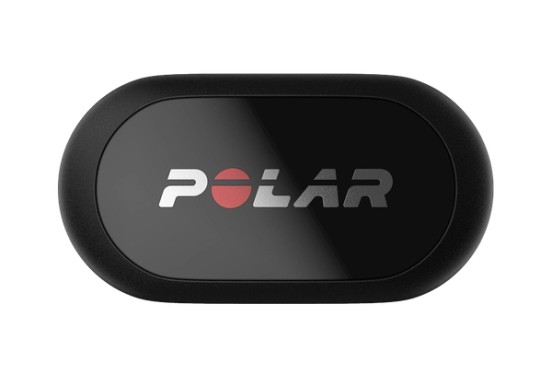
1. Polar H10 — Best overall for interval precision
| At a glance | Detail |
|---|---|
| Sensor | ECG chest strap |
| Connections | ANT+, two Bluetooth connections, 5 kHz |
| Power | Replaceable CR2025; up to 400 h |
| Best running use | Intervals, threshold runs, mixed-brand devices |
Why I chose it: I put the H10 first because it gives me the fewest compromises when heart rate is the point of the purchase. The chest electrode method responds to a rising effort without asking an optical algorithm to infer a pulse through arm motion, and the combination of ANT+ and two Bluetooth connections makes it easy to keep using after a watch change.
Its Pro Strap matters more than the pod’s feature list suggests: if the band moves, the graph can become nonsense. I would dampen the electrodes before a cold run, fit the band firmly enough not to slide, and detach the sensor after washing. The replaceable battery appeals to me for race travel because I can fix a dead sensor without finding a charging cable.
My call: This is my pick for a runner whose intervals, thresholds or heart-rate zones need the clearest signal. It is not the pick for someone who already knows a chest band will stay in the drawer. What I do not like: Chest-band pressure and electrode upkeep.
2. Garmin HRM 600 — Best Garmin performance strap
| At a glance | Detail |
|---|---|
| Sensor | ECG chest strap |
| Connections | ANT+ and Bluetooth; advanced metrics require compatible Garmin devices |
| Power | Rechargeable; up to two months at 1 h/day |
| Best running use | Garmin training metrics, treadmill and watch-free recording |
Why I chose it: I would buy the HRM 600 only when I can name the Garmin extras I will use. Beyond live heart rate and HRV, a compatible Garmin watch can draw running dynamics and, on select models, newer measures such as step speed loss. It can also record an activity without a watch, which is a real distinction from a basic strap.
For a runner who only wants BPM on a screen, this is expensive redundancy; the HRM 200 or Polar H10 makes more sense. I like that the module is rechargeable and the strap can be removed for washing, but I would check the precise watch-feature matrix before paying for a metric that my watch cannot display.
My call: Choose it if you train inside Garmin’s ecosystem and will use the extra data. Skip it if cross-brand simplicity is the priority. What I do not like: Premium price and feature dependence on watch compatibility.
3. COROS Heart Rate Monitor — Best comfortable armband
| At a glance | Detail |
|---|---|
| Sensor | Optical upper-arm sensor |
| Connections | Bluetooth; up to three simultaneous devices; no ANT+ |
| Power | Rechargeable; up to 38 active h |
| Best running use | Easy and long runs when chest straps irritate |
Why I chose it: A monitor I actually wear for every long run beats a technically superior strap left at home. That is the case for the COROS armband. Moving optical sensing from the wrist to a snug upper-arm position reduces some of the motion and fit problems I watch for when a watch graph looks implausible.
I would place it high enough to stay steady without cutting circulation and test it on a familiar steady run before trusting it for training zones. It can pair with non-COROS Bluetooth devices, but it does not broadcast ANT+ and it does not independently store a session. Those are buying decisions, not footnotes.
My call: Buy it when chest-band comfort is your limiting factor and your devices accept Bluetooth. For sharp 30-second repeats, I would still reach for an ECG strap. What I do not like: Less immediate than chest ECG for abrupt surges.
4. Polar Verity Sense — Best versatile optical sensor
| At a glance | Detail |
|---|---|
| Sensor | Optical arm or temple sensor |
| Connections | Bluetooth and ANT+ |
| Power | Rechargeable; up to 30 active h |
| Best running use | Running, gym sessions and swimming |
Why I chose it: I choose the Verity Sense over a simpler armband when one sensor has to cross sports. It offers ANT+ as well as Bluetooth, onboard session recording, and a goggle-clip option for swimming. A runner who also cycles or swims can get more use from it than from a Bluetooth-only band.
Optical placement still matters. I would run with it snug on the upper arm and check the selected mode before leaving the house; a recorded session and a live-broadcast session are not the same workflow. Its versatility earns the slot, but it is more device to manage than the COROS band if all I do is connect a watch for daily runs.
My call: I would buy it for mixed-sport flexibility or ANT+ on an armband. If I only need a comfortable Bluetooth pulse feed, COROS is the simpler choice.
What I do not like: Small controls and mode management take practice.
5. Wahoo TRACKR HEART RATE — Best rechargeable cross-platform chest strap
| At a glance | Detail |
|---|---|
| Sensor | ECG chest strap |
| Connections | ANT+ and up to three Bluetooth connections |
| Power | Rechargeable; over 100 active h |
| Best running use | Watch, phone and gym-device combinations |
Why I chose it: The TRACKR is the chest strap I would put in front of a runner who wants to stop buying coin cells without giving up broad connectivity. Three simultaneous Bluetooth connections are useful when a phone app and training watch are both in the setup; ANT+ covers many bike computers and gym devices.
It sends the heart-rate signal I need for structured work without pretending to be a Garmin running-dynamics accessory. The strap is hand-washable and the pod recharges. I would still wet the electrodes at the start and check the battery before a race; rechargeable does not mean maintenance-free.
My call: Buy it for rechargeable ECG and flexible pairing. If battery replacement is easier for you than charging, the H10 is the cleaner answer.
What I do not like: USB charging adds another task; no Garmin-only dynamics.
6. Garmin HRM-Fit — Best sports-bra clip option
| At a glance | Detail |
|---|---|
| Sensor | ECG sensor clipped to a compatible sports bra |
| Connections | ANT+ and Bluetooth; dynamics on compatible Garmin devices |
| Power | Replaceable battery; up to one year at 1 h/day |
| Best running use | Runners whose bra band can replace a second torso strap |
Why I chose it: I include the HRM-Fit because it solves a specific, real fit problem: some runners do not want a separate elastic band beneath a sports bra. Its clips use a compatible medium- or high-support bra band to keep the electrodes against the skin, and it can provide Garmin running dynamics with the right watch.
I would not recommend it sight-unseen. Garmin’s fit guidance calls for a suitably wide, flat, close-fitting band; loose bands, front zippers and incompatible constructions can defeat the design. That compatibility check matters more than any feature claim. If the bra fails it, choose a conventional strap or armband instead.
My call: Buy it only after checking your actual sports bra against Garmin’s fit requirements. Skip it when you need one sensor to work with any top.
What I do not like: Fit depends on bra band shape and compression.
7. Polar H9 — Best value chest strap
| At a glance | Detail |
|---|---|
| Sensor | ECG chest strap |
| Connections | ANT+, one Bluetooth connection, 5 kHz |
| Power | Replaceable coin cell; up to 400 h |
| Best running use | A reliable first chest strap without premium extras |
Why I chose it: If a runner asks me for accurate workout heart rate at the lowest sensible cost, I start with the H9. It uses the same chest-electrical measurement approach that makes this category useful for intervals, but removes H10 extras a single-watch runner may never touch.
The tradeoff appears when I want a phone and a watch receiving Bluetooth at once: H9 has one Bluetooth connection, while H10 has two. The H9 also lacks H10’s one-session internal memory and comes with the simpler Soft Strap. I would pay for H10 only when those differences matter to my setup or the fit of its Pro Strap.
My call: Buy it for one-device heart-rate training on a budget. Skip it if you regularly pair several Bluetooth receivers.
What I do not like: Fewer simultaneous connections and a simpler strap than H10.
8. Garmin HRM 200 — Best basic Garmin strap
| At a glance | Detail |
|---|---|
| Sensor | ECG chest strap |
| Connections | ANT+ and Bluetooth with secure-connection option |
| Power | Replaceable CR2032; up to one year at 1 h/day |
| Best running use | Garmin users who need HR and HRV, not dynamics |
Why I chose it: The HRM 200 is the Garmin I would buy when my training question is simply “what did my heart rate do?” It supplies heart rate and HRV to compatible devices without charging for HRM 600’s running-dynamics package. Its replaceable battery and size choices keep the ownership story simple.
I would verify sizing and Bluetooth/ANT+ pairing with the device I own, then stop shopping. If a runner is chasing running economy, step speed loss or watch-free activity recording, this is the wrong Garmin sensor. If not, the missing features are savings rather than sacrifices.
My call: Buy it for straightforward Garmin HR/HRV. Skip it when advanced dynamics are a defined part of your plan.
What I do not like: No premium running-dynamics package.
How I Rank a Running Heart Rate Monitor
My order begins with the workout: does the sensor produce useful real-time information at the pace and intensity I actually run? I then weigh comfort after an hour, stable pairing, battery routine, strap maintenance and whether extra metrics change a training decision. A premium pod does not outrank a simpler one merely by reporting more fields.
To test one fairly, I would wear it on a familiar easy loop, then through a controlled progression and short intervals while comparing with a well-fitted ECG chest reference. I would mark when effort changes, check for dropouts and implausible cadence-like plateaus, repeat in cold and warm conditions, and record whether I would willingly wear it on the next long run. I do not treat a single tidy graph as proof of universal accuracy.
How I Choose and Set Up a Heart Rate Monitor
Check connections before buying
I list every device that needs the signal: watch, phone, treadmill, bike computer or training app. ANT+ and Bluetooth are not interchangeable, and one Bluetooth slot is not the same as two or three simultaneous connections. I confirm compatibility with the device I already own before choosing a monitor.
Fit comes before theoretical precision
I moisten chest electrodes before a cold start and set the band snug enough not to slide. For an optical armband, I put the sensor on a stable upper-arm area, not across a moving joint. I do not overtighten either one. If friction is the deal-breaker, my running chafing guide has practical clothing and skin-contact fixes.
Pick a battery routine you will actually follow
A coin cell can be replaced on a trip; a rechargeable pod avoids coin-cell waste but must be charged. I decide which failure is more likely in my routine. I also detach washable pods, clean textile bands as directed, and replace a worn strap before blaming the electronics.
Use heart rate as context, not a verdict
On easy runs I use heart rate to check that effort has not crept up; heat, hills, stress and poor sleep can move the number. During short reps I lead with pace and perceived effort because heart rate rises with delay even when the sensor is working. My Zone 2 guide and easy-pace guide show how I combine the number with breathing and effort.
Full Comparison Table
| Monitor | Sensor | Connection | Best use | Main limit |
|---|---|---|---|---|
| Polar H10 | ECG chest strap | ANT+, two Bluetooth connections, 5 kHz | Intervals, threshold runs, mixed-brand devices | Chest-band pressure and electrode upkeep |
| Garmin HRM 600 | ECG chest strap | ANT+ and Bluetooth; advanced metrics require compatible Garmin devices | Garmin training metrics, treadmill and watch-free recording | Premium price and feature dependence on watch compatibility |
| COROS Heart Rate Monitor | Optical upper-arm sensor | Bluetooth; up to three simultaneous devices; no ANT+ | Easy and long runs when chest straps irritate | Less immediate than chest ECG for abrupt surges |
| Polar Verity Sense | Optical arm or temple sensor | Bluetooth and ANT+ | Running, gym sessions and swimming | Small controls and mode management take practice |
| Wahoo TRACKR HEART RATE | ECG chest strap | ANT+ and up to three Bluetooth connections | Watch, phone and gym-device combinations | USB charging adds another task; no Garmin-only dynamics |
| Garmin HRM-Fit | ECG sensor clipped to a compatible sports bra | ANT+ and Bluetooth; dynamics on compatible Garmin devices | Runners whose bra band can replace a second torso strap | Fit depends on bra band shape and compression |
| Polar H9 | ECG chest strap | ANT+, one Bluetooth connection, 5 kHz | A reliable first chest strap without premium extras | Fewer simultaneous connections and a simpler strap than H10 |
| Garmin HRM 200 | ECG chest strap | ANT+ and Bluetooth with secure-connection option | Garmin users who need HR and HRV, not dynamics | No premium running-dynamics package |
Frequently Asked Questions
What is the best heart rate monitor for running?
For a runner who wants reliable workout data across brands, I choose Polar H10. If a chest band is uncomfortable, I would start with the COROS upper-arm monitor instead.
Is a chest strap always more accurate than an armband?
I expect chest ECG to respond more promptly when effort changes fast, but fit, battery and pairing can spoil any sensor. A snug upper-arm optical band can be entirely useful for steady running.
Can an upper-arm monitor replace a chest strap for Zone 2?
Often, yes. I would confirm that its trace is stable on familiar easy runs and use breathing and perceived effort alongside the number. I would not treat one bpm threshold as an absolute rule.
Why does my optical heart rate match my cadence?
Rhythmic movement can confuse an optical sensor. I check fit and placement, warm up, and compare with a chest strap if the trace still looks like my step rate.
Should I buy Polar H10 or Garmin HRM 600?
I buy H10 for straightforward ECG and cross-brand flexibility. I buy HRM 600 only when my compatible Garmin watch can use the added dynamics or standalone recording I specifically want.
Do I need ANT+?
Only if something in my setup uses it. I check the watch, treadmill or bike computer before paying for the protocol; a Bluetooth-only armband can be enough for many runners.
Do I need a monitor at all as a beginner?
No. I would establish regular easy running by conversational effort first. I add a monitor when its feedback helps me pace consistently rather than making every run feel like a test.
Can a sports heart rate monitor diagnose a heart condition?
No. I use these devices for training, not diagnosis. Chest pain, fainting, unusual palpitations or other concerning symptoms call for medical care rather than a gadget comparison.
My Final Recommendation
I would buy the Polar H10 if heart-rate-guided training is the reason I am shopping. If the chest band makes me dread wearing it, the COROS Heart Rate Monitor is the practical switch. If I own a compatible Garmin and will use its extra running metrics, the HRM 600 earns its price; otherwise, I would keep the simpler sensor and spend the difference on running.

Ken, a runner and NextGait’s editor. I separate a manufacturer’s specification from a session I have personally logged, and I would rather name a monitor’s limitation than promise a perfect graph. Read more about my running background and our editorial standards.