
After 95 verified miles, I rate the ASICS Novablast 5 8/10. It is the lively daily trainer I choose when an ordinary road run may turn steady, or when I want cushioning that still feels coherent after 90 minutes. My clearest memory is a quiet run through Birch Grove Park: no dramatic shoe moment, just an easy rhythm I did not have to manage. Its limits showed just as clearly in an Atlantic City downpour and whenever I asked the tall, soft platform to turn like a lower racing shoe.
I have run for 12 years, and this review comes from one Illuminate Yellow/Black pair in my usual men’s US 10.5 D. I put it through South Jersey roads, boardwalk planks, concrete, pace changes, and coastal long runs up to 17 miles. I will walk through the five decisions that determine whether it belongs in a training week; that is more useful than calling every bouncy shoe “versatile.”
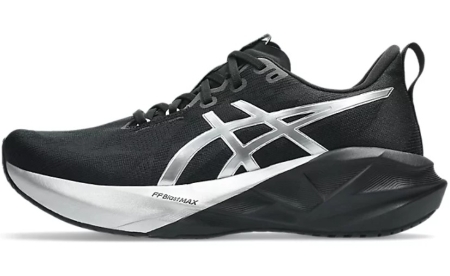
My 95-Mile Verdict
| Decision | My answer |
|---|---|
| Best role | Easy and steady road mileage, aerobic progression, and comfortable long runs |
| Pace range in my testing | About 7:15–9:00 per mile; those are my efforts, not a speed requirement |
| Fit | True to size in my men’s US 10.5 D, with secure heel hold and room for forefoot swelling |
| Longest run | 17 miles along Atlantic City and Ocean City coastal routes |
| My sample weight | 9.6 oz in US 10.5 on my scale |
| Main compromise | Less precise on uneven ground or sharp intervals; upper became heavy when soaked |
| Would I buy it again? | Yes, as a lively everyday road trainer |
What I like: the protective yet quick-recovering foam, secure heel, comfortable long-run fit, and a ride that still has some life at steady pace. What gives me pause: high stack on awkward surfaces, a slight delay when I want immediate interval turnover, and water retention in heavy rain. The shoe is excellent when those strengths match most of your week.
Jump to a Section
How I Tested the ASICS Novablast 5
I logged 95 verified running miles in my Illuminate Yellow/Black men’s US 10.5 D. I weigh about 182 lb and run 30–40 miles in a typical week. The test included easy and steady runs, controlled pace changes, road long runs up to 17 miles, clean boardwalk planks, concrete connectors, and one 11-mile rain run. I watched how the foam recovered between steps, whether the heel remained centered when I tired, how the forefoot fit changed after an hour, and what happened to grip and upper weight when weather changed.
Ninety-five miles is enough for a useful fit and ride verdict, but only an early durability read. I do not translate a single pair into a guaranteed lifespan, an injury-prevention claim, or a measured energy-return percentage. When I describe bounce, I mean the sensation and rhythm I experienced at my pace.
The Specs That Explain My Ride
| Feature | Novablast 5 | What I notice while running |
|---|---|---|
| Midsole | Full-length FF BLAST MAX; no plate | Soft landing followed by a springy, flexible release |
| Geometry | About 41.5 mm heel / 33.5 mm forefoot in the men’s reference; 8 mm drop | Substantial road protection with a tall platform to manage |
| Upper | Engineered jacquard mesh and winged, gusseted tongue | Smooth wrap, little tongue movement, and secure midfoot |
| Outsole | Rubber in key wear zones and trampoline-inspired forefoot shape | Quiet road contact and a lively toe-off on firm ground |
| Weight | ASICS lists about 9 oz / 255 g for its reference; my US 10.5 was 9.6 oz | Cushioning feels generous without becoming heavy on normal runs |
A stack figure or foam name does not tell me whether I will enjoy mile 12. What matters is the sequence underfoot: the heel absorbs impact without sinking into a pocket, the broad middle gives me time to settle, and the forefoot flexes and releases without a rigid rocker tipping me forward. That is why I call the Novablast 5 lively rather than merely soft.
Decision 1: What Pace Am I Actually Running?
For relaxed miles, the Novablast 5 lets me stop thinking about the shoe. The landing is muted on asphalt and boardwalk wood, and the foam springs back soon enough that my cadence does not feel delayed. It is an easy pick for the aerobic middle of my week and fits naturally with the restraint I describe in my Zone 2 training guide.
When I gradually increase pressure toward steady running, roughly 7:15–8:00 per mile in my log, the forefoot still gives me a clean exit. I can run a progression without feeling that I have brought a recovery-only shoe. That is the reason I place it among my daily trainer choices: it handles more than a single easy pace.
I draw the line at sharp repetitions. The foam compresses enough to protect me on a long run, and that same compliance creates a small delay when I want an immediate, exact push-off. A controlled tempo segment is possible; a session built around hard intervals makes me reach for a lighter, more decisive shoe. I choose the Novablast when pace is part of the run, rather than the entire point of it.
Decision 2: Will the Cushioning Still Work When I Tire?
My coastal long runs reached 17 miles along Atlantic City and Ocean City. After the 90-minute mark, the FF BLAST MAX still rounded off hard concrete and wooden-plank impacts without turning flat under my 182 lb. I did not have to shorten my stride just because the forefoot felt dead. That is a stronger endorsement for a daily trainer than a lively first mile.
The best run of this test was the ordinary one through the shaded paths at Birch Grove Park. I settled into an even effort, the heel stayed centered, and the shoe never demanded an adjustment. I notice that kind of reliability because a high-stack shoe can sometimes feel fun early but vague once my form becomes tired. This pair kept a consistent transition on the firm paths and roads I actually used.
Its width gives a neutral runner a reassuring landing area, but I would not mistake that for deliberate pronation control. If I needed a structured stability shoe, I would choose one on its own merits. For comfortable long road mileage, the Novablast belongs on my long-distance shortlist; for sharply uneven shoulders, its height becomes a liability.
Decision 3: Does the Fit Disappear on My Foot?
My normal men’s US 10.5 D fit true to length. The heel collar held my rearfoot without rubbing, the winged tongue spread lace pressure evenly, and the forefoot left room for swelling after ten miles. I never needed a runner’s knot or a stop to recenter the tongue. That is exactly how I want a daily shoe to behave: I notice the run, not the upper.
The standard width is accommodating for my foot, but it is not an anatomical wide-toe shoe. I would ask a broad-midfoot or high-volume runner to try the wide version rather than simply add length. Sizing up may create heel movement while leaving the same pressure point. My wide-foot shoe guide explains why I test width and length separately.
| Fit zone | My experience | My buying check |
|---|---|---|
| Length | True to my usual US 10.5 | Start with normal running size, then jog |
| Heel | Secure, no rubbing in my long runs | Turn and accelerate to check for slip |
| Midfoot | Held without one tight lace row | Check instep pressure in normal socks |
| Forefoot | Room for swelling up to 17 miles | Try wide if sides or fifth toe are crowded |
Decision 4: What Surface and Weather Am I Facing?
On dry asphalt, concrete, and clean boardwalk planks, the Novablast 5 lands quietly and tracks predictably. Its forefoot flex keeps the thick platform from slapping. I can take it over ordinary damp textured pavement, but I do not treat it as an all-weather grip specialist or a trail shoe.
My worst outing was an 11-mile Atlantic City run. Torrential rain arrived at mile six. The mesh soaked up enough water that the shoe felt heavier and squelched for the remaining five miles. Grip on the textured pavement was usable in that run, yet the upper no longer felt airy or light. That is a real limitation for a runner whose schedule puts them in sustained rain; I use the preparation and surface checks in my rain-running guide.
I also leave this shoe off cambered shoulders, loose gravel, and broken paths when foot placement matters. The broad base is calm for a high-stack road trainer, but the height gives an off-center landing more leverage. On such a route, I prefer a lower, more precise platform.
Decision 5: Where Does It Belong in My Rotation?
The Novablast 5 takes most of my easy and steady road miles, aerobic progressions, and comfortable long runs. I can use it on a recovery day when I still want some life underfoot, though its bounce may be more sensation than a tired runner wants. I put focused track work and fast threshold sessions in a lighter specialist. This arrangement gives the Novablast frequent use without asking it to be a race shoe.
If I owned only one road shoe and the fit worked, I could complete a mixed week in it, with the understanding that hard intervals are a compromise. If I owned two, I would pair it with a faster workout shoe. I would make that purchase decision from the sessions I repeat, not from a single exciting try-on.
What Changed from the Novablast 4?
The fifth version moves to a full-length FF BLAST MAX midsole and changes the upper from the previous woven construction to engineered jacquard mesh. ASICS also revised the tongue with a winged, gusseted design and refined the forefoot pod and outsole geometry. Those are meaningful changes because the shoe is meant to combine a softer landing with an energetic exit while holding the foot securely as pace changes.
I do not claim a precise percentage of extra bounce from my road test. In my Novablast 5, the useful change is simpler: the heel does not collapse into a deep pocket, the forefoot releases cleanly at steady pace, and the tongue stays put on long runs. I would not discard a well-fitting Novablast 4 that still performs well. I would choose the 5 when replacing it if I wanted this softer, more coherent daily ride.
What 95 Miles Tell Me About Durability
At 95 verified miles, the outsole has light scuffing but its tread pattern is still clearly defined. The lateral foam has fine compression lines, the upper has no visible mesh fraying, and I found no separation around the midsole bond. On the road, I cannot feel a meaningful flattening of the cushioning yet. These are signs of a healthy early test pair, not proof of a particular retirement mileage.
I check whether the shoe begins to feel lopsided, whether grip changes where I land, whether the forefoot loses its quick release, and whether the heel hold remains secure. Those observations will matter more at 200 or 300 miles than how clean the sidewall looks today. My replacement checklist separates cosmetic wear from a change that affects the run.
Which Alternative Would I Choose?
| Alternative | I choose it when… | I choose the Novablast 5 when… |
|---|---|---|
| ASICS Superblast 3 | I want a more performance-focused long run or workout platform | I want softer everyday comfort and a less costly daily role |
| Saucony Ride 19 | I prefer a more grounded, predictable transition | I want more spring in routine road mileage |
| ASICS Gel-Nimbus 28 | Maximum plush recovery comfort is the priority | I want a lighter, quicker-feeling daily ride |
| ASICS Novablast 4 | My current pair still fits and performs | I am replacing it and want the 5’s foam and upper revisions |
The conventional Nike workhorse asks a different question. In my Novablast versus Pegasus comparison, I separate springy cushioning from a firmer, more traditional transition. Neither feel is universally better; I choose the one that makes the bulk of my week easier to run.
Who Should Buy the ASICS Novablast 5?
- I would recommend it to a neutral runner seeking one lively pair for easy, steady, and long road miles.
- I would put it on the shortlist for someone who wants substantial cushioning without a plated or rigid feel.
- I would choose it if secure heel hold and room for normal foot swelling matter on longer runs.
- I would consider it for a newer runner after checking the tall platform at a real running pace, not only while standing.
The best buyer is the person whose training calendar contains many ordinary road runs. The Novablast makes those miles more enjoyable without requiring a workout to justify the shoe.
Who Should Skip the ASICS Novablast 5?
- I would pass if I need deliberate stability guidance rather than a broad neutral base.
- I would choose a lower, more precise shoe if most routes are loose, sharply cambered, or broken.
- I would buy a faster specialist if short intervals or race efforts dominate my week.
- I would test something else if frequent heavy rain makes a water-absorbing upper a regular problem.
- I would avoid treating its generous cushioning as a promise of injury prevention.
Those limits are why my score is 8/10 rather than a blanket recommendation. I know the runs on which I trust the shoe, and I can name the conditions that make me leave it by the door.
My Final Verdict After 95 Miles
I would rebuy the ASICS Novablast 5 as my lively daily road trainer. Its FF BLAST MAX ride remains comfortable after long periods on concrete and boardwalk, my US 10.5 fit stayed secure through 17 miles, and the pair still feels fresh at 95 verified miles. The 11-mile storm exposed water retention; fast intervals and awkward terrain expose the limits of the high, soft platform. For easy-to-steady road training, though, it makes the ordinary miles feel remarkably easy to repeat.
ASICS Novablast 5 FAQs
Is the ASICS Novablast 5 good for daily training?
Yes. I use it most confidently for easy, steady, and long road miles. Its cushioning feels lively without making my normal running rhythm awkward.
Does the Novablast 5 fit true to size?
My usual men’s US 10.5 D fit true to length, with secure heel hold and enough forefoot space for swelling on runs up to 17 miles. I would try the wide version for a broad midfoot rather than size up automatically.
Is the Novablast 5 a stability shoe?
No. It is a neutral shoe. The broad base felt reassuring on my roads, but I would not use it in place of a model chosen for deliberate stability guidance.
Can I run long distances in the Novablast 5?
Yes. My longest test was 17 miles, and the midsole still felt useful beyond 90 minutes. I like it for comfortable long road training more than for an all-out race.
Is the Novablast 5 good for speedwork?
It can handle controlled pace changes and some tempo running. For sharp intervals, I prefer a lighter, firmer-feeling shoe with a more immediate toe-off.
How does the Novablast 5 perform in rain?
Grip on textured wet pavement remained usable during my 11-mile storm run, but the upper became saturated and heavy after rain began at mile six. I would be cautious on paint, metal, and other low-friction surfaces.
How durable is the ASICS Novablast 5?
At 95 verified miles my pair has light outsole scuffing, fine foam creases, and an intact upper, with no meaningful loss of ride that I can feel. That is an early wear report, not a guaranteed lifespan.
What changed from the Novablast 4?
The 5 uses a full-length FF BLAST MAX midsole, engineered jacquard mesh in place of the earlier woven upper, a revised winged tongue, and refined forefoot and outsole geometry. I value the coherent ride and secure tongue in my own pair.
Would I buy the Novablast 5 again?
Yes. I would buy it again for the broad middle of my road-training week, while keeping a sharper shoe for fast sessions and choosing a lower platform on uneven routes.

Written by Ken — the recreational distance runner behind NextGait. I have run for 12 years, logged more than 12,500 miles, and finished 36 races from 5Ks to a 50K. More about me →